

In conversation with… Tami Jacoby
Advertisement
Read this article for free:
or
Already have an account? Log in here »
To continue reading, please subscribe:
Monthly Digital Subscription
$1 per week for 24 weeks*
- Enjoy unlimited reading on winnipegfreepress.com
- Read the E-Edition, our digital replica newspaper
- Access News Break, our award-winning app
- Play interactive puzzles
*Billed as $4.00 plus GST every four weeks. After 24 weeks, price increases to the regular rate of $19.95 plus GST every four weeks. Offer available to new and qualified returning subscribers only. Cancel any time.
Monthly Digital Subscription
$4.99/week*
- Enjoy unlimited reading on winnipegfreepress.com
- Read the E-Edition, our digital replica newspaper
- Access News Break, our award-winning app
- Play interactive puzzles
*Billed as $19.95 plus GST every four weeks. Cancel any time.
To continue reading, please subscribe:
Add Free Press access to your Brandon Sun subscription for only an additional
$1 for the first 4 weeks*
*Your next subscription payment will increase by $1.00 and you will be charged $16.99 plus GST for four weeks. After four weeks, your payment will increase to $23.99 plus GST every four weeks.
Read unlimited articles for free today:
or
Already have an account? Log in here »
Hey there, time traveller!
This article was published 22/02/2013 (4815 days ago), so information in it may no longer be current.
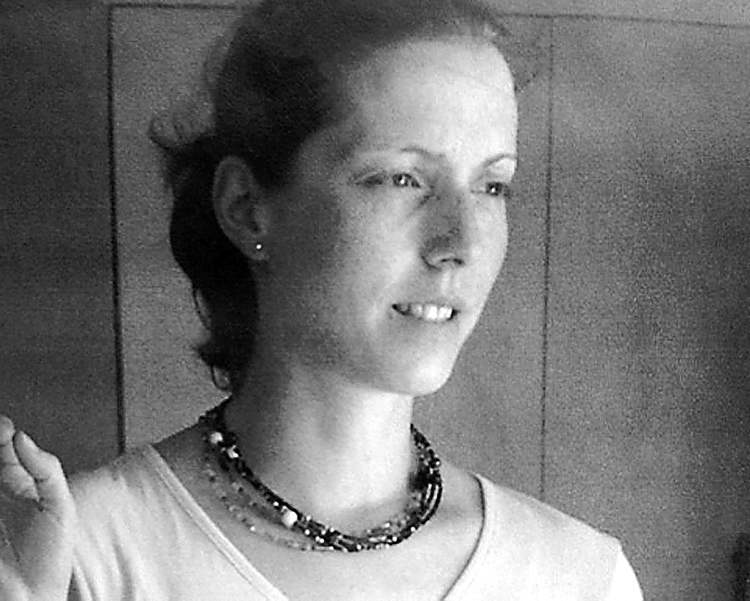
Gender and terrorism will be at the forefront of a workshop at the University of Winnipeg where Prof. Tami Jacoby will be speaking as a panellist today.
The workshop, entitled Female Suicide Bombings: Challenges and Responses, will be held at 1 p.m. at the Richardson College for the Environment and Science complex.
Jacoby is a professor of political studies at the University of Manitoba and has written books and talked at conferences about women in the Middle East. She will be taking part in a panel called Gender, Trauma, and the Right to Fight.
Admission to the workshop is free and anyone may attend, but people are asked to register in advance by emailing t.narozhna@uwinnipeg.ca.
FP: Why are female suicide bombers specifically an issue?
Jacoby: Female suicide bombers are an issue because it’s unexpected. It’s not the norm, and because of that, people assume there’s something peculiar about it. There are a lot of reasons, and that’s actually what I’m going to be talking about at the workshop, but I think there’s been a long coincidence between feminism and pacifism. We typically look at women as mothers, as nurturers, as peacemakers, so when women commit serious acts of violence, it kind of shakes our foundation. We don’t understand why, why would a woman do that, because of traditional stereotypes about women.
FP: What are you hoping to address at the conference?
Jacoby: There are many different feminist perspectives that would understand female violence differently, and we’re looking to see the ways that feminism is contested. By looking at feminism through such an extreme case as female suicide bombers, it really opens up the field of feminism to a variety of interpretations and different political perspectives and different understandings of the world.
FP: What makes this important to Canadians?
Jacoby: There are a number of reasons. One, if you look at the feminist movement in Canada, if it strives to universal goals it has to take into consideration different kinds of feminism, different kinds of patriarchal structures that influence women to behave differently. And also there’s the more pragmatic idea that things that go on in other parts of the world affect us. Terrorism, which is what we’re talking about here, is transported to places like Canada through a variety of political relationships and home-grown communities and charities and religious organizations… So we have to understand what happens in other parts of the world, whether it’s gendered or not.
FP: What kind of changes are you hoping to see arise from your talk?
Jacoby: Basically, I’m asking two questions, which I have some answers for, and I would like to see what answers other people have. And that is: Can female political violence be understood as feminist? I’m not sure I entirely agree that feminism can promote violent goals or violent behaviours. That’s not the kind of feminism I understand. But like I said before, if you’re looking at feminism around the world, you have to take that into consideration. And the second question is: Is female political violence different from male political violence? Is there something significant if it’s a woman and not a man? I think that female political violence is different because women have different expectations of them in society. So when they commit acts of violence, it’s often a way of breaking out of traditional social roles and there’s different space available for women to be political in society. A woman that commits violence may be acting against social norms, but it may be part of a woman’s nurturing role to, let’s say, give birth to soldiers, in which case her womb is nationalized, or nurture the motherland. There are many ways to contest gender symbols, and women can do that in violent activities. It’s just not something we see here.

FP: You will be focusing on Israel and Palestine during your talk. What differentiates that area from others?
Jacoby: There are major differences in how feminism can develop in conflict zones versus zones of peace. In a zone of peace, political structures are usually stable, so women can rely on them to pursue their goals for gender equality or gender equity. In zones of conflict, where political structures are in flux, there’s generally a tendency to rely more on traditional relations between the sexes because there’s more of a need for social unity. Divisiveness is generally looked upon as anti-nationalist or threatening. And in places like Israel and Palestine in particular, women are conscripted on a compulsory basis. Women are just, by virtue of being in society, part of a national liberation movement which operates in the civilian sphere, so they don’t really have a choice, like in Canada, whether they want to fight or not. And if they’re already fighting, there’s a natural tendency to want to also make decisions about war or national liberation. So the context is very different, plus there’s also the religious aspect that is very different. Religion is politicized to an unprecedented degree in Israel and Palestine as compared to here, where it’s more of an issue of multiculturalism or religious freedom.
— Oliver Sachgau