

The best Bomber you’ve never heard of Blog of the Week: West End Dumplings
Advertisement
Read this article for free:
or
Already have an account? Log in here »
To continue reading, please subscribe:

Digital Subscription
One year of digital access for only $205*
- Enjoy unlimited reading on winnipegfreepress.com
- Read the E-Edition, our digital replica newspaper
- Access News Break, our award-winning app
- Play interactive puzzles
*First annual payment billed as $205.00 + GST for one year. This annual subscription will automatically renew at $233.00 + GST every 52 weeks (10% off the regular annual price of $259.35). Offer available to new and qualified returning subscribers only. Cancel any time.
To continue reading, please subscribe:
Add Free Press access to your Brandon Sun subscription for only an additional
$1 for the first 4 weeks*
- Enjoy unlimited reading on winnipegfreepress.com
- Read the E-Edition, our digital replica newspaper
- Access News Break, our award-winning app
- Play interactive puzzles
*Your next Brandon Sun subscription payment will increase by $1.00 and you will be charged $17.95 plus GST for four weeks. After four weeks, your payment will increase to $24.95 plus GST every four weeks.
Read unlimited articles for free today:
or
Already have an account? Log in here »
Hey there, time traveller!
This article was published 01/09/2013 (4776 days ago), so information in it may no longer be current.
Between 1931 and 1941 it would have been difficult to flip through the local sports pages without reading about Jeff Nicklin.
He was born Dec. 10, 1914 in Fort William, Ont. His family moved to Winnipeg when he was 10. He attended Mulvey and Gordon Bell schools, graduating from Kelvin in 1930.
Despite the many sports he excelled in growing up, Nicklin chose to pursue football as an adult.
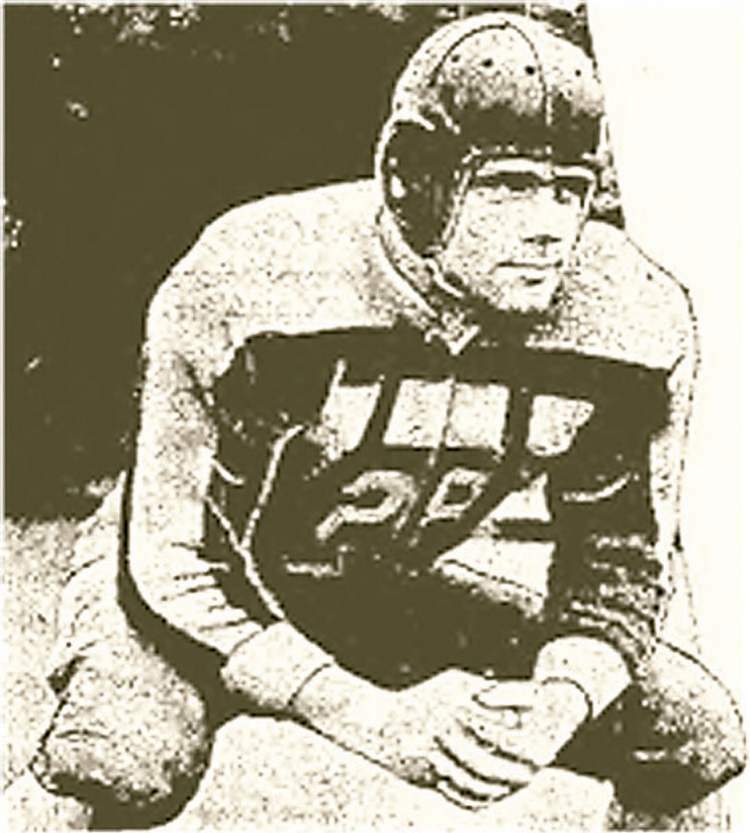
In 1932 he became a member of the Winnipeg Junior Rugby Football League’s Winnipegs and in 1933 joined the Deer Lodge Juniors. They won the 1933 Manitoba-Saskatchewan league and the 1934 Western Canadian championship.
Later that year, while still of junior-league age, he jumped to the senior Winnipegs, (eventually known as the Winnipeg Blue Bombers), who happened to be the reigning Dominion champions. This led to friction between the two teams as Deer Lodge accused the Winnipegs of poaching, while the senior team said Nicklin was simply too good to be playing at that level.
Nicklin’s first big-league game came when he was 19, on Sept. 15, 1934 between the Winnipegs and the University of Minnesota All-Stars, (the first half was played under Canadian rules, the second under American). Neither team excelled at the hybrid game, the Winnipegs lost 13-8. Osborne Stadium’s near-capacity crowd, however, were treated to seeing Nicklin in the big leagues and even scoop up a fumble in the dying minutes that set up the home team’s only touchdown.
Free Press sports writer Cam McKenzie wrote: “Young Jeff Nicklin, playing his first game in senior football, turned in a sound exhibition at right end. Jeff has a great pair of hands and can tackle with the best of them and should be a valuable man to the Winnipegs in their bid for another championship.”
Nicklin, indeed, proved a valuable man to the team for the next seven seasons. The Winnipegs won the Western Championship in 1935, 1937, 1938, 1939 and 1940, also taking the Grey Cup in 1935 and 1939. Nicklin was named to the Western All-Star team in 1937, 1938 and 1940. A Winnipeg Tribune writer referred to him as “One of the finest native-bred performers Prairie football ever has produced.”
When he wasn’t playing pro football, he was coaching football at Isaac Brock School and had a day job with the provincial Department of Mines and Natural Resources. He was also dating a young woman named Eileen Hollingsworth.
The 1940 football season didn’t play out as many had expected. Through the course of the year a number of players, including at least six starters, enlisted to fight in the war. Despite this, the Blue Bombers, (as they were now becoming known), won the Western Championship but there would be no East-West final matchup that year.
Nicklin enlisted with the Royal Winnipeg Rifles in the summer of 1940 and went to Shilo for training. There, his commanding officers saw what his coaches saw on the football field: an intense, quick study who possessed great leadership skills. He was enrolled in officer training.
He was able to squeeze in some games during August and September, but after that, he was off to Shilo for full-time training. Nicklin, who at just 25 years of age was a seven-season Bomber veteran, took leave from the team.
On Sept. 14, 1940, he wed Eileen at St. Alban’s Church. The couple had a brief honeymoon in Kenora before moving into the Rothesay Apartments on Preston Avenue. For Nicklin, though, the stay was brief. It was back to Shilo and in 1941 he was deployed overseas.
When word got out in May 1942 that Canada was going to create the 1st Parachute Battalion, he immediately volunteered. After a little training in Britain, it was off to Fort Benning, Ga., then back to Shilo in September 1942, where he trained new paratroop recruits.
His time back in Manitoba allowed him to take in a little football. The senior league was suspended due to the war but the RCAF Bombers, which included some of his old teammates, played in a newly formed city league. He proved to be good luck when he made the ceremonial opening kickoff at their Sept. 25, 1942 game against the U of M Varsity. The Bombers beat them 20-1 for their first win of the season.
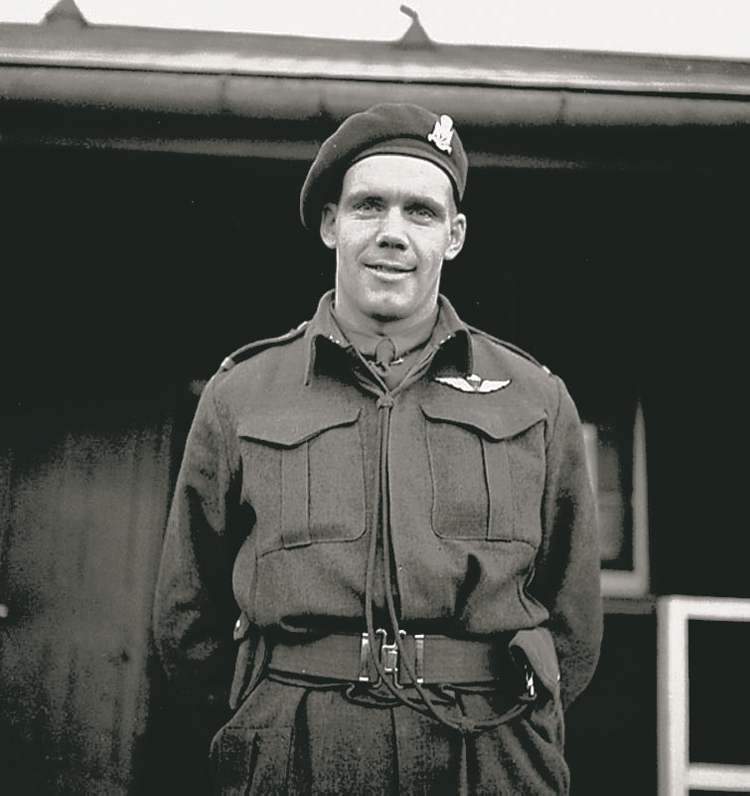
It was back overseas in 1943, this time as a major and second in command of the parachute battalion and responsible for training.
In June 1944 Nicklin narrowly escaped death on his first operational jump into enemy territory when he went off course and landed in the midst of a German-held town. His parachute snagged on a roof and he was left hanging in plain view. While under fire, Nicklin cut himself down and eventually stole out of town to rejoin his men.
On Sept. 8, 1944, at the age of 29, Nicklin took command of the battalion and was made a lieutenant-colonel.
Nicklin was tough, some said to the point of being tyrannical. Despite this, he did get respect from his men for being willing to do himself whatever he asked of them. He visited them on the front lines and participated in dangerous nighttime reconnaissance.

On March 24, 1945, the 1st Paratroop Division were part of the air invasion of the Rhine River near Wesel, Germany known as Operation Varsity. Nicklin was the first man out of the plane, but his parachute got caught up in a tree and he never reached the ground. His body was found two days later with a number of gunshot wounds to the abdomen. He is buried with his parachute in the Groesbeek Canadian War Cemetery, Netherlands.
Nicklin, 30, left behind wife Eileen, who had moved back in with her parents at 538 Rathgar Street, and a one-year-old son, David Jeff, whom he never met. Eileen remarried and died this March.
In September 1945 the 1st Canadian Parachute Division donated a trophy bearing Nicklin’s name to be awarded to the most outstanding player in the Western senior rugby football league. When the CFL was formed in Winnipeg in 1956, it kept the award and the Jeff Nicklin Memorial Trophy is still presented each year.
Christian Cassidy blogs about local history at his blogs West End Dumplings and This Was Manitoba.