

Public sees man who escaped justice
'What's clear to the general public is foggy to the people who make the decisions'

Advertisement
Read this article for free:
or
Already have an account? Log in here »
To continue reading, please subscribe:
Monthly Digital Subscription
$1 per week for 24 weeks*
- Enjoy unlimited reading on winnipegfreepress.com
- Read the E-Edition, our digital replica newspaper
- Access News Break, our award-winning app
- Play interactive puzzles
*Billed as $4.00 plus GST every four weeks. After 24 weeks, price increases to the regular rate of $19.95 plus GST every four weeks. Offer available to new and qualified returning subscribers only. Cancel any time.
Monthly Digital Subscription
$4.99/week*
- Enjoy unlimited reading on winnipegfreepress.com
- Read the E-Edition, our digital replica newspaper
- Access News Break, our award-winning app
- Play interactive puzzles
*Billed as $19.95 plus GST every four weeks. Cancel any time.
To continue reading, please subscribe:
Add Free Press access to your Brandon Sun subscription for only an additional
$1 for the first 4 weeks*
*Your next subscription payment will increase by $1.00 and you will be charged $16.99 plus GST for four weeks. After four weeks, your payment will increase to $23.99 plus GST every four weeks.
Read unlimited articles for free today:
or
Already have an account? Log in here »
Hey there, time traveller!
This article was published 02/11/2013 (4543 days ago), so information in it may no longer be current.
We have always asked a lot of Robert Taman.
The husband of Crystal Taman, who was killed in 2005 when her car was struck by a truck driven by an off-duty Winnipeg police officer, has been called upon repeatedly to make sense out of the madness that surrounds his wife’s death and the ensuing police investigation.
Friday was no exception. It was just a few moments after provincial court Judge Kelly Moar acquitted former East St. Paul police chief Harry Bakema of perjury, obstruction and breach of trust charges. Bakema was accused of corrupting the investigation, allowing off-duty cop Derek Harvey-Zenk to avoid incarceration.
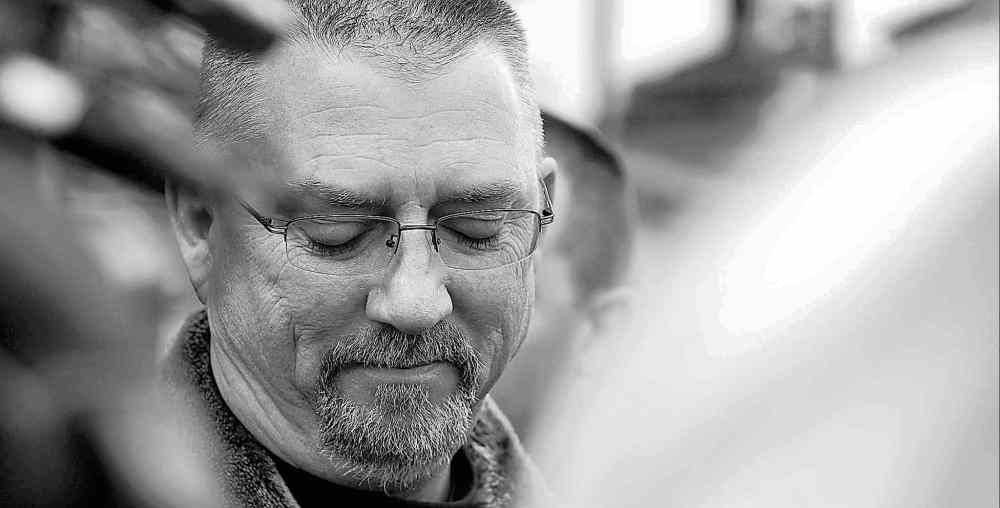
Surrounded by journalists outside the Law Courts Building, Robert Taman said what so many other people would be thinking in the wake of Bakema’s acquittal.
“What’s clear to the general public is foggy to the people who make the decisions,” he said, his eyes watering and his expression one of abject despondency.
Indeed. Perhaps it is Justice Moar’s bad luck that he was deliberating on the fate of a man whose actions were laid bare in a 2008 judicial inquiry. It is that inquiry that informed the public about the steps Bakema took to shield Harvey-Zenk from prosecution.
Inquiry commissioner Roger Salhany demonstrated no ambivalence about Bakema’s actions or the effect they had on the investigation. “It is clear that Bakema’s conduct, indeed his misconduct, had a devastating effect on the ability of a prosecutor to proceed with alcohol-related charges,” he wrote.
Salhany found Bakema not only falsified his notes, he encouraged other officers to do the same and to suppress observations and evidence about Harvey-Zenk’s intoxication. Salhany could not assign criminal responsibility for any of the transgressions he uncovered. However, his report formed the basis of a Crown decision to lay charges against Bakema.
How and why did Justice Moar disagree with the view of the inquiry and the Crown? Despite evidence Bakema had attempted to conceal or obscure Harvey-Zenk’s level of intoxication, Moar found the evidence to be less than airtight.
In an ironic twist, Moar was concerned the testimony of several witnesses against Bakema differed from testimony they delivered at the judicial inquiry. He also worried about the absence of police notes on which to base the testimony.
In general, Moar said it was clear Bakema and the East St. Paul police were “not equipped” to deal with the Taman case. Moar said Bakema was guilty of many bad decisions. However, the judge said his actions and decisions fell short of being criminal.
“Why he acted that way is something only he knows,” Moar said.
It should be noted Moar was not bound by the inquiry findings. And he was obligated to thoroughly test any evidence in his court to ensure it is worthy of supporting a criminal charge. However, there are aspects of the decision that certainly seem to be generous to the accused.
First, Moar’s assertion Bakema and the East St. Paul police were in over their heads is questionable. This was a tragic event, but had it been handled professionally from the outset, it would not have been a difficult case to manage. All the evidence was there. The driver of the vehicle who caused the collision was still at the scene. Bakema and his force had the experience and the tools to not only document the crime scene, but collect evidence showing conclusively whether Harvey-Zenk was impaired. Bakema repeatedly demonstrated his knowledge of how to manage a crime scene like that with each decision he made to stop others from documenting Harvey-Zenk’s intoxication.
This was not a whodunnit murder, a complicated fraud, or a series of unsolved sexual assaults. The only thing that made this case unique was the fact the man who plowed into the back of Taman’s car was a cop.

All along, the obstruction of justice charge was the key allegation in this case. In his comments about Bakema and the East St. Paul police being in over their heads, we have to deduce Moar did not find Bakema acted wilfully to obstruct the investigation.
To be guilty of obstruction, the accused must have known there was a natural consequence of his actions, namely a corrupted investigation. We can only assume Moar did not find Bakema’s actions wilful. This was essentially the argument put forward by Bakema’s lawyer, who described his client’s actions as “unintentional errors.”
Robert Taman was right. The public will not understand the vagaries that allowed Bakema to escape justice on these charges. However, the public does understand police officers are often the beneficiaries of the systemic doubt demonstrated in this case.
And that even the most obvious evidence of wilful illegality can always, given the right accused, be explained away as unintentional errors.
dan.lett@freepress.mb.ca
Dan Lett is a columnist for the Free Press, providing opinion and commentary on politics in Winnipeg and beyond. Born and raised in Toronto, Dan joined the Free Press in 1986. Read more about Dan.
Dan’s columns are built on facts and reactions, but offer his personal views through arguments and analysis. The Free Press’ editing team reviews Dan’s columns before they are posted online or published in print — part of the our tradition, since 1872, of producing reliable independent journalism. Read more about Free Press’s history and mandate, and learn how our newsroom operates.
Our newsroom depends on a growing audience of readers to power our journalism. If you are not a paid reader, please consider becoming a subscriber.
Our newsroom depends on its audience of readers to power our journalism. Thank you for your support.
Dan Lett is a columnist for the Free Press, providing opinion and commentary on politics in Winnipeg and beyond. Born and raised in Toronto, Dan joined the Free Press in 1986. Read more about Dan.
Dan’s columns are built on facts and reactions, but offer his personal views through arguments and analysis. The Free Press’ editing team reviews Dan’s columns before they are posted online or published in print — part of the our tradition, since 1872, of producing reliable independent journalism. Read more about Free Press’s history and mandate, and learn how our newsroom operates.
Our newsroom depends on a growing audience of readers to power our journalism. If you are not a paid reader, please consider becoming a subscriber.
Our newsroom depends on its audience of readers to power our journalism. Thank you for your support.
Related Articles
Justice delayed, justice denied
Advertisement Advertise With Us
Advertisement Advertise With Us
History
Updated on Saturday, November 2, 2013 12:27 PM CDT: fixed cutline