

Bears, whales and crude oil don’t mix
Advertisement
Read this article for free:
or
Already have an account? Log in here »
To continue reading, please subscribe:
Monthly Digital Subscription
$1 per week for 24 weeks*
- Enjoy unlimited reading on winnipegfreepress.com
- Read the E-Edition, our digital replica newspaper
- Access News Break, our award-winning app
- Play interactive puzzles
*Billed as $4.00 plus GST every four weeks. After 24 weeks, price increases to the regular rate of $19.95 plus GST every four weeks. Offer available to new and qualified returning subscribers only. Cancel any time.
Monthly Digital Subscription
$4.99/week*
- Enjoy unlimited reading on winnipegfreepress.com
- Read the E-Edition, our digital replica newspaper
- Access News Break, our award-winning app
- Play interactive puzzles
*Billed as $19.95 plus GST every four weeks. Cancel any time.
To continue reading, please subscribe:
Add Free Press access to your Brandon Sun subscription for only an additional
$1 for the first 4 weeks*
- Enjoy unlimited reading on winnipegfreepress.com
- Read the E-Edition, our digital replica newspaper
- Access News Break, our award-winning app
- Play interactive puzzles
*Your next Brandon Sun subscription payment will increase by $1.00 and you will be charged $17.95 plus GST for four weeks. After four weeks, your payment will increase to $24.95 plus GST every four weeks.
Read unlimited articles for free today:
or
Already have an account? Log in here »
Hey there, time traveller!
This article was published 09/01/2014 (4507 days ago), so information in it may no longer be current.
The first warden of Wapusk National Park near Churchill says an oil spill along Manitoba’s northern rail line could be “horrendous” for polar bears.
Doug Clark, now a professor in the University of Saskatchewan’s School of Environment and Sustainability, said the Hudson Bay Railway crosses the Owl and Broad rivers, the heart of the polar bear denning area in Manitoba. A derailment and spill anywhere in that large region, where the mushy permafrost already wreaks havoc on the rail line, would be disastrous for polar bears, said Clark.
Polar bears are curious and are drawn to anything oily and plastic, and will likely come in contact with any spill.
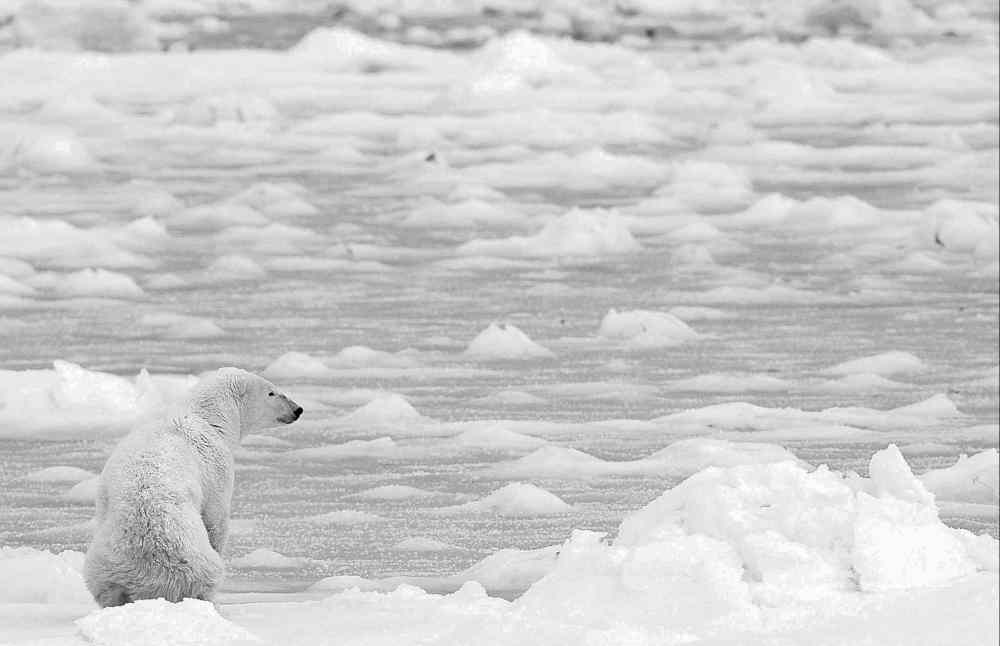
Clark, who lived in Churchill for three years and still studies polar bears and environmental change, pointed to a controversial and seminal 1980 study by a Norwegian scientist who dunked four Churchill polar bears in a briny, oily solution to test the effects of crude oil on the bears’ physiology. Most of the bears died “really fast and really badly,” said Clark.
“When it comes to polar bear populations, (shipping oil by rail) is probably one of the most dangerous things that could ever be considered,” said Clark. “Crude oil is horrendously toxic to polar bears. I don’t mind using the word horrendous, because it is.”
A spill closer to the port could also be devastating to beluga whales that congregate every summer in the Churchill River’s estuary. There, warm water and fish abound, and tourists visit by the thousands to catch a glimpse of the whales.
Gasoline, diesel and other light petroleum products are already shipped by rail to the port. But Clark says Omnitrax’s plan to begin shipping crude oil amounts to a huge increase in the amount of petroleum products on the line.

And, crude oil is far more difficult to clean up, especially in the vast, shallow sponge that is permafrost.
“It gets into the system, it sinks and it stays,” he said.
Related Articles
Omnitrax gets oil-spill ready
Advertisement Advertise With Us