

Toy story WITH A TWIST
Lego Movie directors had doubts about surprise ending
Advertisement
Read this article for free:
or
Already have an account? Log in here »
To continue reading, please subscribe:
Monthly Digital Subscription
$1 per week for 24 weeks*
- Enjoy unlimited reading on winnipegfreepress.com
- Read the E-Edition, our digital replica newspaper
- Access News Break, our award-winning app
- Play interactive puzzles
*Billed as $4.00 plus GST every four weeks. After 24 weeks, price increases to the regular rate of $19.95 plus GST every four weeks. Offer available to new and qualified returning subscribers only. Cancel any time.
Monthly Digital Subscription
$4.99/week*
- Enjoy unlimited reading on winnipegfreepress.com
- Read the E-Edition, our digital replica newspaper
- Access News Break, our award-winning app
- Play interactive puzzles
*Billed as $19.95 plus GST every four weeks. Cancel any time.
To continue reading, please subscribe:
Add Free Press access to your Brandon Sun subscription for only an additional
$1 for the first 4 weeks*
*Your next subscription payment will increase by $1.00 and you will be charged $16.99 plus GST for four weeks. After four weeks, your payment will increase to $23.99 plus GST every four weeks.
Read unlimited articles for free today:
or
Already have an account? Log in here »
Hey there, time traveller!
This article was published 23/02/2014 (4401 days ago), so information in it may no longer be current.
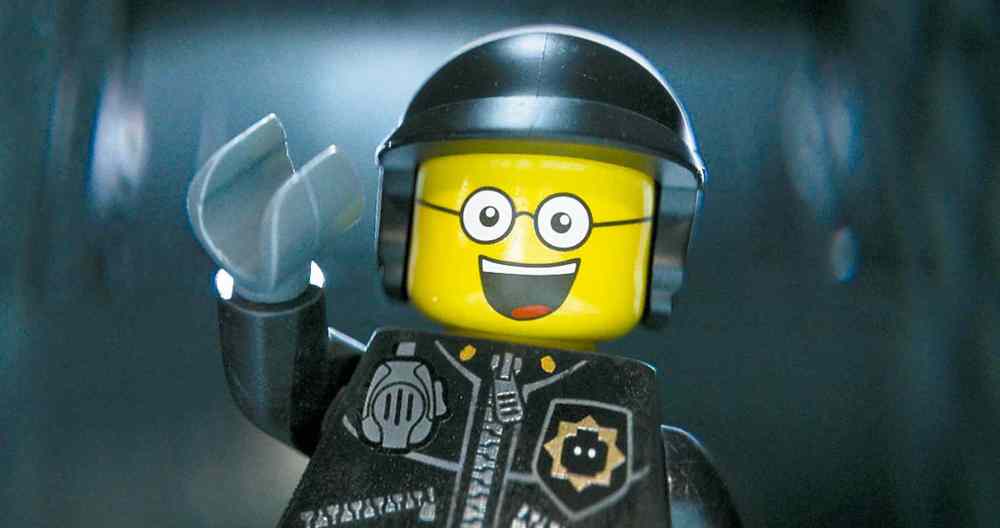
LOS ANGELES — Of the many unexpected moments in Phil Lord and Chris Miller’s breakout hit The Lego Movie, perhaps none is as surprising as the film’s ending, which is daring even by the standards of this unconventional film.
So daring, in fact, even its filmmakers weren’t sure they should include it.
“We were terrified,” said Miller, who co-directed the film with Lord. “We didn’t know if you would care about the universe once you understood how the universe worked,” alluding to how the movie turns itself inside-out at the end.

In a season in which the typically tricky art of the movie ending has largely satisfied — witness the well-regarded twist in American Hustle, the Quaalude-enabled pièce de résistance of The Wolf of Wall Street and the return-to-Earth redemption of Gravity — the finale of Lego might top them all.
Warner Bros., which financed and released The Lego Movie, was initially unsure about the finale, and for a time pushed the filmmakers to consider a more conventional path. It had reason for hesitating.
(Spoiler alert: The following has details about the film’s ending).
Just when audiences think they’ve seen it all — Abraham Lincoln exasperatedly leaving a convocation that includes the Green Lantern and Shaquille O’Neal, for instance — the movie separates from itself at the end, as hero Emmet (Chris Pratt) and the entire movie that preceded it is revealed to be the figment of a young (live-action) boy’s fertile mind.
Everything that happens — the use of Krazy Glue as a weapon, the God-like power of Morgan Freeman’s Vitruvius, a kitchen-sink ensemble that also includes Batman and the Teenage Mutant Ninja Turtles — does so because the boy, a basement-playing child named Finn, took the ordinary and turned it into the stuff of epic storytelling.
And the villain? He’s inspired by the boy’s stern father, referred to as the man upstairs in the animated section because he, of course, lives upstairs. At the film’s end, the man (Will Ferrell) comes down to the basement and lets the boy have it for playing with his Lego kits, though the two eventually find common ground.
It would all be as if, at the end of Gravity, Sandra Bullock turned to the camera and said she had imagined the whole space adventure and has been on Earth the entire time.
Noting as inspiration the series finales of St. Elsewhere and Newhart (both ’80s shows ended with the suggestion all that came before was the product of someone’s imagination), Lord and Miller said they believed their ending played directly to the film’s message.
“The kid is making connections that adults aren’t making,” Lord said. “He’s making connections you can’t make as you get older and your thinking gets more rigid. And we couldn’t really set up that dichotomy without including the last scenes.”
He added, “It just seemed intrinsic to the concept.”
Audiences certainly have responded — they gave the movie an “A” CinemaScore and turned out in droves to see it again last weekend, ensuring it won the box-office crown for the second weekend in a row. The film collected a whopping $146 million in its first 12 days of release.
The numbers might be validation for the filmmakers’ approach to the ending but, during post-production, studio executives weren’t convinced. They wondered if the surprise was too meta for kids and the twist too jarring for everyone else, says a person close to the production who asked not to be identified because of the sensitive nature of the issue. Lord and Miller held their ground, the person said, and the studio relented.
The ending had an unusual, well, beginning. Dan and Kevin Hageman, the project’s initial writers and the men who sold the Lego company on the concept of the film, also included a switch to live action at the end of their script. But they didn’t have, as Kevin Hageman put it, an “epic meta twist.” Instead, their story shifted to real-life people without suggesting all that came before was in the mind of one of the characters.
When Lord and Miller came on, they upped the ante and introduced the rug-pull.
“It’s such a jarring twist, one of those things that can turn super-schmaltzy,” Dan Hageman said. “But it also is what the movie is about, this idea of childhood and adulthood, of fathers and sons, which is why I think it works.”
Shooting the ending required a very different use of the film’s actors. Ferrell was already cast, playing the voice of the animated movie’s antagonist, Lord Business. Lord and Miller then found a child actor named Jadon Sand to play Finn; his wide-eyed innocence and dark-haired curls suggested a boy who might mentally create the adventures seen in the film. Oddly enough, Sand had worked previously as an unseen voice in animated films, including Wreck-It Ralph and Frozen.
The scenes also required another set of skills, drawing on Lord and Miller’s background directing the live-action 21 Jump Street and the movie’s upcoming sequel, in addition to their animation bona fides on the animated franchise Cloudy With a Chance of Meatballs.
Even after production wrapped, the ending presented challenges. Producer Dan Lin noted the task of keeping it a surprise during promotional efforts — not easy in a world where blog posts can reveal a movie’s intimate plot points and social media can carry them around the world with blazing speed.
For the most part, it worked.
Though the main coup is the suggestion the film was the product of someone’s imagination, filmmakers couldn’t resist other wrinkles. So they hinted at a sequel by introducing the idea of Finn’s sister, who loves the younger-skewing toy Duplo. (It is not known if a planned sequel will in fact include this element, though Duplo is also made by Lego.)
Adding to the father-son theme, the voice of Finn’s sister is played by Lord’s own son, his high voice at the time sounding like a girl.
So are Lord and Miller happy with the meta-universe they created?

“What we kind of wanted to go for throughout the movie was ask questions about why characters are behaving this way,” Lord said. “We spent a lot of time trying to figure out the right tone and level of magic, whether there really is a Lego universe where toys are alive or it’s just someone’s imagination. So yes. I think so.”
He paused. “I hope so.”
— Los Angeles Times