

Learning how to help patients who are dying
Workshop attracts 50 experts
Advertisement
Read this article for free:
or
Already have an account? Log in here »
To continue reading, please subscribe:
Digital Subscription
One year of digital access for only $1.44 a week*
- Enjoy unlimited reading on winnipegfreepress.com
- Read the E-Edition, our digital replica newspaper
- Access News Break, our award-winning app
- Play interactive puzzles
*Billed as $5.77 plus GST every four weeks. After 52 weeks, price increases to the regular rate of $19.95 plus GST every four weeks. Offer available to new and qualified returning subscribers only. Cancel any time.
To continue reading, please subscribe:
Add Free Press access to your Brandon Sun subscription for only an additional
$1 for the first 4 weeks*
- Enjoy unlimited reading on winnipegfreepress.com
- Read the E-Edition, our digital replica newspaper
- Access News Break, our award-winning app
- Play interactive puzzles
*Your next Brandon Sun subscription payment will increase by $1.00 and you will be charged $17.95 plus GST for four weeks. After four weeks, your payment will increase to $24.95 plus GST every four weeks.
Read unlimited articles for free today:
or
Already have an account? Log in here »
Hey there, time traveller!
This article was published 29/05/2014 (4393 days ago), so information in it may no longer be current.
FIFTY medical experts from Singapore to San Diego are in Winnipeg today and Friday to learn how to help the terminally ill in a way you can’t teach in a lab or get from a painkiller.
They’ll leave the city that pioneered hospital-based palliative care with a kind of intellectual tool kit: how to turn time into a recognized form of therapy, a speciality of its own.
Studies show professionals who spend the right kind of time with patients can ease their passage, mentally and psychologically, helping them cope and prepare for the process of dying.
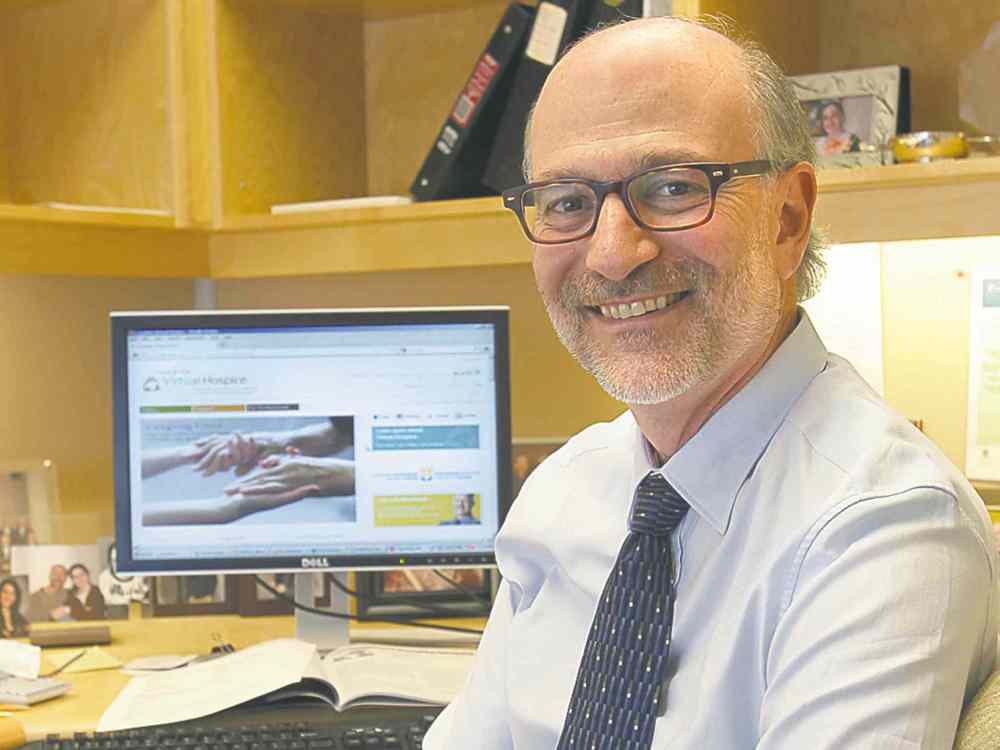
The work has given Winnipeg a reputation in the speciality, and after seven years, annual workshops in Winnipeg can no longer meet international demand.
“We’ve tried to hold at least one other workshop in some other site around the world (each year),” said dignity-therapy pioneer and Winnipeg psychiatrist Dr. Harvey Chochinov.
“Earlier this year, we held a similar workshop in Australia. The year before in San Diego and before that… in China,” said Chochinov, who — among his other titles — holds the only research chair in palliative care in Canada.
Chochinov is a distinguished professor at the University of Manitoba.
This week’s workshop signed up doctors, nurses, social workers, psychologists and health-care chaplains from Tobago, India, Singapore, Italy, Germany, Turkey, the United States and Canada.
Chochinov’s work is critical to the palliative care unit at CancerCare Manitoba, which he serves as director. The unit, with other experts including Dr. Paul Henteleff, has grown into a brain trust for the therapy.
“The work we’ve done has been able to explore in careful detail and in an unprecedented way issues that are related to dignity and the importance of dignity near end of life,” Chochinov said. Studies in top peer-reviewed medical journals have given the therapy developed here worldwide exposure and shown they improve a terminal patient’s final stages of life.
Patients report a heightened sense of dignity, of meaning and purpose; a sense they can attend to unfinished business. “For family, this is something that has been invariably a help to their loved ones (70 per cent in one study, 65 per cent in another study), as much as anything else that was done in palliative care,” Chochinov said.

In Winnipeg, psychosocial therapists at CancerCare are now trained in the technique. The Canadian Cancer Society supports efforts to train doctors and professionals in the province.
Dr. Lori Montross, a licensed counselling psychologist and assistant professor at the University of California in San Diego, is in Winnipeg to help run the workshops.
Instrumental in the introduction of dignity therapy in the United States at the San Diego Hospice in 2009, Montross said the work is why she got into health care in the first place.
“It’s the most rewarding work I have ever done, so much so, it doesn’t feel like work… to be able to dedicate time to listen to patients to gather their important life stories and honour what their journey has been throughout their life,” Montross said.
alexandra.paul@freepress.mb.ca