

In conversation with Andrew Derocher
Advertisement
Read this article for free:
or
Already have an account? Log in here »
To continue reading, please subscribe:
Monthly Digital Subscription
$1 per week for 24 weeks*
- Enjoy unlimited reading on winnipegfreepress.com
- Read the E-Edition, our digital replica newspaper
- Access News Break, our award-winning app
- Play interactive puzzles
*Billed as $4.00 plus GST every four weeks. After 24 weeks, price increases to the regular rate of $19.95 plus GST every four weeks. Offer available to new and qualified returning subscribers only. Cancel any time.
Monthly Digital Subscription
$4.99/week*
- Enjoy unlimited reading on winnipegfreepress.com
- Read the E-Edition, our digital replica newspaper
- Access News Break, our award-winning app
- Play interactive puzzles
*Billed as $19.95 plus GST every four weeks. Cancel any time.
To continue reading, please subscribe:
Add Free Press access to your Brandon Sun subscription for only an additional
$1 for the first 4 weeks*
*Your next subscription payment will increase by $1.00 and you will be charged $16.99 plus GST for four weeks. After four weeks, your payment will increase to $23.99 plus GST every four weeks.
Read unlimited articles for free today:
or
Already have an account? Log in here »
Hey there, time traveller!
This article was published 15/11/2014 (4158 days ago), so information in it may no longer be current.
While the rest of us might not like it much, the drop in temperatures this time of year is good news for polar bears and their fans.
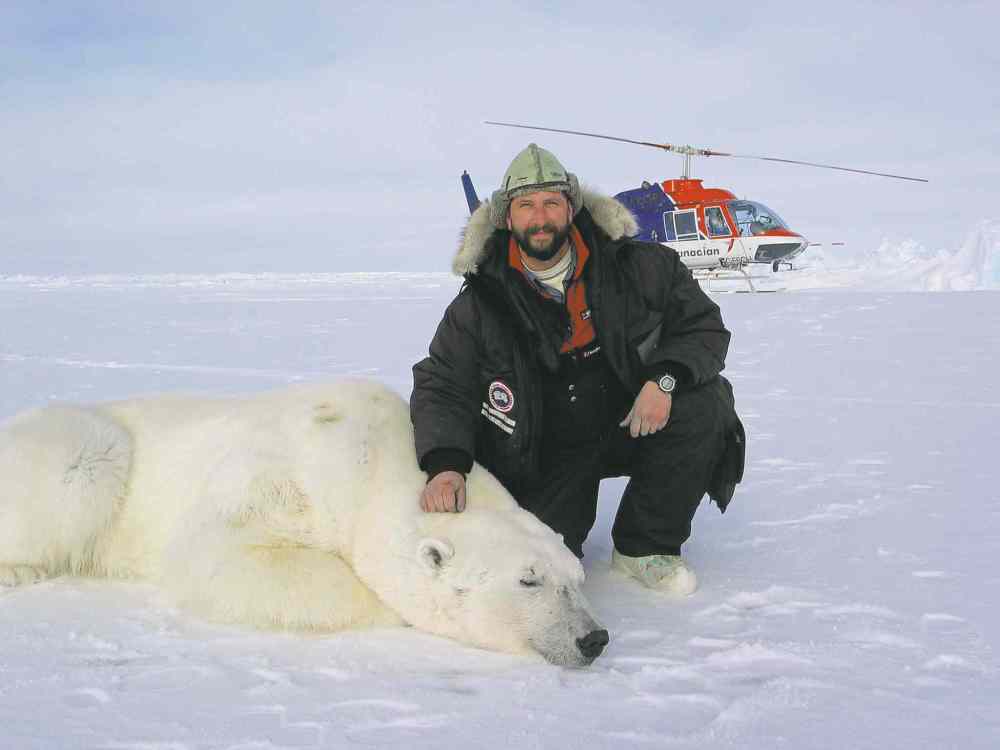
Every year around now, as Winnipeggers pull out hats and mitts, polar bears gather near Churchill to wait for Hudson Bay to freeze over so they can get back to hunting seals. It’s also time for Polar Bear Week, led by Polar Bears International, which is a recently concluded week-long celebration of the massive Arctic predators. A team of scientists headed to the area around Churchill to study the bears, and one of them, Andrew Derocher from the University of Alberta, answered some Free Press questions from there.
Q: Experts say polar bears are struggling. What’s the biggest challenge facing polar bears right now?
A: The No. 1 issue we’ve got is climate change and habitat loss. The simplest way to think about a polar bear is it is a sea-ice obligate species. It has to live on the ice… All their energy really comes from out on the sea ice; way over 95 per cent of it comes from out on the ice, eating seals. If you take away their habitat, they’re no different than any other species… But for some reason, people sort of transpose these sort of ‘super-bear’ characteristics onto polar bears, that they must be able to adapt. And there’s no way.
Q: Some research indicates polar bears are as smart as apes. Can you shed some light on that?
A: Yeah, I don’t know. I mean, polar bears are incredibly intelligent. I think they’re kind of these one-time learners. If they get some positive reinforcement, they figure that out really quickly… And bears in general are pretty good at problem solving. You watch them come around the Tundra Buggies here, and you can see the wheels are turning, they’re thinking, ‘OK, it smells kind of interesting up there.’ They’re trying to figure out, is there something in there, but they’re also very cautious, and that’s another thing that probably comes with intellect… They live in a pretty tricky environment. Put it this way: navigation skills? They smoke us. And we’re just big monkeys, right? They can go several hundred kilometres or miles out on the ice and find their way exactly back to the same little point a year later where they want to hang out.
Q: Why do you think polar bears have captured the imaginations of so many Canadians?
A: It’s interesting. I think people just like bears. That’s the first thing. But then you get sort of this drop-dead gorgeous bear that’s kind of white with these little black eyes and these nice little ears and they’re kind of sweet and the cubs are just, you know, to die for. So there’s something there that’s familiar and comforting. But… there’s kind of this flip side. Because if you actually see the photos of bears where they’re covered in blood from ripping apart a seal or walrus or something, and it’s sort of like this beauty and the beast all in one. It’s kind of this melding of the danger and beauty, and I think there’s something alluring to that. And, you know, culturally we’ve been around polar bears a long time; they go way back in our history. And so people have interacted with them in different ways…
Q: Do you have a favourite polar bear fact?
A: I think, for me, I think it’s the area that they cover. A polar can move over an area of about 600,000 square kilometres in a year. If you compare that to an Arctic grizzly bear… they’d maybe move over 1,000 square kilometres. These are two Arctic bears, and one is moving 600 times farther. We’ve got bears that go from the western part of the Canadian Arctic all the way across Alaska and end up in Russia and then some of them turn around and come back in a single year.

Q: Given the tough situation they’re in now, what would have to happen to protect polar bears?
A: I think more than anything else, we have to start looking at where our energy is coming from much more seriously. So individuals have to cut down their use and their expectations of future use. But also we need technology to come on board and basically find ways for us to use much less hydrocarbon fuel. So one of the first things we’ve got to get rid of, coal. Coal is one of the biggest problems we’ve got. We’ve got to look to technology. It’s a numbers game, and we have to get the amount of carbon in the atmosphere down. I suppose we could look at technologies like carbon storage, but we’re not really there yet. So the sooner we act, the better it’s going to be for the bears.
Q: How can Canadians help?
A: Number one is they have to be informed about climate change. That’s the No. 1 thing… You have to understand the problem if you want to find a solution. And once you understand the problem, you really have to start leaning on your politicians. They have to understand that this is an issue that needs to be solved from an intergenerational fairness perspective. I mean, we have a window of time where we can act to save polar bears, but when I view it, what we’re really talking about is trying to maintain sort of civilization as we know and not try to basically affect those that are already disadvantaged on a global context. Right now, it’s about polar bears, but in another 10, 20 years, it’s going to be about people having to undergo mass migration. And at that stage we’re going to be worried about people, we’re not going to be worried about polar bears.