

For NDP, March 8 a day of bad luck
Comparing infamous date with current crisis

Advertisement
Read this article for free:
or
Already have an account? Log in here »
To continue reading, please subscribe:

Digital Subscription
One year of digital access for only $205*
- Enjoy unlimited reading on winnipegfreepress.com
- Read the E-Edition, our digital replica newspaper
- Access News Break, our award-winning app
- Play interactive puzzles
*First annual payment billed as $205.00 + GST for one year. This annual subscription will automatically renew at $233.00 + GST every 52 weeks (10% off the regular annual price of $259.35). Offer available to new and qualified returning subscribers only. Cancel any time.
To continue reading, please subscribe:
Add Free Press access to your Brandon Sun subscription for only an additional
$1 for the first 4 weeks*
- Enjoy unlimited reading on winnipegfreepress.com
- Read the E-Edition, our digital replica newspaper
- Access News Break, our award-winning app
- Play interactive puzzles
*Your next Brandon Sun subscription payment will increase by $1.00 and you will be charged $17.95 plus GST for four weeks. After four weeks, your payment will increase to $24.95 plus GST every four weeks.
Read unlimited articles for free today:
or
Already have an account? Log in here »
Hey there, time traveller!
This article was published 05/01/2015 (4214 days ago), so information in it may no longer be current.
As harbingers go, this is not a good one for the future prospects of the Manitoba New Democratic Party.
As most Manitobans now know, the NDP has decided to use its March annual convention to settle the leadership crisis that has seen Premier Greg Selinger battling dissidents bent on forcing him to yield the reins of the party.
The leadership vote will take place in Winnipeg on March 8, a date that already lives in infamy in NDP history.
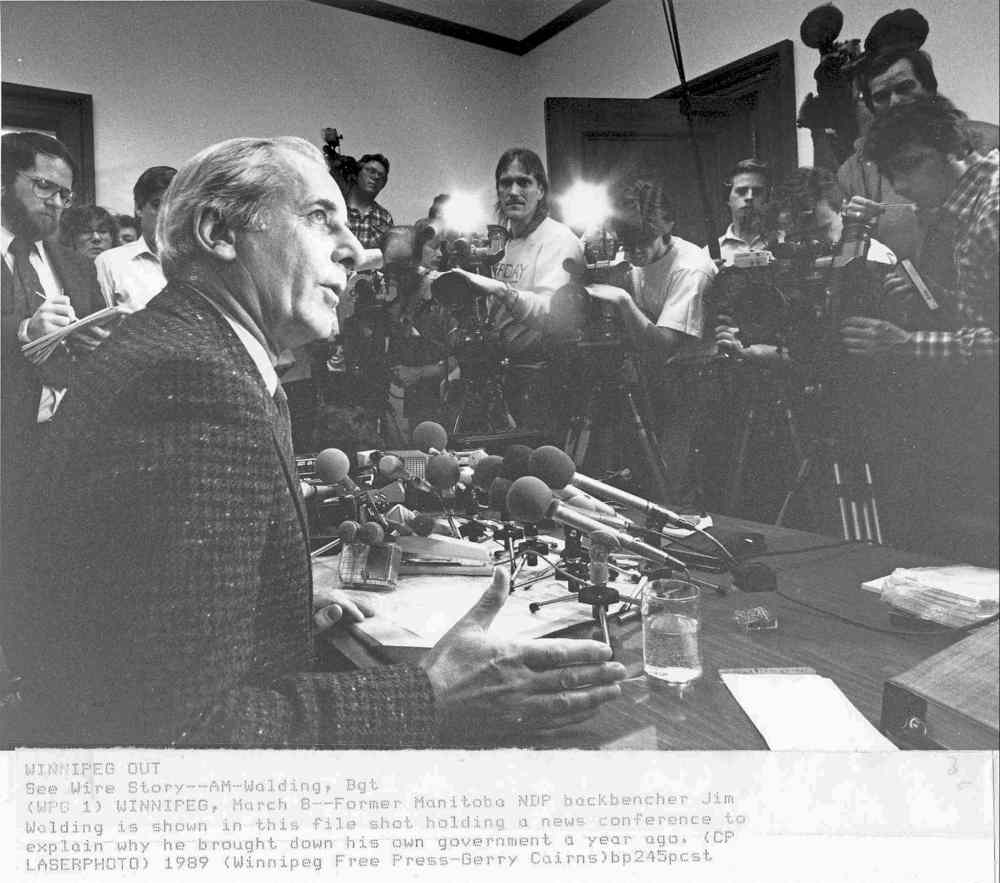
For it was on March 8, 1988, that NDP MLA Jim Walding stunned the government of premier Howard Pawley by voting with the Opposition PCs on a confidence motion. Walding’s mutiny led to Pawley’s resignation, an election and 11 years in opposition for the NDP.
For many New Democrats, the perverse coincidence that will see the party vote for a new leader on the very day Walding brought down an NDP government 26 years earlier is symbolically important.
Some see the Walding fiasco as a clear example of how besieged premiers often have to sacrifice their own political careers for the greater good of the party. And there are elements of the Walding affair that lend themselves to that interpretation.
Late on that March 8 night, just a few hours after the government had failed to maintain the confidence of the legislature, senior cabinet ministers and political staff gathered in the second-floor cabinet room to strategize. Pawley had already left the building.
Michael Balagus, a former chief of staff to premier Gary Doer who was also Pawley’s press secretary, remembers the discussions that night centred on whether an election had to be called (it did) and whether Pawley could lead the party into that electoral contest.
In the final analysis, it was determined Pawley could not continue.
His government was extremely unpopular at the time, and even though he could not have anticipated Walding’s treasonous behaviour, Pawley could not escape the fact the government fell on his watch.
The group decided Cliff Scott, the premier’s chief of staff, would be the one to broach the subject with Pawley. Balagus said Pawley accepted the reality of his situation and did the honourable thing.
“The decision to ask Howard to step down wasn’t about disloyalty,” he said. “This was a group of people looking at the writing on the wall and making the only decision possible.”
Selinger seems committed to fighting to the death on this one
That interpretation of the Pawley-Walding incident surely lends a lot of credibility to the efforts of some within the NDP elected caucus — including the five dissident cabinet ministers who blew this internal dispute wide open — to force Selinger to step down before the next election.
Last spring, Selinger was approached, at his invitation, by a number of ministers and MLAs who believed he could not win the next provincial election. He also reportedly had frank discussions with his closest political aides. All told the premier his botched efforts to sell the public on the virtue of raising the PST by one point to fund infrastructure made him the wrong man to continue leading the party.
Unlike Pawley, Selinger did not accept this advice from his caucus colleagues and advisers. In fact, it appears despite asking people to speak freely, he never seriously considered stepping down. Now facing a runoff with former cabinet ministers Steve Ashton and Theresa Oswald, Selinger seems committed to fighting to the death on this one.
It would be easy to compare the dilemmas facing Selinger and Pawley and conclude the former should take a page out of the book of the latter and resign to allow his party a chance to rebrand and rebuild.
In fact, a bit too easy.
There are similarities in the narratives of the two premiers. But there are also differences to dispute the notion Selinger should pull a Pawley and just resign.
First and foremost, it’s important to remember Selinger is not facing an immediate crisis, as Pawley was in 1988.
The Selinger government has not fallen, and even though five cabinet ministers have resigned, there is no immediate threat the dissidents will help the opposition force an early election.
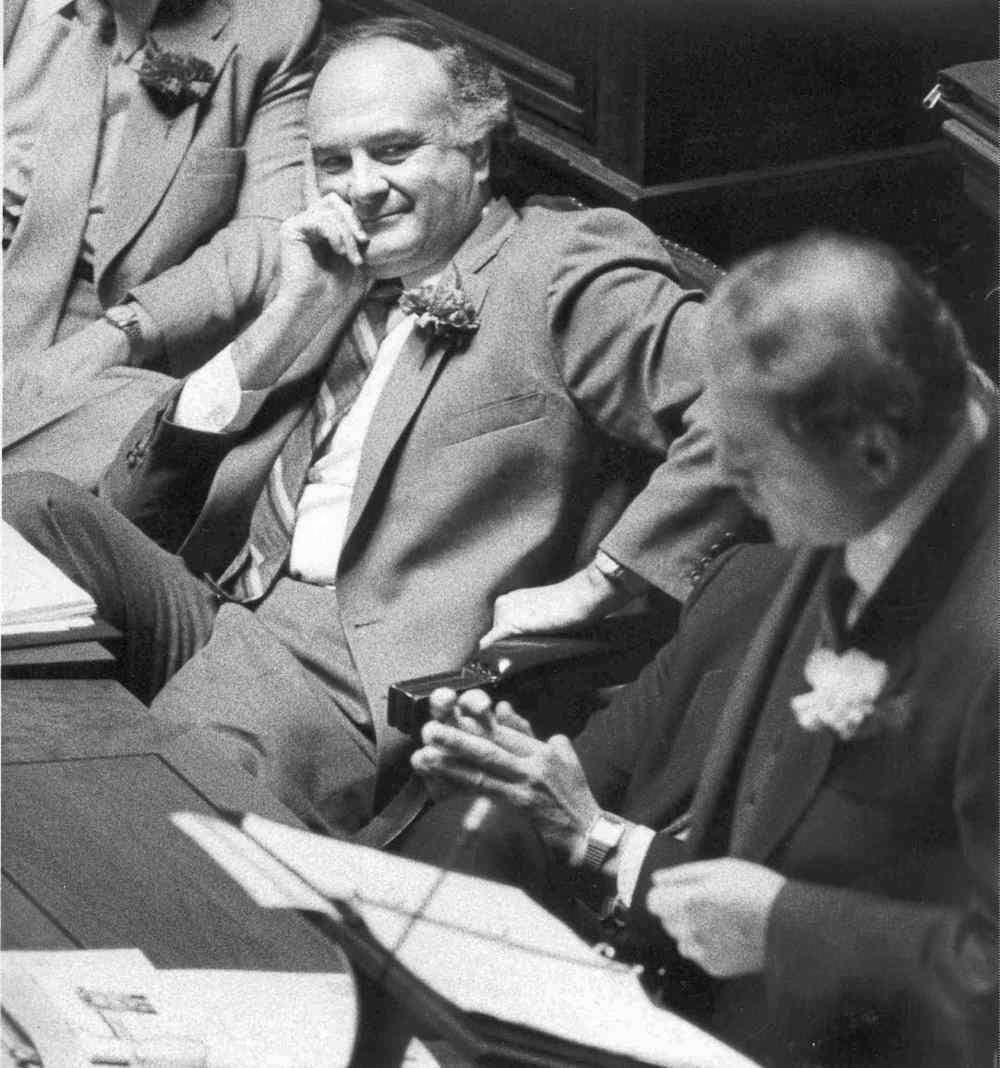

Second, even though an argument has been made for Selinger’s resignation, it’s important to remember Pawley’s decision to step down did not serve as a lifeline for the NDP. In fact, despite electing Doer as their new leader, the NDP was reduced to third-party status. The NDP would spend more than a decade in opposition before Doer was able to form the government.
There are other issues to consider when assessing the Selinger-Pawley comparison, and the odd coincidence that will see the NDP hold a leadership vote on a date that represents one of the greatest humiliations in the party’s long and storied history.
But when all is said and done, there is only one inescapable conclusion.
Regardless of whether Selinger wins or loses the leadership, holding an important vote on March 8 is surely not a positive sign for the future of the NDP.
dan.lett@freepress.mb.ca
Dan Lett is a columnist for the Free Press, providing opinion and commentary on politics in Winnipeg and beyond. Born and raised in Toronto, Dan joined the Free Press in 1986. Read more about Dan.
Dan’s columns are built on facts and reactions, but offer his personal views through arguments and analysis. The Free Press’ editing team reviews Dan’s columns before they are posted online or published in print — part of the our tradition, since 1872, of producing reliable independent journalism. Read more about Free Press’s history and mandate, and learn how our newsroom operates.
Our newsroom depends on a growing audience of readers to power our journalism. If you are not a paid reader, please consider becoming a subscriber.
Our newsroom depends on its audience of readers to power our journalism. Thank you for your support.
Dan Lett is a columnist for the Free Press, providing opinion and commentary on politics in Winnipeg and beyond. Born and raised in Toronto, Dan joined the Free Press in 1986. Read more about Dan.
Dan’s columns are built on facts and reactions, but offer his personal views through arguments and analysis. The Free Press’ editing team reviews Dan’s columns before they are posted online or published in print — part of the our tradition, since 1872, of producing reliable independent journalism. Read more about Free Press’s history and mandate, and learn how our newsroom operates.
Our newsroom depends on a growing audience of readers to power our journalism. If you are not a paid reader, please consider becoming a subscriber.
Our newsroom depends on its audience of readers to power our journalism. Thank you for your support.
Advertisement Advertise With Us
Advertisement Advertise With Us