Series a national stage
TV show helped foster Canadian music identity
Advertisement
Read this article for free:
or
Already have an account? Log in here »
To continue reading, please subscribe:
Digital Subscription
One year of digital access for only $1.44 a week*
- Enjoy unlimited reading on winnipegfreepress.com
- Read the E-Edition, our digital replica newspaper
- Access News Break, our award-winning app
- Play interactive puzzles
*Billed as $5.77 plus GST every four weeks. After 52 weeks, price increases to the regular rate of $19.95 plus GST every four weeks. Offer available to new and qualified returning subscribers only. Cancel any time.
To continue reading, please subscribe:
Add Free Press access to your Brandon Sun subscription for only an additional
$1 for the first 4 weeks*
- Enjoy unlimited reading on winnipegfreepress.com
- Read the E-Edition, our digital replica newspaper
- Access News Break, our award-winning app
- Play interactive puzzles
*Your next Brandon Sun subscription payment will increase by $1.00 and you will be charged $17.95 plus GST for four weeks. After four weeks, your payment will increase to $24.95 plus GST every four weeks.
Read unlimited articles for free today:
or
Already have an account? Log in here »
Hey there, time traveller!
This article was published 11/01/2015 (4178 days ago), so information in it may no longer be current.
In the 1960s, there was no national music industry in Canada. While several thriving music scenes existed in regional pockets across the country, there were no nationwide charts, not even national distribution for many of the record labels. You could have a No. 1 record in Halifax that was never heard beyond the Atlantic provinces.
But one television show helped bridge those regional gaps: Music Hop. Weekdays at 5:30 p.m., CBC TV presented a half-hour, cross-country music roundup that showcased the flavours of five regional music settings. Music Hop broadcast regional talent to a wider audience and did much to foster a national music identity. Teens in Vancouver, for example, were introduced to artists from Halifax or Montreal. Similarly, Winnipeg performers were able to showcase their talents nationally. It allowed regional artists to tour beyond their local boundaries and release records nationally. In 1966, CBC boasted the show drew some one million viewers, most being under 20 years old.
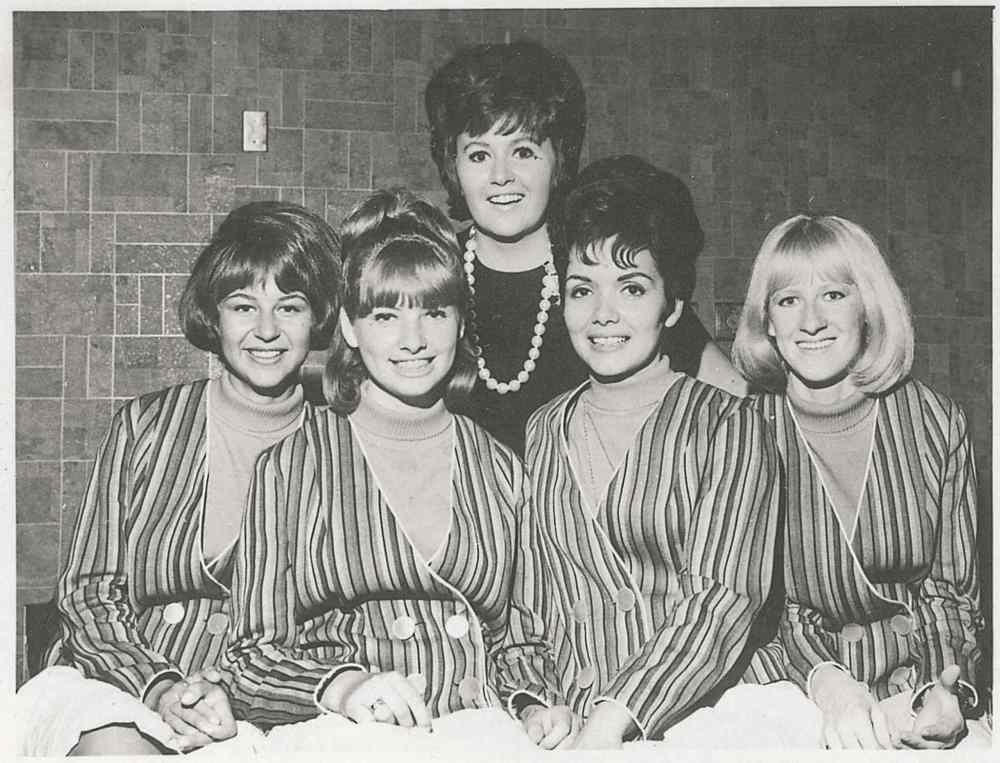
Debuting in 1963, Music Hop was initially a Toronto show hosted by Alex Trebek of Jeopardy! fame, in his first TV hosting gig. The popularity of the show led CBC to expand the concept across Canada the following year.
Vancouver’s Let’s Go aired Mondays and was hosted by CFUN DJs Fred Latremouille and Red Robinson. The house band was the CFUN Classics, led by Claire Lawrence. The group backed Latremouille on the single Latremotion and later morphed into the Collectors (and Chilliwack).
Regular vocalists on Let’s Go included ex-Winnipegger Terry Jacks, Susan Pesklevits (later Susan Jacks), Howie Vickers (who took over as host in 1967) and Tom Northcott. The Poppy Family, New Vaudeville Band, Northwest Company and former Winnipeg group the Wiggy Symphony appeared on later editions of the show.
Tuesday’s show emanated from Montreal under the title Jeunesse Oblige (Today’s Youth), hosted by singer Pierre Lalonde and featured many of Quebec’s biggest performers, most of whom were unknown to anglophone audiences (although I do recall seeing JB & the Playboys on the show).
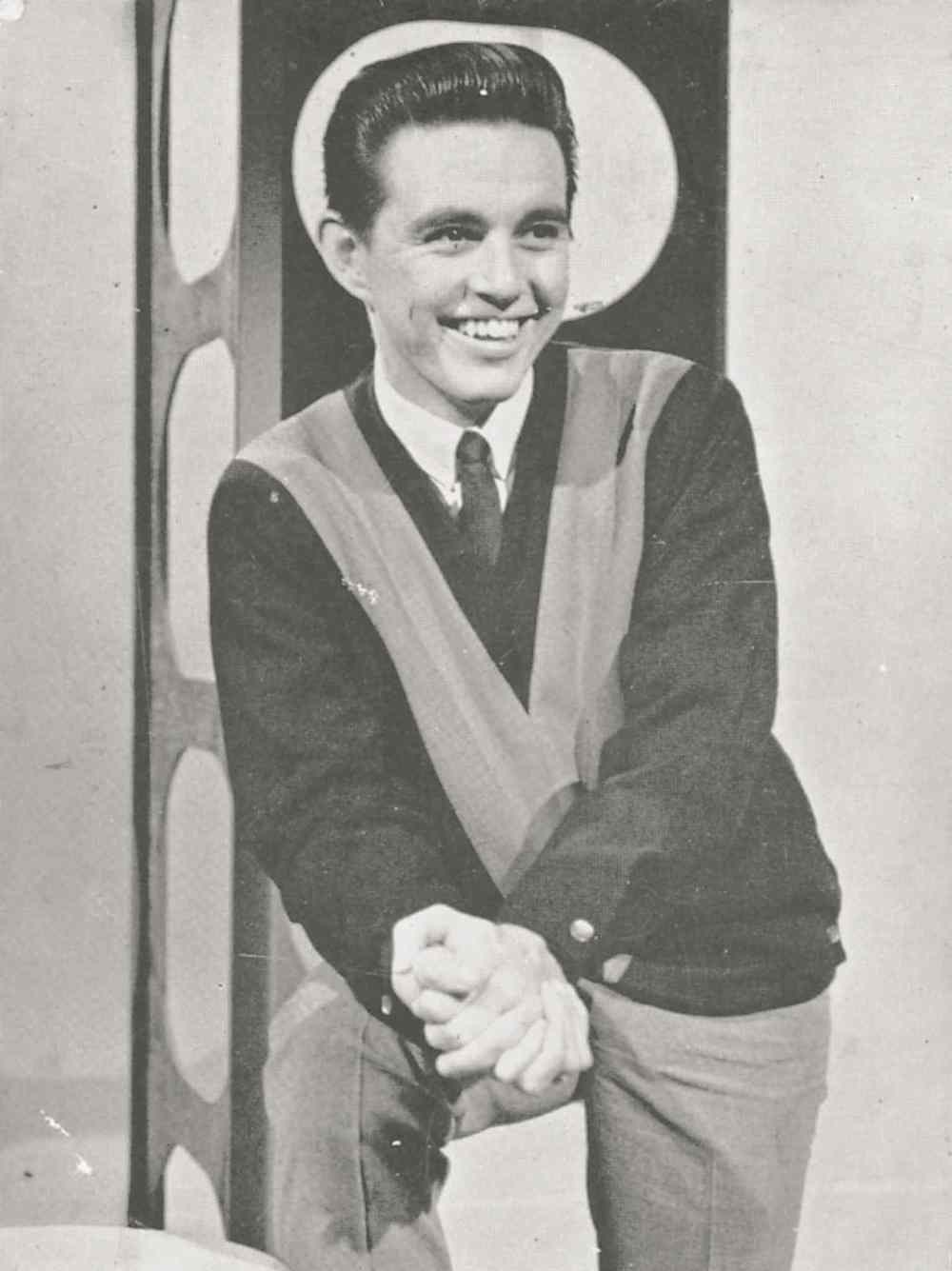
It was Winnipeg’s turn on Wednesday, with Music Hop Hootenanny produced by CBWT’s Ray McConnell and hosted by Ray St. Germain. Bob McMullin was the show’s music director.
“That was really the show that started my whole career on television,” says St. Germain, who would go on to host several shows for CBC, Global and APTN. He hosted from 1964 through the 1966 season. “We taped 39 shows a year. The chorus consisted of local singers Yvette Dandeneau Shaw, Micki Allen, Lucille Emond, Carol West, Karen Marklinger, Sam McConnell, Hector Bremner and Barry Stillwell.”
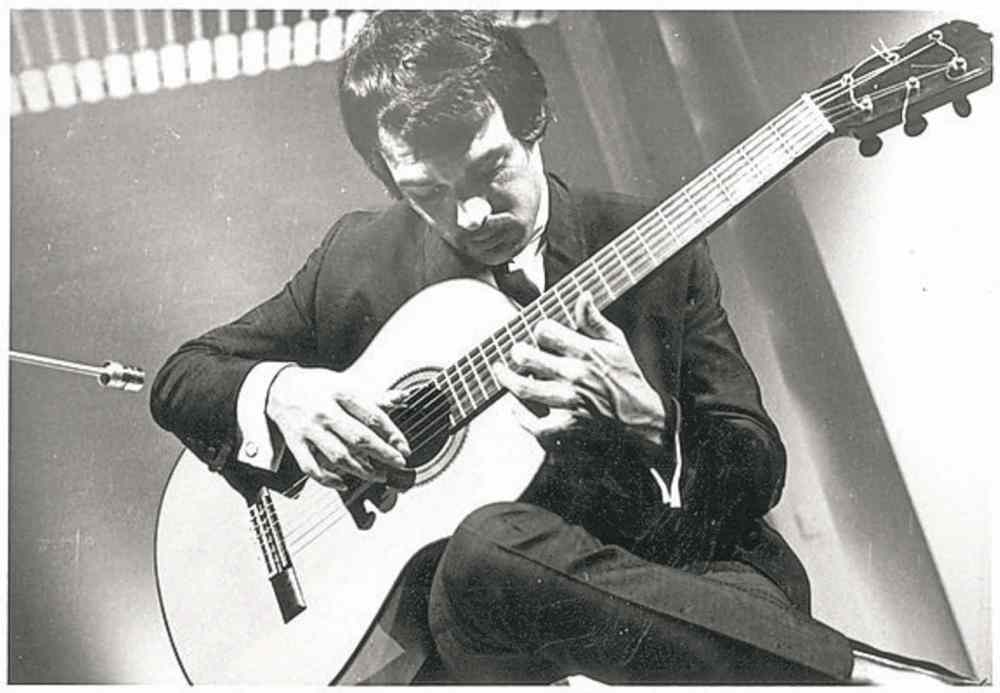
The Winnipeg show’s backing band featured guitarist extraordinaire Lenny Breau, drummer Wayne Funican and bass player Dave Young (replaced in the final season by Werner Franks).
“Just knowing that we were watched right across Canada every week was quite a thrill for everyone on the show,” says St. Germain, who remains a fixture on the local music scene. “We had some great guests like Buddy Knox, Bobby Curtola and many local artists as well.”
“I was 13 years old, in Grade 7 and working four times a week, rehearsals, being in the studio with cameras under hot spotlights,” recalls Lucille Emond (now Merritt). “Ray St. Germain was our fearless leader. He was handsome, caring, and just an all-round great guy. Lenny Breau was this darling, lovable person playing guitar, always lost in his own world. He kept us entertained for many hours while everyone got their own lines and cues.”
Adds St. Germain, “Everything was pre-recorded, and Lenny hated that because he had to remember what he played. As you know, Lenny loved to improvise.”
‘I would get fan mail from all over Canada, and a few marriage proposals along the way’
Emond says the real star of the show was music director Bob McMullin.
“Bob had the most difficult job,” she recalls. “Imagine putting eight singers together, all sizes and shapes who have never even met each other nor sung together, and trying to have us sing on key? Impossible, but we all did the best we could.”
One of the ensemble members would be given a featured spot each week. “I would get fan mail from all over Canada, and a few marriage proposals along the way,” laughs Emond.
CKEY radio’s Dave Mickie (a.k.a. Dave Marsden) took over for Trebek for the Toronto edition of Music Hop in 1965, replacing Trebek’s cashmere-sweater style with a more colourful, hipster angle. The show boasted the R&B flavour of the local music scene with backing band Norm Amadio & the Rhythm Rockers (later renamed the Big Sound), which included future Gordon Lightfoot sidemen Red Shea and John Stockfish along with the city’s finest jazz players and session men. Saxophone player Don (DT) Thompson provided the show’s comedy shtick.
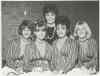
The female backing group the Girlfriends featured Diane Miller, Rhonda Silver and Stephanie Taylor. Shawn and Jay Jackson & the Majestics, Jackie Shane, Little Caesar & the Consuls, Eric Mercury, the Big Town Boys and Dee & the Yeoman were among the show’s featured guests.
Friday’s show, Frank’s Bandstand, was hosted by local CHNS radio personality Frank Cameron, broadcast from Halifax and included Nova Scotia’s finest artists.
“A lot of great musicians came through Frank’s Bandstand,” recalls Cameron. “Anne Murray did it for a season. Catherine MacKinnon was a regular, along with her sister Patrician Anne; Karen Oxley, Davey Wells. It was fun.”
The house band, the Offbeats, was directed by guitarist Brian Ahern, who would go on to marry Emmylou Harris and produce her early breakthrough recordings. Saxophone player Keith Jollimore later played with Lighthouse and guested on albums by Crowbar, April Wine and the Cooper Brothers.
Singer/songwriter Ken Tobias of New Brunswick was also a regular performer. Nova Scotia groups such as the Great Scots and the Brunswick Playboys also appeared on the show. Many members of the ensemble cast served double duty on Singalong Jubilee, hosted by Bill Langstroth. Cameron remembers that in the first year, CBC Halifax would receive racist phone calls if a black artist appeared on the show.
For the 1967 season, the Music Hop franchise was renamed Let’s Go, adopting the Vancouver-based show’s name for the entire series. Winnipeg’s slot switched to Thursdays, while the Montreal edition was dropped in favour of a show from Ottawa on Tuesdays (Toronto moved to Wednesday).
For its final season in 1968-69, Frank’s Bandstand was dropped, and the show ran only four days. Besides the new day, the Winnipeg show also included a new host, former Guess Who frontman Chad Allan. In a strange twist, the house band was the Guess Who, the band Allan had quit the year before. The Good Time Music Appreciation Society (Chad Allan, Micki Allen, Barry Stillwell, and Karen Marklinger) handled the lighter pop material, leaving the Guess Who, fronted by Burton Cummings, to cover the rock hits of the day.
For the Guess Who, landing the weekly television gig was a lifesaver.
“That CBC show saved our necks,” says Cummings.
Winnipeg’s favourite sons were on the verge of folding when CBC came calling to enlist their services. An ill-fated British trip earlier in the year had left the band demoralized and deeply in debt. The television show paid $1,100 a week, money that went toward their debts.
“They wanted a band that could read music,” chuckles guitarist Randy Bachman. “Peterson and Cummings could read, but Kale and I couldn’t. We learned everything by ear from records.”
In a ploy to discover in advance what songs they would be auditioning, Bachman phoned McMullin two days beforehand to ask if the charts were completed. Naively, the arranger gave him the names of all four songs.
“So we bought the records, learned them by ear, went down to the CBC studio. They plunked the sheet music in front of us; we looked at each other and whipped off the tunes. The producer, Larry Brown, came up to us afterwards and said, ‘You got the gig!’ “
For the next two years, the Guess Who appeared every week on Let’s Go, notching up more than 65 appearances before heading off to international stardom. “The Let’s Go show was such hard work, but people didn’t realize it,” says Cummings. “On one show, we had a 30-piece orchestra and did the entire Sgt. Pepper album, the whole trip. It was incredible. Bob McMullin banged out the charts for all this stuff.”
Let’s Go offered the Guess Who national exposure and a forum to promote their own records.
“When we began the second season,” recalls Cummings, “Larry Brown said, ‘You’re established national television stars now. Why don’t you and Randy write, and if I like it, I’ll let you do it on the show.’ ” The writing team of Bachman & Cummings was born. Hits such as When Friends Fall Out, These Eyes and No Time debuted on the CBC show.
Local groups such as the Fifth, the Mongrels, Pink Plumm, Sugar ‘n’ Spice, Eternals, and Gettysbyrg Address, as well as singers such as Emond, Rick Neufeld and Corrine Cyca, guested on the show.
Alberta’s Barry Allen, along with the 49th Parallel, also made appearances. Local singer/guitarist Janet Shnider (now Brett) appeared a couple of times as well, one of which included a memorable duet with Chad Allan. “I was the mystery girl in the video of Chad singing the Lovin’ Spoonful’s She’s Still a Mystery to Me,” she recalls. “I pranced around Assiniboine Park swirling my long hair and peeking out from windows and from behind trees. It was quite amusing. I also did my own arrangement of Can’t Buy Me Love of which I was quite proud.”

Let’s Go ended its run in June 1969, but the show’s influence was far-reaching.
“It’s impossible to put a monetary value on the lifetime benefits we’ve enjoyed as a result of doing that weekly TV show,” Bachman says.
Sign up for John Einarson’s 2015 Off The Record courses at mcnallyrobinson.com.