

Wildlife rehab centre planning new facility
Energy giant pledges $500K for project
Advertisement
Read this article for free:
or
Already have an account? Log in here »
To continue reading, please subscribe:
Digital Subscription
One year of digital access for only $1.44 a week*
- Enjoy unlimited reading on winnipegfreepress.com
- Read the E-Edition, our digital replica newspaper
- Access News Break, our award-winning app
- Play interactive puzzles
*Billed as $5.77 plus GST every four weeks. After 52 weeks, price increases to the regular rate of $19.95 plus GST every four weeks. Offer available to new and qualified returning subscribers only. Cancel any time.
To continue reading, please subscribe:
Add Free Press access to your Brandon Sun subscription for only an additional
$1 for the first 4 weeks*
- Enjoy unlimited reading on winnipegfreepress.com
- Read the E-Edition, our digital replica newspaper
- Access News Break, our award-winning app
- Play interactive puzzles
*Your next Brandon Sun subscription payment will increase by $1.00 and you will be charged $17.95 plus GST for four weeks. After four weeks, your payment will increase to $24.95 plus GST every four weeks.
Read unlimited articles for free today:
or
Already have an account? Log in here »
Hey there, time traveller!
This article was published 12/01/2015 (4163 days ago), so information in it may no longer be current.
A rehabilitation centre for injured wildlife that started in people’s backyards 30 years ago is raising funds to build a $2.5-million facility.
And its first major sponsor is TransCanada Corp., the Calgary-based energy giant at the centre of the proposed Keystone XL pipeline to carry crude oil from Alberta to Texas refineries.
Manitoba’s Wildlife Haven Rehabilitation Centre’s fundraising for a wildlife hospital and education centre was recently kicked off by a pledge of $500,000 from TransCanada. The wildlife rehab, which operates out of Île des Chênes, south of Winnipeg off Highway 59, has also secured a charitable lease on TransCanada land for the new facility.
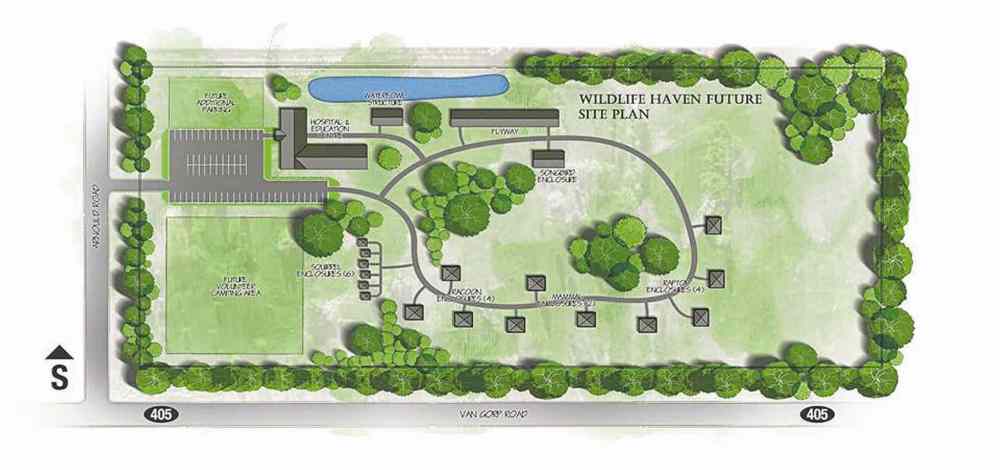
“TransCanada has been a sponsor of ours for the past 20 years, including sponsoring our education program” that shows rehabilitated wildlife in public schools, said Dan Diawol, rehab centre director.
“They’re just a very good sponsor and we’re very grateful for their help.”
The pledge makes up most of the $700,000 raised so far.
In another era, TransCanada might be seen as the good guys, transporting oil and natural gas to run our vehicles and heat our homes in frigid January temperatures. But with controversy surrounding the Keystone XL pipeline, and TransCanada also wanting to build a 4,600-kilometre pipeline from Alberta and Saskatchewan to refineries in Eastern Canada, the energy giant can use all the positive publicity it can get.
In addition, it was almost a year ago a TransCanada pipeline exploded in a fireball near Otterburne, a few kilometres south of éle des Chênes, cutting service to 4,000 homeowners for days.
The funding had nothing to do with the explosion on the branch line near Otterburne that runs off the main line into the U.S., spokesman Grady Semmens said.
The funding is part of $12 million TransCanada donates annually to community, environmental and emergency services groups across North America, he said.
The company’s main natural gas pipeline skirts the village of Île des Chênes, said Semmens. TransCanada also has a nearby compressor station that pushes the natural gas through the pipeline. TransCanada is giving the rehab centre a charitable 50-year lease on an seven-hectare parcel of land next to its compressor station.
The company’s relationship with the rehabilitation centre dates back to 1994 when an employee became interested in the group.
For operators of the wildlife centre, it’s just about treating the animals. The centre relies on private donations.
Corporations such as TransCanada, the Royal Bank, and TD Friends of the Environment help cover the rehab’s operating costs, along with individual contributions. The rehab, which receives virtually no government funding, has only one full-time employee. The rest, including Diawol, are volunteers.
A wildlife rehab sounds more like a place where four-legged celebrities go to kick their chemical addictions — a Betty Ford Clinic for furry critters.
It started in 1984 with people caring for injured animals, as well as orphaned young wildlife, in cages in their backyards. In 1992, the University of Manitoba’s agriculture research station at Glenlea offered buildings in which to work.

Six years ago, the U of M needed the space back and the centre found a new location in éle des Chênes, using a single-storey metal dairy barn owned by the Van Gorp family. But it’s a makeshift facility, and there’s no space for public visitors, including school groups. “We’ve been looking for the ideal location for the last 10 years,” said Diawol.
The centre takes in 1,500 to 1,800 animals per year; from injured squirrels to birds that have flown into windows, to an orphaned young bobcat currently in its charges. (The wildlife rehab won’t let people view the bobcat because it becomes extremely stressed by visitors.) It took in nine orphaned coyote pups earlier this year.
Spring and summer are its busiest times. Half the wildlife that comes in are young orphans.
The centre is calling the new facility a wildlife hospital and education centre, although it doesn’t employ a veterinarian. It has an agreement for veterinarian services with the nearby Centennial Animal Hospital on Pembina Highway. The hope is the new facilities will open next year.
bill.redekop@freepress.mb.ca
History
Updated on Monday, January 12, 2015 8:05 AM CST: Fixes headline, corrects spelling of Île des Chênes