

PST increase helps economy: Selinger
Says it proves his strength as leader
Advertisement
Read this article for free:
or
Already have an account? Log in here »
To continue reading, please subscribe:

Digital Subscription
One year of digital access for only $205*
- Enjoy unlimited reading on winnipegfreepress.com
- Read the E-Edition, our digital replica newspaper
- Access News Break, our award-winning app
- Play interactive puzzles
*First annual payment billed as $205.00 + GST for one year. This annual subscription will automatically renew at $233.00 + GST every 52 weeks (10% off the regular annual price of $259.35). Offer available to new and qualified returning subscribers only. Cancel any time.
To continue reading, please subscribe:
Add Free Press access to your Brandon Sun subscription for only an additional
$1 for the first 4 weeks*
- Enjoy unlimited reading on winnipegfreepress.com
- Read the E-Edition, our digital replica newspaper
- Access News Break, our award-winning app
- Play interactive puzzles
*Your next Brandon Sun subscription payment will increase by $1.00 and you will be charged $17.95 plus GST for four weeks. After four weeks, your payment will increase to $24.95 plus GST every four weeks.
Read unlimited articles for free today:
or
Already have an account? Log in here »
Hey there, time traveller!
This article was published 12/01/2015 (4201 days ago), so information in it may no longer be current.
Greg Selinger said Manitoba’s economy is stronger because he decided to raise the PST by one percentage point in 2013.
The NDP premier made the comment after opening his leadership campaign office in St. Boniface Saturday while being flanked by about 200 supporters, including several cabinet ministers.
He gave an indication where he will take his campaign in the coming weeks, promoting his increase in the provincial sales tax as a show of his strength as leader, rather than a political liability.
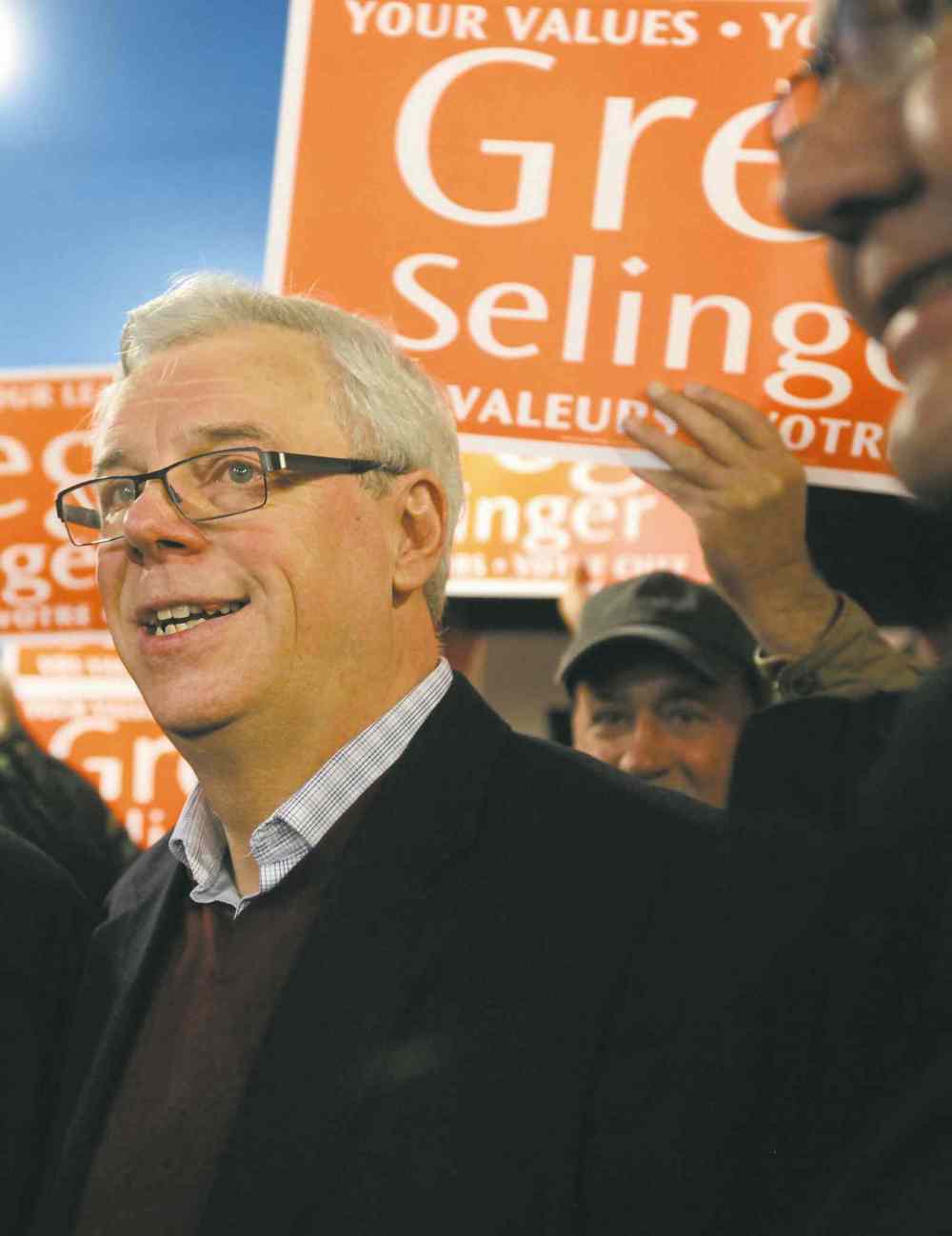
He is running to keep his job as NDP leader after members of his cabinet rebelled last fall, prompting a leadership vote
Selinger told reporters bumping up the PST to eight per cent in 2013 to help fund infrastructure projects has produced more than 8,000 jobs in the first year.
“I have a proven track record of moving the province forward,” he said.
Manitobans will support the tax as long as they see it being spent on “good, quality infrastructure” such as rebuilding highways, Selinger said.
Former NDP finance minister Rosann Wowchuk, who didn’t run in the last election, was on hand. Wowchuk said she was “very upset” after five of Selinger’s cabinet ministers quit Nov. 3 and demanded Selinger step down as party leader and premier.
“We, as party members, elected a leader, and we should work out our difficulties within the party rather than going public,” she said.
Wowchuk said forcing a leadership campaign is “wasted energy.”
Selinger talked about the need for good-paying jobs, reliable health care and his ability to win the next election, which is set for April 19, 2016. He boasted more than 16,000 people moved into Manitoba in 2014, the highest level in half a century.
“I am confident we can win the next election,” Selinger said.

Theresa Oswald, who resigned cabinet last fall in protest of Selinger’s leadership, is running to be NDP leader and premier, as is Steve Ashton, the former infrastructure and transportation minister.
The leadership vote is set for March 8, during the NDP’s annual convention.
Amid the leadership battle, the party’s poll numbers have sagged.
A Probe Research survey in December showed the party had the backing of just 26 per cent of Manitobans. The Progressive Conservatives topped the polls with 48 per cent support.
bill.redekop@freepress.mb.ca
Promises, promises
Campaign pledges so far in the NDP leadership contest:
Steve Ashton:
- Hold a referendum on whether to keep, revise or axe the one-percentage-point PST increase his party implemented in 2013.
- Designate a cabinet minister responsible for buying local products, in addition to other portfolio responsibilities.
- Create 3,000 additional child-care spaces, but he had not costed out the promise.
Theresa Oswald:
- Hire 20 more midwives and set up a breast-milk bank, at a cost of $1.5 million.
- Increase rent allowance to people on welfare, costing the province $22 million in the next budget and $45 million in future budgets.
- A PST rebate of up to $125 annually for low-income earners, at a cost of $10-$15 million a year.
- Delay elimination of the deficit on debt payments beyond 2016, adding to the province’s total debt.
- Boost efforts to revitalize neighbourhoods, prevent crime and nurture social enterprises that create jobs, at a cost of $2.5 million.
- Set child-poverty reduction targets.
Related Articles
The odd world of Greg Selinger
Advertisement Advertise With Us
Advertisement Advertise With Us