

Lesson in law of improbability
Selinger appeared prime for defeat, then unexpected events happened

Advertisement
Read this article for free:
or
Already have an account? Log in here »
To continue reading, please subscribe:

Digital Subscription
One year of digital access for only $205*
- Enjoy unlimited reading on winnipegfreepress.com
- Read the E-Edition, our digital replica newspaper
- Access News Break, our award-winning app
- Play interactive puzzles
*First annual payment billed as $205.00 + GST for one year. This annual subscription will automatically renew at $233.00 + GST every 52 weeks (10% off the regular annual price of $259.35). Offer available to new and qualified returning subscribers only. Cancel any time.
To continue reading, please subscribe:
Add Free Press access to your Brandon Sun subscription for only an additional
$1 for the first 4 weeks*
- Enjoy unlimited reading on winnipegfreepress.com
- Read the E-Edition, our digital replica newspaper
- Access News Break, our award-winning app
- Play interactive puzzles
*Your next Brandon Sun subscription payment will increase by $1.00 and you will be charged $17.95 plus GST for four weeks. After four weeks, your payment will increase to $24.95 plus GST every four weeks.
Read unlimited articles for free today:
or
Already have an account? Log in here »
Hey there, time traveller!
This article was published 09/03/2015 (4216 days ago), so information in it may no longer be current.
There is no way to get around the fact Premier Greg Selinger’s victory in Sunday afternoon’s NDP leadership vote was, in its essence, improbable.
Consider that just two hours before he was declared the winner, as New Democrats mustered for a second ballot, it seemed the stars were not aligning for Selinger.
He had narrowly placed first on the first ballot, ahead of rival Theresa Oswald by 37 votes. Steve Ashton, the veteran MLA who was running in his second leadership race, finished 73 votes behind Oswald.
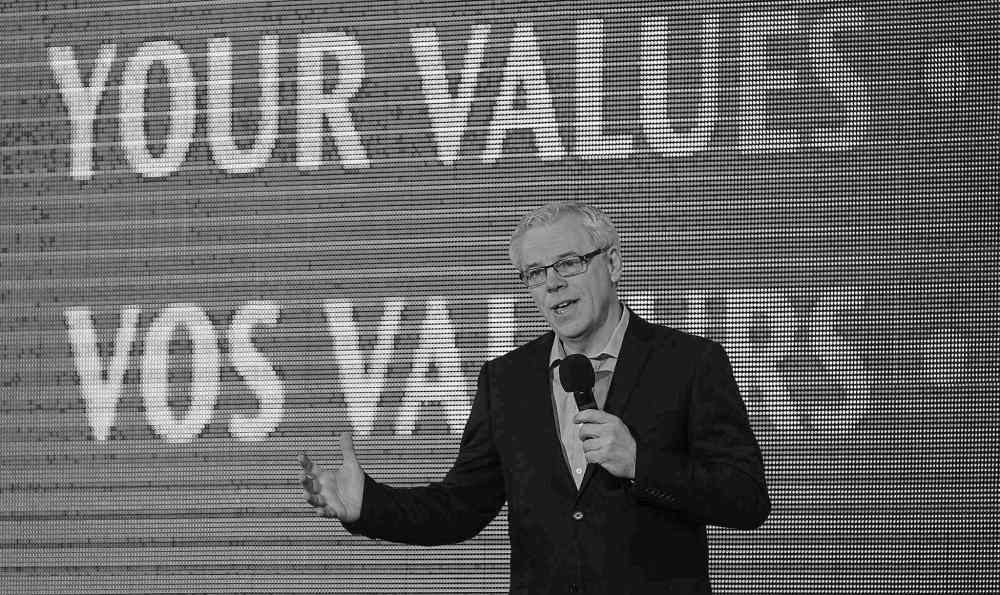
Ashton had not been part of the coup last fall that attempted to force Selinger from office. But he did campaign to replace the current premier. The laws of political physics dictated most of Ashton’s support would go to Oswald. Those supporters wanted change, and now Oswald was the only option left that represented change.
It was the most probable scenario. But sometimes in politics, probable is also the least likely thing.
Improbable began the moment the first ballot results were announced. Ashton would not endorse either remaining candidate, but the work had begun to recruit his delegates.
According to sources, Oswald’s campaign had negotiated the support of two key union blocks: the United Steelworkers and the United Fire Fighters of Winnipeg. Both had supported Ashton; both were supposed to go to Oswald. But when the results were announced, only the Steelworkers went to Oswald. UFFW president Alex Forrest and his 14 yellow-shirted delegates immediately went over and shook hands with Selinger. Oswald supporters were aghast.
Asked later by an Oswald strategist to explain the betrayal, several sources confirmed Forrest said he became concerned at the last moment Oswald was “too close with the paramedics.”
For reasons no sane person understands, firefighters and paramedics are mortal enemies — despite working side by side every day.
Forrest’s decision was not just improbable, it was absurd. His explanation was nonsensical. However, his decision would be critical to the outcome of the second ballot.
This was not the only improbable development. Oswald had also hoped to capture Indo-Canadian voters from south Winnipeg who had supported Ashton because they were sworn political enemies of the Indo-Canadian New Democrats from north Winnipeg who support Selinger.
At one point during second-ballot voting, a senior Ashton organizer told an Oswald strategist all of the Indo-Canadian support from Ashton’s campaign would go to Oswald. A few minutes later, another Ashton strategist definitively stated the Indo-Canadian delegates were definitely going to Selinger. We can only guess from the outcome some went to Oswald and some to Selinger — enough that the premier was able to retain his job.
Regardless of the behind-the-scenes machinations, there is no way to overstate Selinger’s accomplishment. Going into this weekend, he was a bloodied and battered politician in all respects.
There was last fall’s mutiny, a hangover from his 2013 decision to raise the PST to fund infrastructure. The idea was actually sound, but the manner in which it was done was amateurish — unleashed on his cabinet just 10 days before the budget was tabled, without any communications or political strategy to ensure support.
Selinger toils in the major leagues of politics. His wonky decision to unleash a tax increase 10 days before a budget with no implementation plan, less than two years after pledging not do to it, was a decidedly minor-league moment.
It was no surprise, then, that going into this past weekend, two-thirds of the party members had voted to support a candidate other than Selinger.
And yet, Selinger prevailed. And in doing so, he redefined what it means to be politically resilient. He snatched victory — razor thin though it may be — from the jaws of defeat.
For Oswald, the result Sunday was confirmation some political acts are simply unforgiveable.
All through the campaign, Oswald’s greatest fear was that party members would react more to her public condemnation of a sitting premier and less to the reasons behind the comments. It seems those fears are now fully realized. The end result is Manitoba missed the chance to have its first female premier, on International Women’s Day no less.
As has been noted many times over the past few weeks, even as he celebrates his triumph in the leadership race, it’s unclear what Selinger has actually won. If he won anything at all.
Last fall, as five cabinet ministers went public with their desire to see him step down, Selinger’s NDP was running 20 points behind the Progressive Conservatives. The internal fighting only served to lower his personal approval rating even more.
New Democrats may find inspiration in Selinger’s gutty performance in the leadership, but it’s unlikely voters will find much to applaud. Along with being the man who broke his 2011 promise never to raise the PST, he is now the man who had to fight two challengers for the right to lead, only to win with a highly questionable 50.1 per cent of support.

Selinger’s victory is impressive for many reasons, but mainly for the fact the odds and circumstances were so lined up against him. Lamentably for all those who supported him, this victory does not make him more attractive to the electorate, nor does it solve his organizational challenges.
He has lost many of his best cabinet ministers and nearly all of his most experienced political operatives, to this bloody clan war. It will take an act of incredible political healing to bring Selinger back together with these people, without whom the NDP has no chance of re-election in 2016.
All in all, it was a remarkable, improbable result. And all it took was an act of betrayal from a flighty union leader, an unexpected truce between Indo-Canadian New Democrats, and a dubious, razor-thin result on a desperate second ballot.
Far-fetched. Doubtful. Maybe even dubious or implausible. But still victorious.
dan.lett@freepress.mb.ca
Dan Lett is a columnist for the Free Press, providing opinion and commentary on politics in Winnipeg and beyond. Born and raised in Toronto, Dan joined the Free Press in 1986. Read more about Dan.
Dan’s columns are built on facts and reactions, but offer his personal views through arguments and analysis. The Free Press’ editing team reviews Dan’s columns before they are posted online or published in print — part of the our tradition, since 1872, of producing reliable independent journalism. Read more about Free Press’s history and mandate, and learn how our newsroom operates.
Our newsroom depends on a growing audience of readers to power our journalism. If you are not a paid reader, please consider becoming a subscriber.
Our newsroom depends on its audience of readers to power our journalism. Thank you for your support.
What they said
“Our party is stronger now. We’ve got more members. Our finances are in decent shape. We’ve focused ourselves on what the priorities of Manitoba are. We’ve connected with Manitobans on their values. That’s a formula for success.”
— Premier Greg Selinger after leadership victory
“Today instead of looking forward, the NDP has kept Greg Selinger as their leader, despite his record of deception and long record of failing Manitobans when it matters most.”
— Liberal Leader Rana Bokhari
“The more things change, the more they stay the same.”
— Opposition Leader Brian Pallister
Dan Lett is a columnist for the Free Press, providing opinion and commentary on politics in Winnipeg and beyond. Born and raised in Toronto, Dan joined the Free Press in 1986. Read more about Dan.
Dan’s columns are built on facts and reactions, but offer his personal views through arguments and analysis. The Free Press’ editing team reviews Dan’s columns before they are posted online or published in print — part of the our tradition, since 1872, of producing reliable independent journalism. Read more about Free Press’s history and mandate, and learn how our newsroom operates.
Our newsroom depends on a growing audience of readers to power our journalism. If you are not a paid reader, please consider becoming a subscriber.
Our newsroom depends on its audience of readers to power our journalism. Thank you for your support.
Advertisement Advertise With Us
Advertisement Advertise With Us