

City to begin testing safer mosquito killer
Use of DeltaGard could end buffer zones
Advertisement
Read this article for free:
or
Already have an account? Log in here »
To continue reading, please subscribe:
Monthly Digital Subscription
$1 per week for 24 weeks*
- Enjoy unlimited reading on winnipegfreepress.com
- Read the E-Edition, our digital replica newspaper
- Access News Break, our award-winning app
- Play interactive puzzles
*Billed as $4.00 plus GST every four weeks. After 24 weeks, price increases to the regular rate of $19.95 plus GST every four weeks. Offer available to new and qualified returning subscribers only. Cancel any time.
Monthly Digital Subscription
$4.99/week*
- Enjoy unlimited reading on winnipegfreepress.com
- Read the E-Edition, our digital replica newspaper
- Access News Break, our award-winning app
- Play interactive puzzles
*Billed as $19.95 plus GST every four weeks. Cancel any time.
To continue reading, please subscribe:
Add Free Press access to your Brandon Sun subscription for only an additional
$1 for the first 4 weeks*
*Your next subscription payment will increase by $1.00 and you will be charged $16.99 plus GST for four weeks. After four weeks, your payment will increase to $23.99 plus GST every four weeks.
Read unlimited articles for free today:
or
Already have an account? Log in here »
Hey there, time traveller!
This article was published 14/08/2015 (3910 days ago), so information in it may no longer be current.
An eco-friendly pesticide alternative to malathion to control adult mosquitoes could mean an end to the controversial buffer zones.
A senior city official said Thursday if DeltaGard is approved for use in Canada, mosquito fogging buffer zones could disappear by 2017.
Ken Nawolsky, Winnipeg’s insect-control superintendent, said Ottawa gave the city the green light Wednesday to begin testing DeltaGard, a synthetic pyrethroid, which tests in the U.S. showed to be almost 100 per cent effective in killing adult mosquitoes with no harmful effects on humans — raising the possibility the buffer zones will not be necessary.
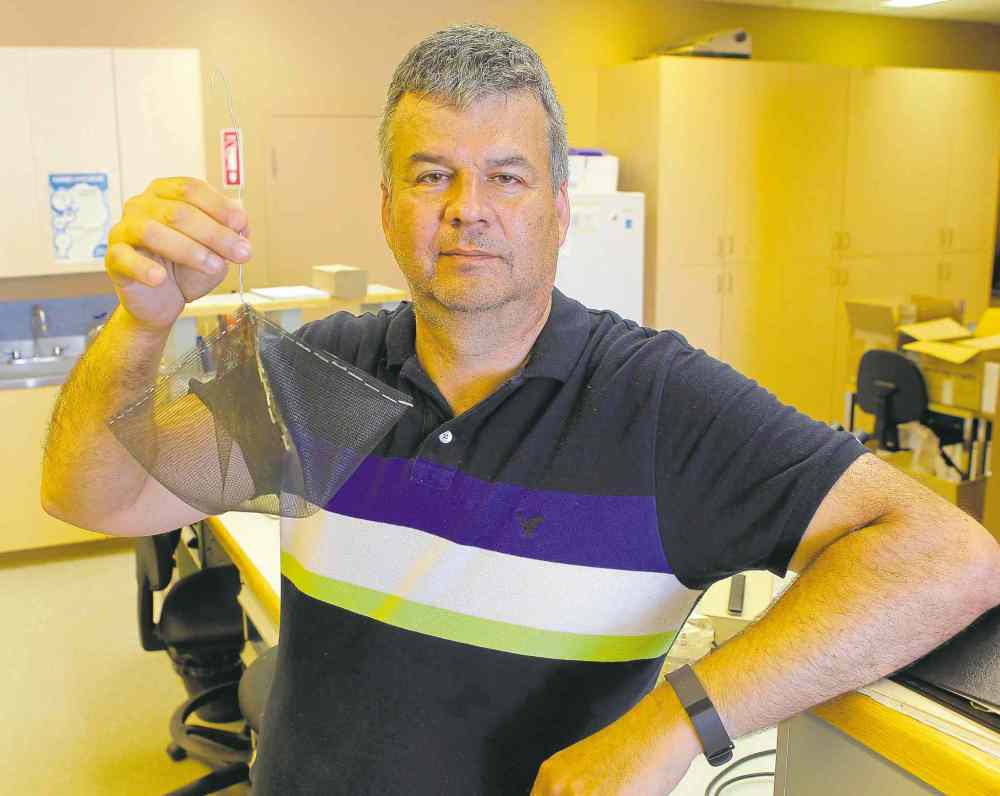
“We chose this because it’s a much more environmentally friendly product,” Nawolsky said at a news conference at the Waverley public works yard. The product should arrive in Winnipeg early next week and testing will begin immediately.
While Health Canada has ruled malathion use is safe to people when applied in low volumes, it is a suspected carcinogen and becomes toxic when ingested in large amounts. The 90-metre buffer zones ensure those individuals opposed to its use do not come into contact during fogging.
Testing of DeltaGard has not shown any health risks, Nawolsky said, raising the hope buffer zones won’t be needed.
“So far, all the data is showing that there are no ill effects (on people), it does not leech into the ground water and it dissipates quickly.”
Provincial officials will be monitoring the testing results, Nawolsky said, adding he’s hopeful the province will allow DeltaGard to be applied without imposing buffer zones, or reduced buffer zones.
Nawolsky said with the province monitoring the testing results, they’ll have all the necessary data to determine if the current 90-metre buffer zone can be reduced.
“Before it even becomes registered in Canada, (the province will) have an idea of what will be the buffer zone, will they change, will they not change,” he said. “That evaluation will be going on in the next year.”
DeltaGard was approved for use in the U.S. in the spring following several years of extensive testing in 28 communities, including in North Dakota.
Obtaining federal approval in Canada to use DeltaGard is an 18- to 24-month process, Nawolsky said, adding it could be in use for the 2017 season.
c_
Nawolsky said the city needs only minute quantities of DeltaGard, compared to malathion, but said the cost to apply the product will still be more expensive than malathion.

The equivalent amount of an aspirin-sized tablet of DeltaGard covers an entire football field — 1.5 millilitres per hectare, compared to 50 millilitres per hectare for malathion.
DeltaGard is twice as expensive as malathion, he said, which would see the cost of a city-wide fogging increase to $300,000 from $100,000.
“Typically, all new products that come onto market are more expensive because when you move to a more environmentally friendly product, the cost tends to be more than a conventional pesticide.”
The city has only enough malathion remaining for one and a half city-wide applications, he said, and is unable to purchase any more because of a distributor’s insistence the city agree to an indemnification waiver, absolving all responsibility for its application, which the city will not sign.
aldo.santin@freepress.mb.ca