

Vanishing skulls
The Bard is one of many famous dead folks to have their heads gone missing
Advertisement
Read this article for free:
or
Already have an account? Log in here »
To continue reading, please subscribe:

Digital Subscription
One year of digital access for only $205*
- Enjoy unlimited reading on winnipegfreepress.com
- Read the E-Edition, our digital replica newspaper
- Access News Break, our award-winning app
- Play interactive puzzles
*First annual payment billed as $205.00 + GST for one year. This annual subscription will automatically renew at $233.00 + GST every 52 weeks (10% off the regular annual price of $259.35). Offer available to new and qualified returning subscribers only. Cancel any time.
To continue reading, please subscribe:
Add Free Press access to your Brandon Sun subscription for only an additional
$1 for the first 4 weeks*
- Enjoy unlimited reading on winnipegfreepress.com
- Read the E-Edition, our digital replica newspaper
- Access News Break, our award-winning app
- Play interactive puzzles
*Your next Brandon Sun subscription payment will increase by $1.00 and you will be charged $17.95 plus GST for four weeks. After four weeks, your payment will increase to $24.95 plus GST every four weeks.
Read unlimited articles for free today:
or
Already have an account? Log in here »
Hey there, time traveller!
This article was published 02/04/2016 (3849 days ago), so information in it may no longer be current.
If you can keep your head while all about you are losing theirs, chances are you’re not William Shakespeare.
According to researchers conducting the first archeological investigation of Shakespeare’s grave at Holy Trinity Church in Stratford-upon-Avon for a recent TV documentary, it appears 18th-century grave robbers stole the legendary playwright’s skull.
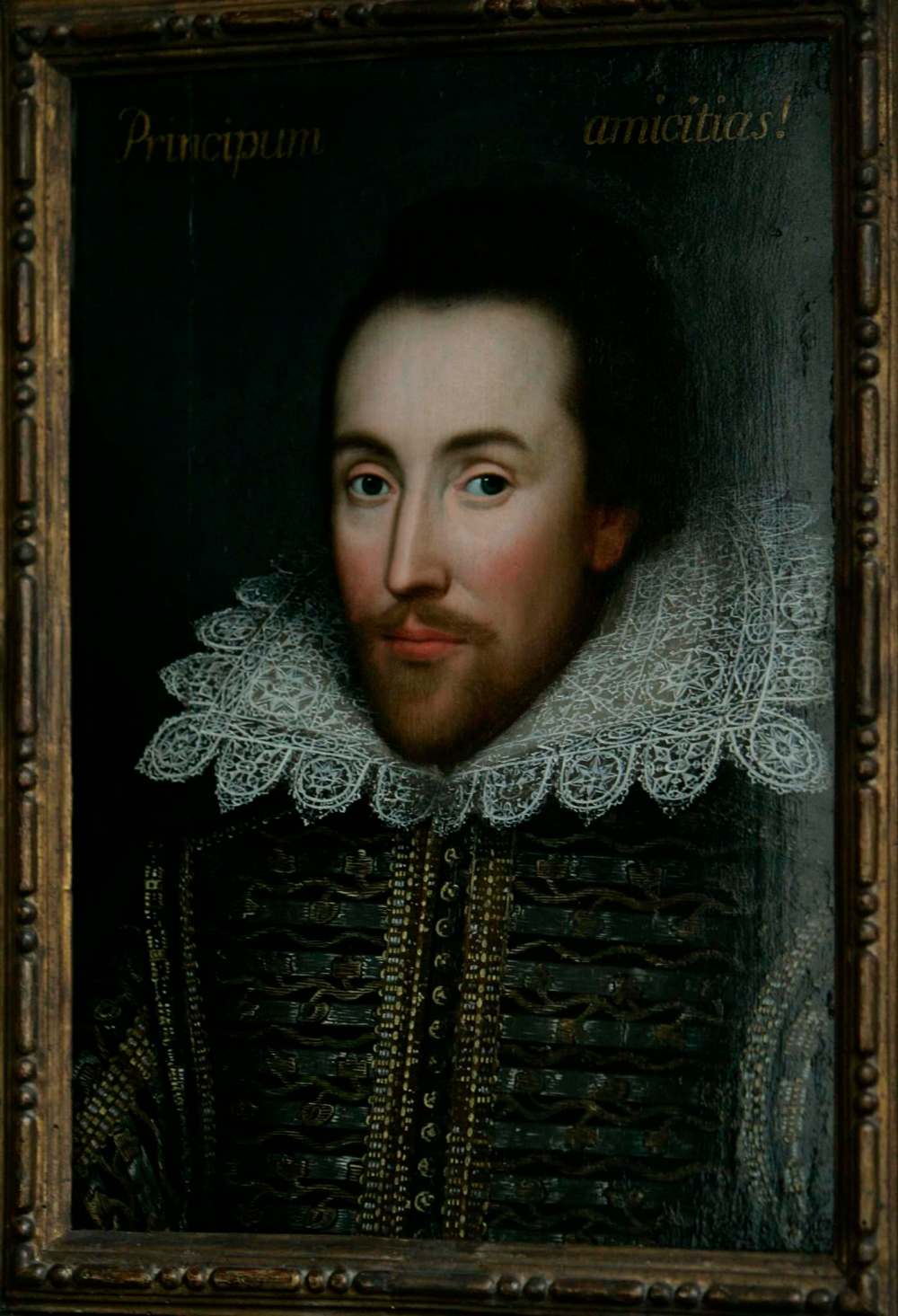
The researchers used ground-penetrating radar to explore the tomb and what they found supports a claim — first made in 1879 in the British magazine Argosy but long dismissed as myth — the Bard’s skull was stolen by grave robbers in 1794.
Staffordshire University archeologist Kevin Colls, who led the study, told reporters the radar scans found “an odd disturbance at the head end” of the tomb.
“It is very likely to me that the skull is not there,” Colls said. “Grave-robbing was a big thing in the 17th and 18th century. People wanted the skull of famous people so they could potentially analyze it and see what made them a genius. It is no surprise to me that Shakespeare’s remains were a target.”
It would appear the inscription on Shakespeare’s gravestone — “Blessed be the man that spares these stones, and cursed be he that moves my bones” — wasn’t enough to deter souvenir hunters.
If he has been relieved of his head after death, the Bard is in excellent historical company, as we see from this week’s slightly ghoulish list of the Top 5 Stolen Skulls of All Time:
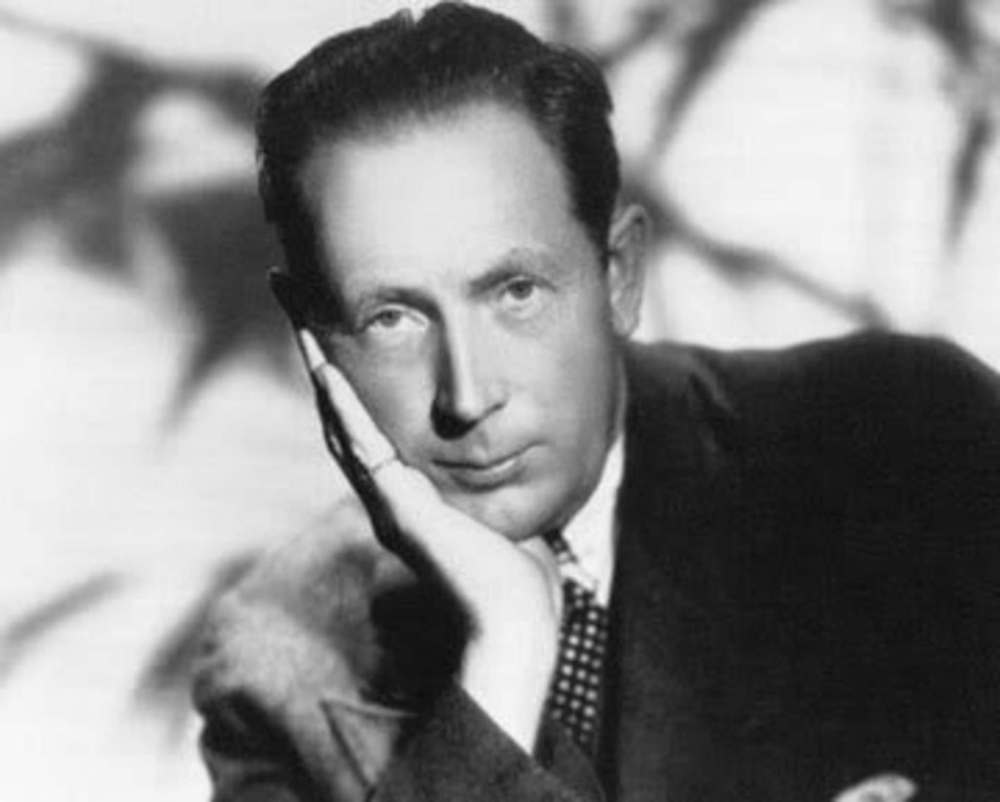
5) The headliner — Silent film director Friedrich Wilhelm “F.W.” Murnau
Off with his head — It almost sounds like a scene from one of his own horror films. In July 2015, the head of F. W. Murnau — the legendary German director whose 1922 masterpiece Nosferatu, a German expressionist retelling of the Dracula story, set the template for modern horror films — was stolen from the family crypt in Germany. The managers of Stahnsdorf South-Western Cemetery outside Berlin confirmed someone broke into the Murnau family plot — likely between July 4 and 12 — opened up the famed film director’s iron coffin, and made off with his head. Wax drippings were reportedly found at the scene of the grave-robbing, suggesting candles had been lit and a possible occult motive for the theft. Murnau, who died in a road accident in Santa Barbara, Calif., in 1931, is buried alongside his two brothers, whose graves were undamaged. It wasn’t the first time someone has broken into the crypt, with cemetery manager Olaf Ihlefeldt saying the tomb has been illegally entered or damaged a number of times since at least the 1970s. He told the Washington Post it’s possible “Satanists” or those practising “black magic” were responsible. “There was a candle,” he said at the time. “… A photo session or a celebration or whatever in the night. It really isn’t clear.” He said the tomb is important to the community. “It was a really special, special thing there,” he said. “It was really important for us.” The location of his skull is unknown, but the director’s legacy has only grown in the eight decades since his death.

4) The headliner — Apache chief Geronimo
Off with his head — In 2009, the descendants of Geronimo sued Skull and Bones, a notorious secret society at Yale University with ties to the Bush family, charging that its members robbed his grave in 1918 and have kept his skull in a glass case at their headquarters ever since. For the record, Geronimo made life miserable for U.S. and Mexican troops for almost 30 years until his capture in 1886. He died a prisoner of war at Fort Sill, Okla., in 1909. According to the New York Times, a longstanding tradition among members of Skull and Bones holds that Prescott S. Bush — father of former president George Bush and grandfather of former president George W. Bush — broke into the grave with some classmates during the First World War and made off with the skull, two bones, a bridle and some stirrups, all of which were put on display at the society’s clubhouse in New Haven, Conn., known as the Tomb. The story picked up steam in 2005 when a historian discovered a letter written in 1918 from one Skull and Bones member to another stating: “The skull of the worthy Geronimo the Terrible exhumed from its tomb at Fort Sill by your club… is now safe inside the tomb and bone together with his well-worn femurs, bit and saddle horn.” Some historians have scorned the tale, noting there is no independent evidence suggesting the grave, now covered in concrete, was disturbed in 1918. Skull and Bones has denied having possession of the famed Apache’s remains, but rumours persist of the skull appearing in mysterious nocturnal initiation rites. The lawsuit by Geronimo’s heirs — who want his remains reburied in New Mexico, where he was born — was dismissed on technical grounds and Skull and Bones insists the story is a hoax. But it’s unlikely the final chapter has been written.

3) The headliner — Infamous spy Mata Hari
Off with her head — Born Margaretha Geertruida Zelle in the Netherlands in 1876, she rose to fame under the stage name Mata Hari, the archetype of the femme fatale, an exotic dancer who used her powers of seduction to extract military secrets from her legion of lovers. With Mata Hari, it’s tough to separate fact from fiction. What’s clear is that at an early age she decided sexuality was her ticket to success. By the early 1900s, her first marriage had deteriorated and she fled to Paris, where she became famous for her provocative dancing and barely-there costumes. She reportedly turned striptease into an art form, driving observers wild with “the flexible grace of a wild animal.” With age, her career declined and she performed her final show in 1915. One year later, she accepted an assignment to spy for France, agreeing to pass military information gleaned from her conquests. But things quickly took a dark turn as, on Feb. 13, 1917, she was arrested in her Paris hotel and accused of being a double agent, spying for Germany and causing the deaths of at least 50,000 soldiers. It’s debatable whether those charges were true, but on Oct. 15, 1917, she was executed by 11 shots from a firing squad at the age of 41. At her execution, she famously refused a blindfold and blew a kiss to the firing squad. According to the website StrangeRemains.com, when no one claimed her corpse, it was donated to the Museum of Anatomy in Paris, where her body was dissected and her head removed and preserved in wax. It became part of a display of infamous criminals executed in the 18th, 19th and 20th centuries. In 2000, however, an inventory of the museum’s collections found the mummified head had vanished. “The remains are not in the museum now, and no one knows where they could be,” museum curator Roger Saban told the New York Post. Officials suspect the head, which still had its bright-red hair, might have been taken by an admirer or collector. An appeal for its return has been issued.
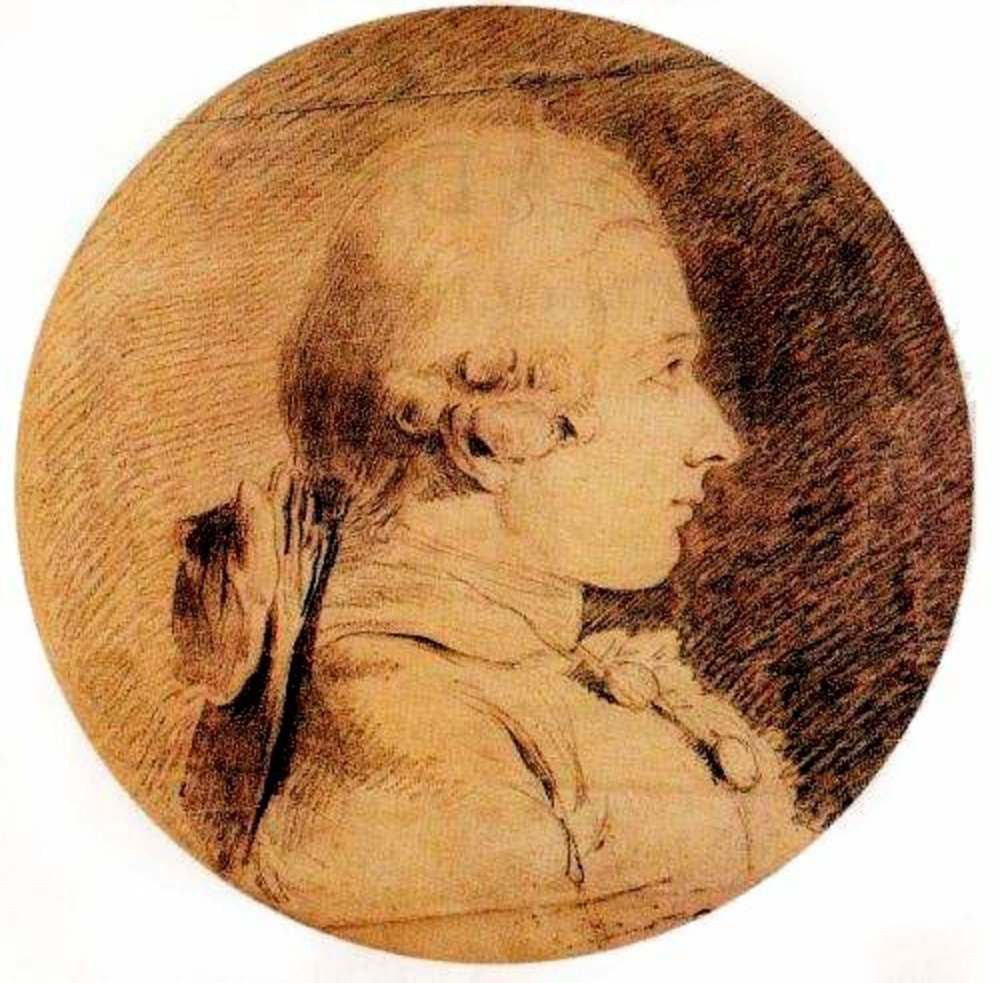
2) The headliner — The Marquis de Sade
Off with his head — You know you’re a naughty boy when your penchant for taking joy from the pain of others is the genesis for the words “sadism” and “sadist.” The Marquis de Sade was a notorious French aristocrat, revolutionary and politician, but was most famed for his acts of sexual cruelty and his writings, in which he depicted sexual fantasies with an emphasis on violence, criminality and blasphemy. He spent more than 30 years in jails and asylums and almost became a victim of the guillotine. In 1801, Napoleon had him imprisoned, but after the intervention of his family, he was declared insane in 1803 and spent his final years confined to an asylum at Charenton, France, where he was under the care of Dr. L.J. Ramon. When he died in 1814, his will stipulated he was to be buried among the trees of his estate at Malmaison, and for acorns to be scattered over his grave. But Ramon failed to honour this request and de Sade was buried at the asylum. Later, during renovations, the body was exhumed and the doctor took possession of it because he was a believer in phrenology, a pseudoscience popularized in the late 1700s in which a person’s skull was believed to reveal his or her personality and other characteristics. According to MentalFloss.com, Ramon took the skull and analyzed its bumps. “In the ridges and valleys of bone, he found evidence of ‘goodwill… no ferocity… no aggressive drives… no excess in erotic impulses,” the website notes. “All in all, Ramon concluded the skull was ‘in every way similar to that of a father of the church.” Yeah, right. He later turned the skull over to Johann Spurzheim, one of the founders of phrenology, who died with it in his possession. The skull has been lost to history, along with the rest of de Sade’s body.
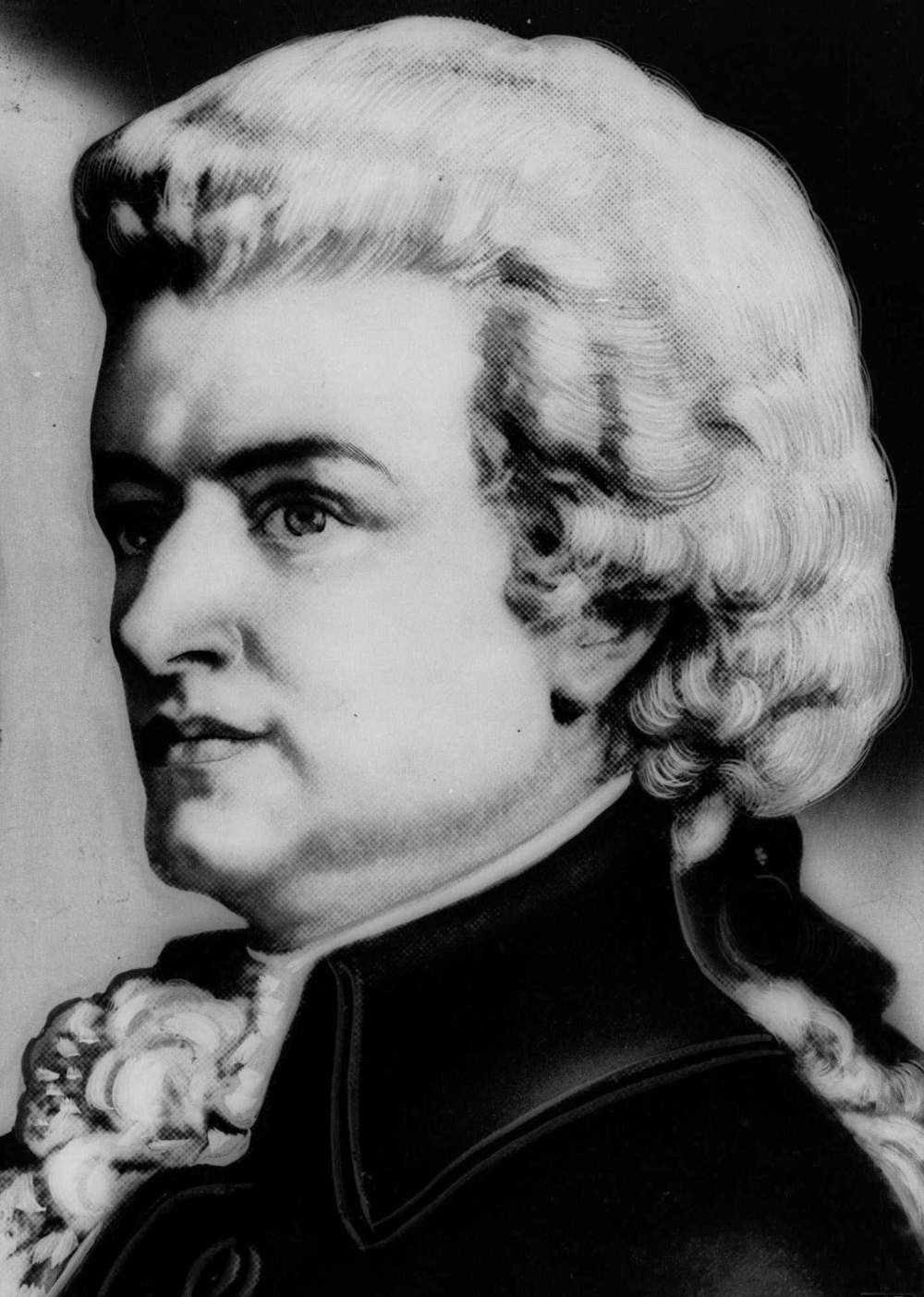
1) The headliner — Wolfgang Amadeus Mozart
Off with his head — There is no doubt Mozart, born Jan. 27, 1756, in Salzburg, Austria, was one of, if not the greatest, composers of all time. A child prodigy, he was competent on keyboard and violin by age five, and composed more than 600 works, many acknowledged as the height of symphonic and operatic achievement. He was a giant who profoundly reshaped the world of classical music. But what happened to his skull? Well, according to NationalGeographic.com, a decade after the composer’s death in 1791, a gravedigger named Joseph Rothmayer supposedly snatched the skull as a souvenir. Mozart had been buried in a common grave, and the practice at the time was to eventually clear them to make way for new bodies. As the story goes, Mozart’s skull was passed around before landing in the hands of famed anatomist Joseph Hyrtl, who attached a red label describing it as the top of the cranium. In 1902, the skull was quietly handed over to the curators at the Salzburg Mozarteum Foundation, where it was on display for several decades, though its provenance had not been thoroughly fact-checked. In the late 1980s, a forensic anthropologist examined the skull and noted it matched contemporary portraits of Mozart, and showed marks from a fall that may have hastened his death. In 2006, however, DNA tests for Austrian state TV failed to find a match with some of Mozart’s dead relatives. “Which either means that the skull is a fake, or that there was some infidelity going on,” notes National Geographic. The online magazine Atlas Obscura calls the results “entirely inconclusive,” adding the fact the skull took a hard hit a year before its owner died is consistent with the headaches Mozart described in the last year of his life. “But this too is ultimately speculative, and the mystery of Mozart’s skull will, for the time being, remain unsolved.”
Coincidentally, like Mozart, both Ludwig van Beethoven and Joseph Haydn had part or all of their skulls stolen. It all makes for fascinating reading, but personally we think there are better ways to get a head.
doug.speirs@freepress.mb.ca