

Minor course corrections in race toward level playing field
Minor course corrections in race toward level playing field
Advertisement
Read this article for free:
or
Already have an account? Log in here »
To continue reading, please subscribe:

Digital Subscription
One year of digital access for only $205*
- Enjoy unlimited reading on winnipegfreepress.com
- Read the E-Edition, our digital replica newspaper
- Access News Break, our award-winning app
- Play interactive puzzles
*First annual payment billed as $205.00 + GST for one year. This annual subscription will automatically renew at $233.00 + GST every 52 weeks (10% off the regular annual price of $259.35). Offer available to new and qualified returning subscribers only. Cancel any time.
To continue reading, please subscribe:
Add Free Press access to your Brandon Sun subscription for only an additional
$1 for the first 4 weeks*
- Enjoy unlimited reading on winnipegfreepress.com
- Read the E-Edition, our digital replica newspaper
- Access News Break, our award-winning app
- Play interactive puzzles
*Your next Brandon Sun subscription payment will increase by $1.00 and you will be charged $17.95 plus GST for four weeks. After four weeks, your payment will increase to $24.95 plus GST every four weeks.
Read unlimited articles for free today:
or
Already have an account? Log in here »
Hey there, time traveller!
This article was published 01/06/2016 (3756 days ago), so information in it may no longer be current.
For most Manitobans, the 2016 budget was the first real chance to see how our new provincial government plans to manage the economy. Entrepreneurs were looking for real policy action to halt the unsustainable growth of government and address our uncompetitive tax climate.
While the government provided a few positive first steps to tackle these issues, there is still much work left to be done to unleash Manitoba’s full economic potential.
Entrepreneurs rank sustainable spending and balanced budgets as one of their highest priorities — behind only the total tax burden they face. The key to balancing a budget is keeping operating spending — the day-to-day costs of running government, such as employee salaries, office supplies and building rent — under control. To do this, government must limit operating spending growth to no more than the rate of inflation and population growth.
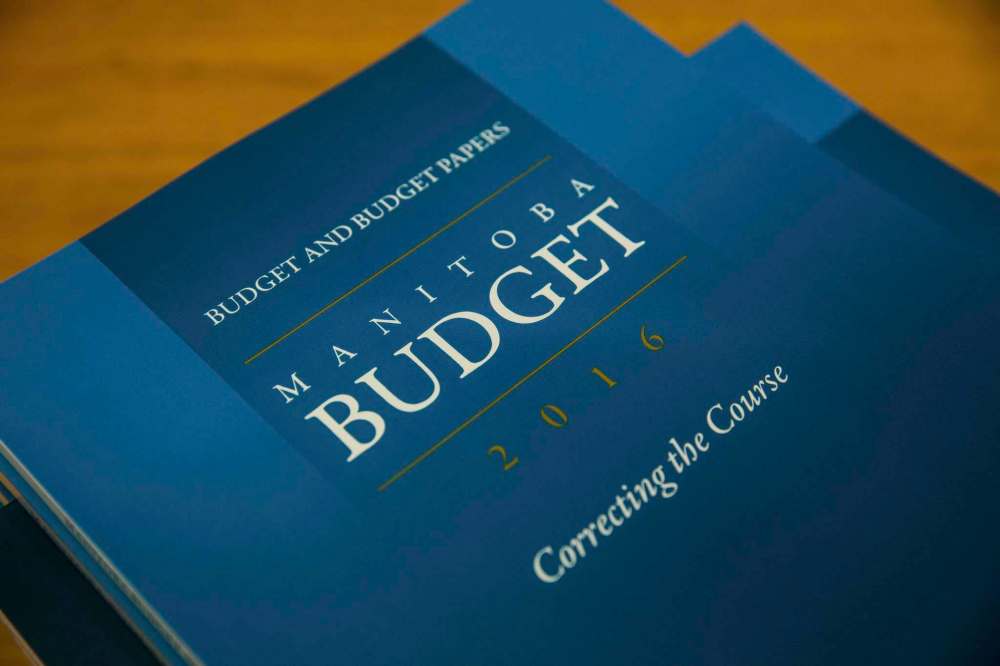
For Manitoba, this means spending should grow by no more than 2.7 per cent annually if the government is to have balanced books and healthy fiscal fundamentals. Spending in 2015 was significantly higher than planned. Compared to the 2015 budget — a more apples-to-apples comparison — spending is up 5.2 per cent.
As long as spending continues to increase beyond the sustainable benchmark, it will be difficult to balance the budget. While the deficit is shrinking in 2016 (a good thing), a balanced budget isn’t proposed until 2024. That is behind current targets for many provinces and the federal government and well beyond what entrepreneurs consider acceptable.
Spending levels and deficits matter because they impact tax rates. As Manitobans know all too well, today’s deficits are tomorrow’s taxes. That’s why it should come as no surprise to Manitobans that addressing our uncompetitive tax climate is entrepreneurs’ top priority.
In the latest Canadian Federation of Independent Business (CFIB) inter-provincial tax comparison, Manitoba’s tax system placed sixth in Canada. No matter which tax you look at — personal income taxes, sales taxes, etc. — Manitoba fares poorly in almost every area.
A middling tax grade may not concern some, but for entrepreneurs competing to attract capital investment dollars and workers to Manitoba, the lure of brighter business climates is a tough hurdle to overcome. The two most tax competitive provinces for small businesses happen to be our Prairie neighbours: Alberta and Saskatchewan.
The fiscal reality facing Manitoba’s government means the strong measures needed on this front can’t all happen at once. That’s why entrepreneurs wanted action on two tax policies, both of which are as rich in symbolism as they are in substance: eliminating personal income tax “bracket creep” and increasing the small-business corporate income tax threshold.
Manitoba, Nova Scotia and Prince Edward Island are the only provinces that do not index personal income tax systems annually to compensate for inflation. This failure results in small but steady tax increases that push residents into higher tax brackets and rates, even though their real income and spending power hasn’t changed.
Because most provinces do adjust tax brackets and basic personal exemption (the amount you can earn before paying tax) for inflation, the personal income tax gap between Manitoba and other provinces has grown over the years.

Eliminating “bracket creep” as proposed in the 2016 budget is a great first step to ensure we don’t keep falling further behind. Far stronger action, such as raising the basic personal exemption to the national average by 2020, is still needed.
On the corporate income tax side, Manitoba has been a leader in lowering the tax rate for small businesses, but has been a laggard in allowing all small businesses to access the rate. Manitoba is one of only two provinces yet to set its small-business tax exemption threshold at $500,000.
Increasing the small-business tax threshold to $500,000, as promised during the election in response to CFIB’s election survey, would have sent a clear message Manitoba’s government believes in levelling the playing field for entrepreneurs.
For a government less than two months old, putting together the 2016 Manitoba budget and sharing its economic vision is an impressive feat. The minor course corrections undertaken in the budget should be applauded, but they aren’t nearly enough to unleash Manitoba’s full economic potential.
Elliot Sims is the Manitoba director of provincial affairs with the Canadian Federation of Independent Business.
Related Articles
No rebate for high-income seniors under province's new tax plan
Advertisement Advertise With Us
Advertisement Advertise With Us