

The imitation game
Playing pretend can go too far for some people
Advertisement
Read this article for free:
or
Already have an account? Log in here »
To continue reading, please subscribe:
Digital Subscription
One year of digital access for only $1.44 a week*
- Enjoy unlimited reading on winnipegfreepress.com
- Read the E-Edition, our digital replica newspaper
- Access News Break, our award-winning app
- Play interactive puzzles
*Billed as $5.77 plus GST every four weeks. After 52 weeks, price increases to the regular rate of $19.95 plus GST every four weeks. Offer available to new and qualified returning subscribers only. Cancel any time.
To continue reading, please subscribe:
Add Free Press access to your Brandon Sun subscription for only an additional
$1 for the first 4 weeks*
- Enjoy unlimited reading on winnipegfreepress.com
- Read the E-Edition, our digital replica newspaper
- Access News Break, our award-winning app
- Play interactive puzzles
*Your next Brandon Sun subscription payment will increase by $1.00 and you will be charged $17.95 plus GST for four weeks. After four weeks, your payment will increase to $24.95 plus GST every four weeks.
Read unlimited articles for free today:
or
Already have an account? Log in here »
Hey there, time traveller!
This article was published 25/06/2016 (3626 days ago), so information in it may no longer be current.
There are months to go until Halloween, but a 39-year-old Ottawa woman tried to get a jump on the fun by dressing up as her 73-year-old mother.
The unnamed woman made national headlines earlier this month when she donned a wig, glasses and “clothing suited to an older person” and took a road test in her elderly mom’s place.
Not surprisingly, the instructors at the road test centre were suspicious and alerted police. “It turned out she was taking the driver’s test on behalf of her mother, and had told the officers she did that because her mother was nervous about taking her test,” Staff Sgt. Rick Labelle of the Smith Falls Police Service told the media.
The woman has been charged with impersonation in a case that generated a few chuckles among newspaper readers, as famed actress Meryl Streep did earlier this month when she donned a fat suit, messy comb-over wig and orange spray tan to impersonate bombastic billionaire Donald Trump.
So the Ottawa woman wanted to help her nervous mom and Streep played Trump to help a New York City charity event, but we’re not entirely sure what motivated the great pretenders on this week’s list of the Top Five Famous Impostors of All Time:
5) The Great Pretender — Steven Jay Russell
The Improbable Impersonation(s) — The outlandish tale of Steven Russell, nicknamed “Houdini” and “King Con” for his remarkable ability to escape from prison, was turned into I Love You, Phillip Morris (2009), starring Jim Carrey. In 1992, behind bars after faking a slip-and-fall accident, Russell used civilian clothes and a walkie-talkie to pose as a guard and walk out of prison. After two years on the run, Russell was back in jail and met and fell in love with another inmate, Phillip Morris. On their release, Russell wanted to provide Morris with a lavish lifestyle, so he embezzled nearly $1 million from a medical company. As a result, he was slapped with a staggering $950,000 bail. Posing as a judge, he phoned the Harris County Records Office and was able to lower the bail to $45,000, which he promptly posted. Three days later, he was back in the slammer, where he began collecting green highlighters and used them to dye spare prison garments green to mimic doctors’ scrubs. Thus disguised, he walked out the front door and joined Morris in Mississippi, where Russell was nabbed about 10 days later. Next, he began losing weight and used laxatives to simulate the symptoms of AIDS. Using a prison typewriter, he falsified his medical records and was sent to a nursing home to die. There he impersonated a doctor and sent the prison certificates of his own death. Nabbed yet again, he faked a heart attack and was taken to hospital, where he phoned the FBI agents guarding him, pretending to be an FBI detective, to let them know they no longer needed to guard him. He is currently in prison serving a 144-year sentence.
4) The Great Pretender — Princess Caraboo
The Improbable Impersonation — On April 3, 1817, an apparently disoriented young woman surfaced in a small village near Bristol, England. She wore a dark turban and spoke a language no one could understand. A few weeks later, coincidentally, a Portuguese sailor arrived and claimed to speak her dialect. The sailor “translated” her wild story, persuading her hosts she was Princess Caraboo from the island of Javasu in the Indian Ocean. The rollicking story claimed she had been kidnapped by pirates, then escaped by jumping overboard and swimming to shore through the stormy English Channel. The fantastic tale vaulted Princess Caraboo to fame and she was reportedly treated like visiting royalty by local dignitaries for the next 10 weeks. The princess famously used a bow and arrow, fenced, swam naked and prayed to a god she named Allah-Tallah. Of course, nothing this good can last. After reading reports in a local newspaper, a boarding-house keeper recognized her photo and informed the phony princess’s hosts she was, in fact, Mary Baker, the daughter of a cobbler from Devon who used to entertain children by speaking in invented languages. Apparently to avoid embarrassment, the family Baker was staying with shipped her off to America, where she continued posing as Princess Caraboo, even appearing onstage in Philadelphia. She later returned to England, settled down under her real name, gave birth to a daughter, and never faced charges for the audacious impersonation. In 1994, her story was transferred to the silver screen in Princess Caraboo, starring Phoebe Cates.
3) The Great Pretender — Anna Anderson
The Improbable Impersonation — On July 17, 1918, Bolshevik secret police marched the last Russian royal family — Czar Nicholas II, his wife Alexandra, and their five children — into the cellar of a house in Yekaterinburg and executed them. For years, however, rumours persisted the youngest daughter, Anastasia, had survived the massacre. Not surprisingly, impostors started popping up, but no one gained as much fame as Anna Anderson. In 1920, Anderson turned up in a mental hospital in Berlin as a Jane Doe, but two years later began claiming to be the grand duchess. She claimed to have survived the shooting and that two brothers had carried her out of the bloodied basement and took her to safety in Romania. Most of the surviving relatives of the Romanovs dismissed her as a fraud, though she is said to have borne a striking resemblance to Anastasia and knew many personal details of the girl’s life. That alone won her the support of many wealthy Russian emigrants, who clung to the hope she was the legitimate heir to the throne. Her story became famous throughout the world and her supporters included Maria Rasputin, daughter of the legendary “mad monk” Grigori Rasputin, a close adviser to her father, the last czar. The would-be royal moved to America in 1968 and took the name Anderson. Her story spawned several books, the 1956 film Anastasia starring Ingrid Bergman and the 1997 animated movie Anastasia, but she was never able to prove her identity in court. The tall tale was finally debunked in the 1990s when posthumous DNA evidence proved she was not related to the Russian royal family. In 2007, the remains of the last members of the slain czar’s family were unearthed in Russia. It is widely believed Anna was Franziska Schanzkowska, a Polish factory worker who vanished in 1920.
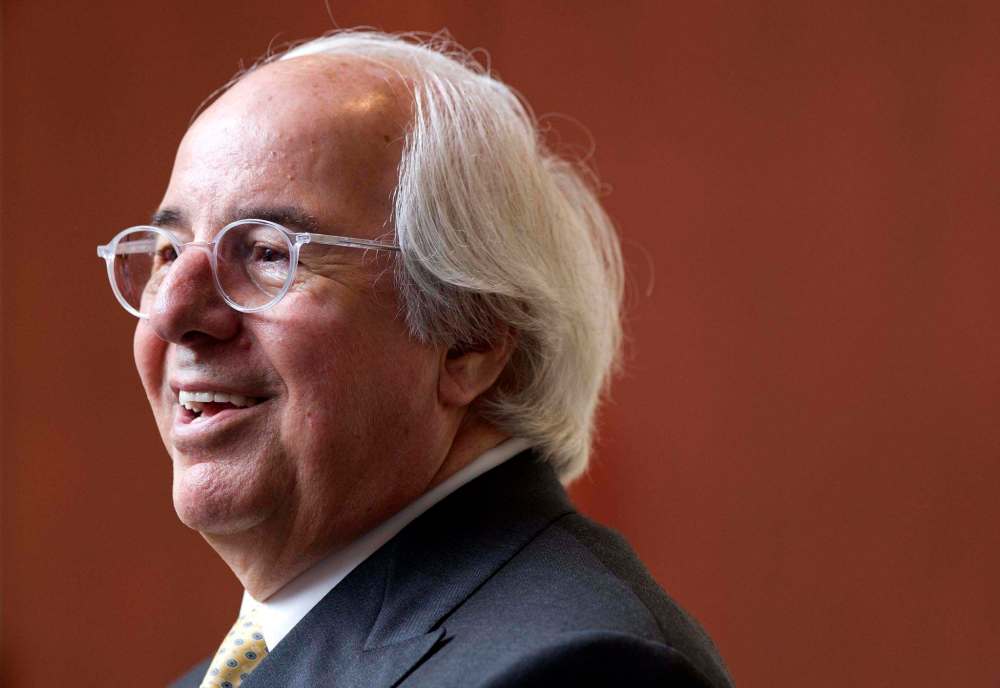
2) The Great Pretender — Frank Abagnale
The Improbable Impersonation — Frank Abagnale’s life story inspired the 2002 Hollywood biopic Catch Me If You Can, in which Leonardo DiCaprio portrays a man considered one of the greatest confidence men of the 20th century, whose wild five-year ride in the 1960s ended with him being recruited by the U.S. government. According to his website, between the ages of 16 and 21, Abagnale had posed as an airline pilot, an attorney, a college professor and a pediatrician, along with cashing $2.5 million in fraudulent cheques in every U.S. state and 26 foreign countries. It was easier to cash bad cheques by dazzling tellers with impressive personalities, so he morphed into a pilot by telling Pan American Airlines he’d lost his uniform travelling and HQ sent him to pick up a new one. He then forged a pilot’s ID and licence. Masquerading as “Frank Williams,” Abagnale got free rides around the world by deadheading on scheduled flights. It’s estimated he travelled more than 1,600,000 kilometres on more than 250 flights, enjoying free food and lodging the entire time. (Although he was asked on numerous occasions, he never took the controls of plane in-flight.) Later, he forged a Harvard University law transcript, passed the Louisiana bar exam, and got a job at the Louisiana State Attorney General’s office at age 19. This legendary impostor was nabbed by French police when he was just 21, and spent time in the French, Swedish and U.S. prison systems. After five years, he was released on condition he help the federal government, without pay, by teaching them his fraudulent tricks. The charming rogue has worked as a consultant and lecturer for the FBI ever since. He is considered the leading authority on financial foul play and has made legitimate millions teaching banks and businesses on how to avoid fraud.
1) The Great Pretender — Ferdinand Waldo Demara Jr.
The Improbable Impersonation(s) — There are a lot of impostors, but there is only one who earned the infamous title of “the great Impostor,” which also happens to be the title of the 1961 movie wherein Ferdinand Demara was portrayed by Tony Curtis. Compiled under assorted names and stolen identities, his careers included civil engineer, zoology graduate, doctor of applied psychology, monk (Trappist and Benedictine), assistant warden at a Texas prison, hospital orderly, philosophy dean at a Pennsylvania college, lawyer, editor, sheriff’s deputy and teacher. In 1957, Time magazine described this chameleon as an “audacious, unschooled but amazingly intelligent pretender who always wanted to be a Somebody, and succeeded in being a whole raft of Somebody Elses.” His greatest hoax came during the Korean War, when he stole the credentials of a doctor he knew, Joseph Cyr, and masqueraded as a surgeon on the Canadian naval destroyer HMCS Cayuga. When 16 combat casualties were brought on board, it was left to this untrained “doctor” to save them. Armed with a photographic memory and high IQ, Demara ducked into his quarters with a medical textbook and did some speed-reading on various surgeries, including the extraction of a bullet lodged near one soldier’s heart. Amazingly, none of the casualties died. He was eventually unmasked when news of his heroics made headlines in Canada. Among the interested readers was the mother of the real Joseph Cyr, who was then practising medicine in New Brunswick. The Canadian navy refused to press charges and Demara was shipped back to the United States, where his biography, The Great Impostor, became a bestseller in 1960. He died in California at age 60 of heart failure and complications from diabetes. Why’d he do it? “Rascality,” he once confessed. “Pure rascality.”
If we’re being honest, many of us root for these impostors because they carry off their hoaxes with a hefty dose of style and panache. Their motivations range from uncontrollable desires for fame and riches to simply escaping the drudgery of everyday life. At least that’s what we told our best friends, Tom Brady, Bill Gates and Angelina Jolie. See you in the movies.
doug.speirs@freepress.mb.ca