

There’s a new sheriff in town
Tories warn unions to not expect easy negotiations
Advertisement
Read this article for free:
or
Already have an account? Log in here »
To continue reading, please subscribe:
Monthly Digital Subscription
$1 per week for 24 weeks*
- Enjoy unlimited reading on winnipegfreepress.com
- Read the E-Edition, our digital replica newspaper
- Access News Break, our award-winning app
- Play interactive puzzles
*Billed as $4.00 plus GST every four weeks. After 24 weeks, price increases to the regular rate of $19.95 plus GST every four weeks. Offer available to new and qualified returning subscribers only. Cancel any time.
Monthly Digital Subscription
$4.99/week*
- Enjoy unlimited reading on winnipegfreepress.com
- Read the E-Edition, our digital replica newspaper
- Access News Break, our award-winning app
- Play interactive puzzles
*Billed as $19.95 plus GST every four weeks. Cancel any time.
To continue reading, please subscribe:
Add Free Press access to your Brandon Sun subscription for only an additional
$1 for the first 4 weeks*
*Your next subscription payment will increase by $1.00 and you will be charged $16.99 plus GST for four weeks. After four weeks, your payment will increase to $23.99 plus GST every four weeks.
Read unlimited articles for free today:
or
Already have an account? Log in here »
Hey there, time traveller!
This article was published 30/09/2016 (3452 days ago), so information in it may no longer be current.
Manitoba’s finance minister says the province needs to do a better job of negotiating contracts with public-sector unions if it is going to get its fiscal house in order.
In an interview, Cameron Friesen would not say if the Pallister government will demand wage freezes in future contract negotiations; nor would he set any specific pay guidelines. He said such targets are now being drafted.
But facing a projected summary deficit of $911 million this fiscal year and with no end to negative balance sheets in the near future, Friesen said the government must negotiate on behalf of “all Manitobans.”
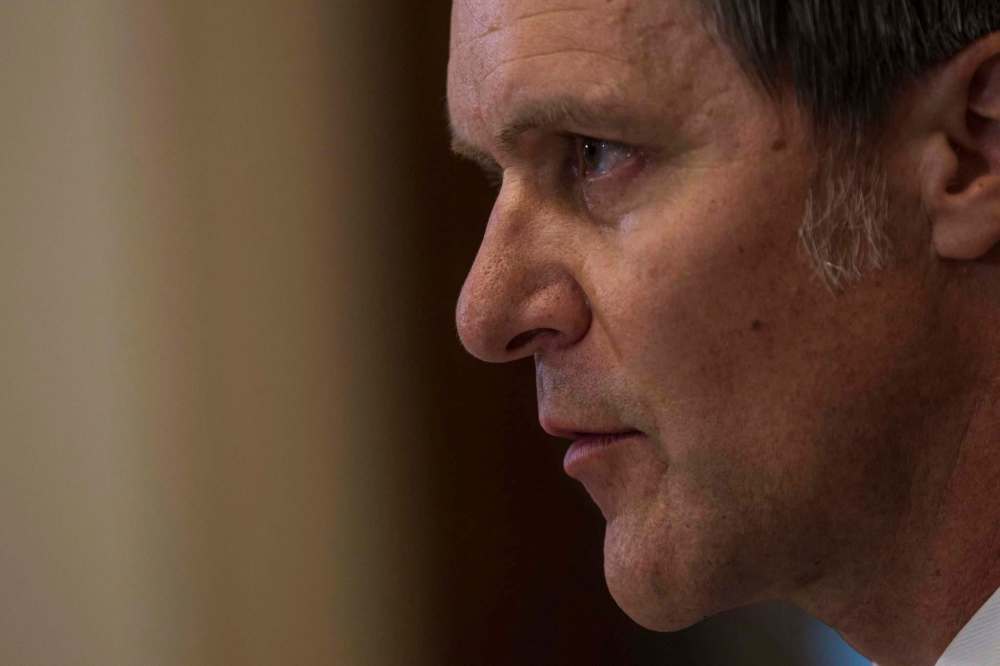
“These are very exceptional financial conditions we find ourselves in as a province. You don’t make headway as a province unless you also bargain well on behalf of all Manitobans. We are bargaining on behalf of Manitobans.”
One indicator for measuring bargaining success is the results of workplace-ratification votes, he said.
“Over and over and over again,” Friesen said, public-sector union members have voted 95 per cent or more for negotiated settlements.
“So as the minister responsible for this area, I have to ask myself if that is an acceptable number and whether that represents that government has bargained well enough on behalf of all citizens,” he said.
Friesen wouldn’t directly criticize a five-year contract the Pallister cabinet approved earlier this month with the province’s engineers that had been negotiated during the spring election. But he left little doubt the province would not entertain such increases in the next few years.
A tentative deal calling for annual wage increases of one, one, two, two and two per cent was reached with the engineers March 12. The agreement is retroactive to the spring of 2014. In this fiscal year, some of the engineers will receive a 2.5 per cent top-up in addition to the general two per cent wage hike, bringing their total raise to 4.5 per cent.
Friesen said the PCs had no choice but to honour the deal that had been negotiated when they took office, but it will set no precedent for the new government.
“It doesn’t mean, somehow, that now government is going to continue in that way, shape and form on a go-forward basis,” he said.
“We’re expecting to lead the nation in terms of economic performance with a year-over-year growth of less than 2.5 per cent. And if you’re negotiating (wage increases) north of two per cent it makes it a huge challenge (fiscally) to go in the right direction,” Friesen said.
Michelle Gawronsky, president of the Manitoba Government and General Employees’ Union, said the civil service has “huge recruitment and retention problems,” and the province will have to pay to keep good people.
“If you don’t have the good people there, then you don’t have the service,” she said.
The MGEU is the largest union in the province, representing 40,000 workers, including the bulk of civil servants.
Gawronsky said she is puzzled when Friesen cites high ratification rates. She said her union doesn’t release the results of a ratification vote, only whether the deal is ratified.
She said, however, it is in the government’s best interests to have a happy, productive workforce.

Gawronsky said the MGEU feels no trepidation in bargaining with the new government. Its approach, she said, will not change.
“The ball is going to be in their court to see how well they’re going to be valuing the folks that provide the services that they claim they are going to be protecting,” she said.
larry.kusch@freepress.mb.ca