

Theatre ups the comfort level
Sensory-friendly performances make experience more accessible

Advertisement
Read this article for free:
or
Already have an account? Log in here »
To continue reading, please subscribe:
Digital Subscription
One year of digital access for only $1.44 a week*
- Enjoy unlimited reading on winnipegfreepress.com
- Read the E-Edition, our digital replica newspaper
- Access News Break, our award-winning app
- Play interactive puzzles
*Billed as $5.77 plus GST every four weeks. After 52 weeks, price increases to the regular rate of $19.95 plus GST every four weeks. Offer available to new and qualified returning subscribers only. Cancel any time.
To continue reading, please subscribe:
Add Free Press access to your Brandon Sun subscription for only an additional
$1 for the first 4 weeks*
- Enjoy unlimited reading on winnipegfreepress.com
- Read the E-Edition, our digital replica newspaper
- Access News Break, our award-winning app
- Play interactive puzzles
*Your next Brandon Sun subscription payment will increase by $1.00 and you will be charged $17.95 plus GST for four weeks. After four weeks, your payment will increase to $24.95 plus GST every four weeks.
Read unlimited articles for free today:
or
Already have an account? Log in here »
Hey there, time traveller!
This article was published 25/10/2016 (3501 days ago), so information in it may no longer be current.
What does accessibility look like?
It may look like ramps and wider doors for wheelchairs at restaurants and cafés or accessible seating at concerts and sporting events. It may look like having American Sign Language interpreters at speaking events. In the theatre world, accessibility is increasingly looking like providing relaxed performances.
Relaxed or sensory-friendly performances are intended for anyone who may find the theatre experience overstimulating, including people living with autism spectrum disorder, learning disorders or sensory-processing disorders.
There are a few technical ways to chill out a show. Lighting is adjusted to be less intense, for example. The volume on sound cues, especially startling ones, is dialed down.
Other modifications address the rather uptight etiquette of theatregoing. I mean, sitting silently and still in a pitch-black theatre you know you can’t leave is challenging at the best of times — just ask anyone who’s ever been overcome by the sudden urge to unwrap a candy the second the lights go down. But for people with sensory sensitivities or who have difficulty with social cues (such as sitting quietly in a theatre), those demands can provoke anxiety. So patrons at relaxed shows are allowed to leave the theatre or take a break. The house lights are dimmed, not blacked out, and the use of a fidget toy or sensory pillow is allowed.
Come to think of it, I don’t see why all theatre performances couldn’t be relaxed a little. People tend to enjoy things more when they are comfortable. Relaxed performances have been offered on Broadway for a few years. They’ve become standard in London’s West End. Now, relaxed theatre is coming to Winnipeg.
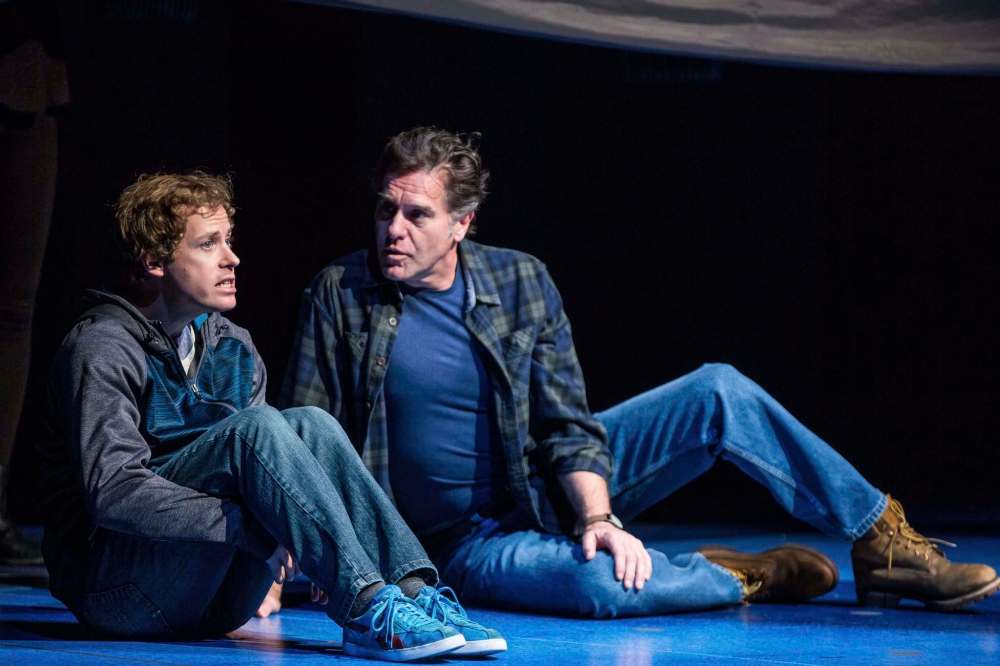
The Royal Manitoba Theatre Centre is offering a relaxed performance of its latest, The Curious Incident of the Dog in the Night-Time (the relaxed performance is Nov. 10). It’s fitting that Curious should have a relaxed show; based on the acclaimed 2003 novel by Mark Haddon, Simon Stephens’ mystery is about a 15-year-old boy named Christopher who is said to be on the autism spectrum. But it’s also a play about empathy.
When Angela Broadbent, the education and community engagement manager at the theatre, found out the company was doing Curious, she started researching relaxed performances. “It was very inspiring,” she says. “What better way to bring people to the theatre who might not otherwise come through our doors?”
This form of accessible theatre is becoming even more accessible as it catches on. For example, relaxed theatre performances are no longer just in children’s theatre. (Another small detail: RMTC also has a detailed FAQ page on its website outlining what to expect at the relaxed performance. That’s accessibility, too.)
RMTC partnered with the Theatre Development Fund, a New York City not-for-profit that launched the Autism Theatre Initiative in 2011. The fund advised RMTC. The creative team here in town looked at this particular production and came up things it could do to make the show sensory-friendly.

Set, costume and lighting designer Erin Gruber has put on relaxed performances in Ontario. They do take planning, thought, and foresight, but the biggest challenges have nothing to do with the intended audience. “The biggest difference is front of house,” she says. “It’s finding a company willing to put in the time and take the initiative.”
For Curious, Gruber and her team made sensory considerations from the word go, so there wasn’t much to adjust. While other productions of the play use strobe lights, she decided not to use them. As she says, it’s about making an environment in which people can be themselves.
“They or their families aren’t going to feel shamed if they aren’t behaving in a way that fits neuro-typical expectations.”
That’s just it. Too often, it’s the people living with disabilities who are expected to conform to such expectations. They must adjust, acquiesce or avoid — if they aren’t excluded outright, that is. Accessibility is too often an afterthought. But accessibility is about making people feel included, safe and welcome. It’s about understanding someone else’s needs, which might be different than your own.
jen.zoratti@freepress.mb.ca
Jen Zoratti is a columnist and feature writer working in the Arts & Life department, as well as the author of the weekly newsletter NEXT. A National Newspaper Award finalist for arts and entertainment writing, Jen is a graduate of the Creative Communications program at RRC Polytech and was a music writer before joining the Free Press in 2013. Read more about Jen.
Every piece of reporting Jen produces is reviewed by an editing team before it is posted online or published in print – part of the Free Press‘s tradition, since 1872, of producing reliable independent journalism. Read more about Free Press’s history and mandate, and learn how our newsroom operates.
Our newsroom depends on a growing audience of readers to power our journalism. If you are not a paid reader, please consider becoming a subscriber.
Our newsroom depends on its audience of readers to power our journalism. Thank you for your support.
Jen Zoratti is a columnist and feature writer working in the Arts & Life department, as well as the author of the weekly newsletter NEXT. A National Newspaper Award finalist for arts and entertainment writing, Jen is a graduate of the Creative Communications program at RRC Polytech and was a music writer before joining the Free Press in 2013. Read more about Jen.
Every piece of reporting Jen produces is reviewed by an editing team before it is posted online or published in print – part of the Free Press‘s tradition, since 1872, of producing reliable independent journalism. Read more about Free Press’s history and mandate, and learn how our newsroom operates.
Our newsroom depends on a growing audience of readers to power our journalism. If you are not a paid reader, please consider becoming a subscriber.
Our newsroom depends on its audience of readers to power our journalism. Thank you for your support.
Advertisement Advertise With Us
Advertisement Advertise With Us
History
Updated on Tuesday, October 25, 2016 7:52 AM CDT: Adds photo