

Brave hearts
Several Manitobans among country's greatest war heroes
Advertisement
Read this article for free:
or
Already have an account? Log in here »
To continue reading, please subscribe:
Digital Subscription
One year of digital access for only $1.44 a week*
- Enjoy unlimited reading on winnipegfreepress.com
- Read the E-Edition, our digital replica newspaper
- Access News Break, our award-winning app
- Play interactive puzzles
*Billed as $5.77 plus GST every four weeks. After 52 weeks, price increases to the regular rate of $19.95 plus GST every four weeks. Offer available to new and qualified returning subscribers only. Cancel any time.
To continue reading, please subscribe:
Add Free Press access to your Brandon Sun subscription for only an additional
$1 for the first 4 weeks*
- Enjoy unlimited reading on winnipegfreepress.com
- Read the E-Edition, our digital replica newspaper
- Access News Break, our award-winning app
- Play interactive puzzles
*Your next Brandon Sun subscription payment will increase by $1.00 and you will be charged $17.95 plus GST for four weeks. After four weeks, your payment will increase to $24.95 plus GST every four weeks.
Read unlimited articles for free today:
or
Already have an account? Log in here »
Hey there, time traveller!
This article was published 14/11/2018 (2755 days ago), so information in it may no longer be current.
There may be some heightened symbolism — and a little more volume — as Canadians gather Sunday for Remembrance Day ceremonies that will mark the 100th anniversary of the end of the First World War.
Back on Nov. 11, 1918, when news of the end of the war broke, Canadian churches spontaneously rang their bells to mark the end of a conflict that left more than 66,000 Canadians dead and 172,000 wounded.
One hundred years later, the Royal Canadian Legion-Veterans Affairs “Bells of Peace” campaign will see legion branches, spiritual centres and community locations throughout Canada ring their bells 100 times during the setting sun.
“As well as on naval ships, they’ll be tolling bells 100 times,” Veterans Affairs spokeswoman Patsy Bolger-Gallant said. “Because at the end of the armistice, of course, it was quite a celebration and the bells tolled all across the globe really. The legion is reaching out to communities right across the country to have this happen.”
It is the perfect time for us to pay solemn tribute to Seven Canadian War Heroes Whose Stories of Sacrifice and Courage Continue to Inspire Canadians:
5) The Canadian hero: Lt. Alexander Roberts Dunn
The story of courage: It may look like nothing more than a bronze cross attached to a strip of ribbon, but the Victoria Cross is so much more. Instituted by Queen Victoria, it was the Commonwealth’s premier military decoration for gallantry and exceptional bravery in the face of the enemy, an honour that has been presented to 96 Canadians, or people closely associated with Canada. It was superseded in 1993 by the Canadian Victoria Cross, but the original British Empire decoration has lost none of its lustre. In 1854, at the age of 21, Alexander Roberts Dunn stepped into history as the first Canadian to be awarded the Victoria Cross for his actions while serving in the British army’s 11th Hussars during the Crimean War. Born in what is now Toronto in 1833, Dunn joined the Hussars as a junior officer in 1852. Two years later, he sailed with his regiment for Crimea, on the Black Sea in eastern Europe, where, on Oct. 25, 1854, the young lieutenant took part in the legendary Charge of the Light Brigade during the Battle of Balaclava. The brigade’s 670 cavalrymen infamously charged Russian guns at the end of a long, narrow alley, with additional enemy cannons on each side, in a heroic, albeit suicidal, example of British military discipline. The Canadian Encyclopedia says only 375 soldiers returned unharmed 25 minutes later. “During the withdrawal after the charge, Dunn saved the life of a fellow 11th Hussar, Troop Sergeant Bentley, whose horse would not keep up. He cut down three Russian cavalrymen who were attacking Bentley from the rear, giving him time to escape. Later, he cut down another Russian who was attacking a Hussar private,” the encyclopedia says. Not only is Dunn considered the first Canadian to have been awarded the Victoria Cross, he was the only officer to earn it during the Charge of the Light Brigade. Dunn was also among the very first group of recipients to be awarded the newly created medal, generally believed to be made from Russian cannons captured during the Crimean War. He died in 1868 after a hunting accident near Senafe, in present-day Eritrea. His grave lay forgotten until it was found by a British officer in the final days of the Second World War.
4) The Canadian hero: Lance Cpl. Fred Fisher
The story of courage: While Alexander Roberts Dunn was the first Canadian to win the Victoria Cross, St. Catharines-born Frederick Fisher was the first to be awarded a VC while serving in the Canadian military. Ten days after his 20th birthday, Fisher enlisted with the 5th Regiment, Royal Highlanders of Canada, better known as the Black Watch. In the early days of the First World War, Fisher’s battalion trained in southern England, where he reportedly learned to use a fairly new weapon of war, the machine-gun. By mid-April, the Canadians were one of six Allied divisions deployed in a great arc along the Ypres Salient — a bulge in the Allied lines — in Belgium. At 5 p.m. on April 22, 1915, the Germans pumped chlorine gas into the air at Ypres and a light breeze carried the greenish-yellow cloud toward the Allies. “The gas was accompanied by heavy artillery fire and followed by a German attack. Many of the French colonial troops died gasping in their trenches, while others broke and fled rearward. Three German divisions streamed through a six-kilometre gap that opened up next to Fisher’s battalion,” according to The Canadian Encyclopedia. A battery of field guns needed to keep the Germans at bay was at risk of falling into enemy hands and, when the battery commander realized he was about to be overrun, Fisher’s machine-gun crew were sent to help. They set up their gun in an abandoned building and opened fire, forcing the Germans back. After four of his crew were killed, Fisher returned to Canadian lines for reinforcements, then resumed attacking the Germans. The field guns were dismantled and hauled out of danger, which earned Fisher his VC. On April 23, while once again setting up his machine-gun, Fisher was struck by a bullet and died instantly. He was buried in a makeshift grave, but his body was never recovered. The CBC reported this month that Fisher’s VC was sent to his parents, as was a handwritten letter from King George V, stating: “It is a matter of sincere regret to me that the death of Lance Corporal Frederick Fisher deprived me of the pride of personally conferring upon him the Victoria Cross, the greatest of all military distinctions.”
3) The Canadian hero: William George (Billy) Barker
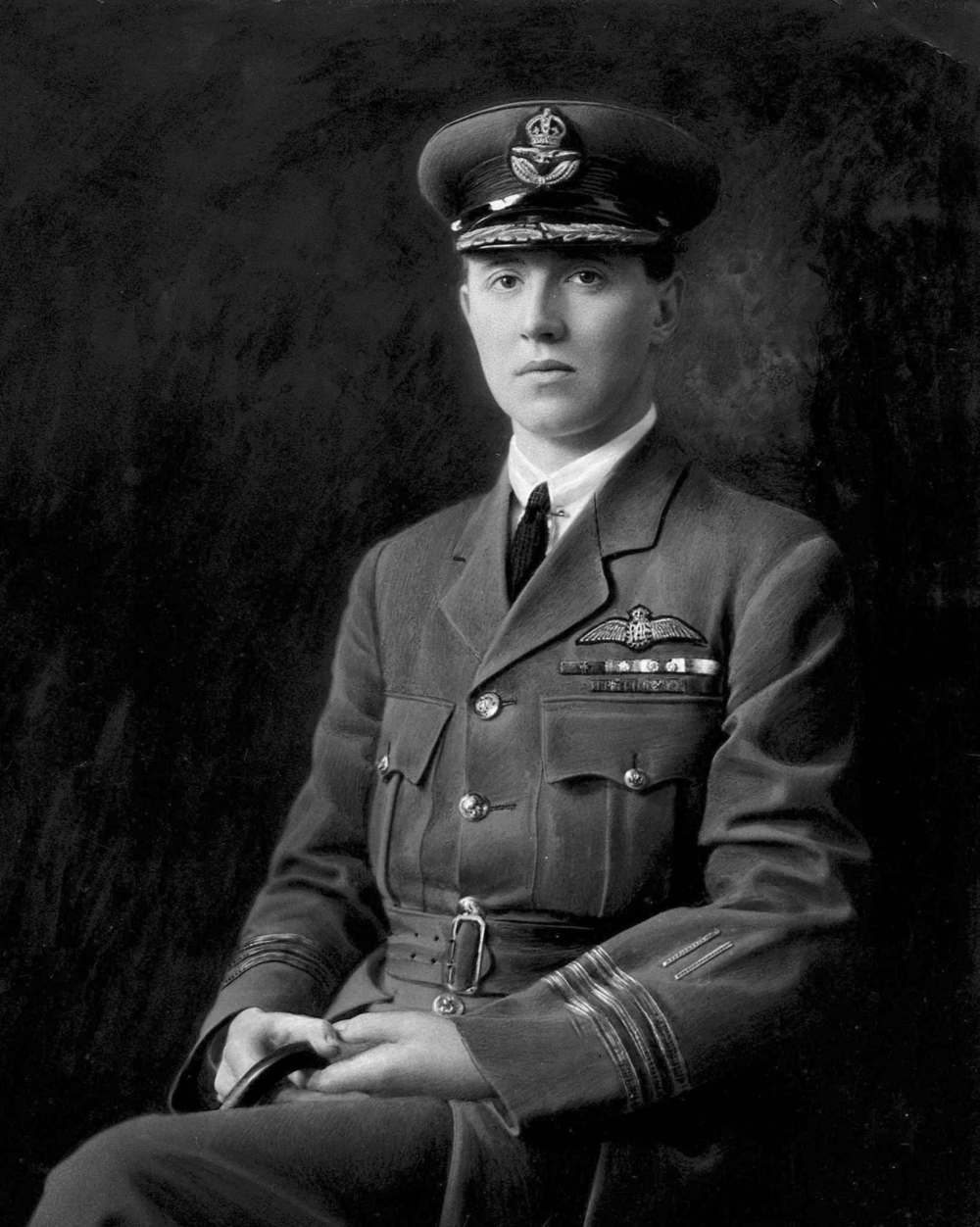
The story of courage: Everyone adores Snoopy, but the greatest First World War flying ace hailed from Manitoba. William George (Billy) Barker grew up riding horses and hunting on a farm near Dauphin, where his father taught him how to shoot a rifle. He was famed for being adept at shooting on the move, even on horseback. He joined the military when the First World War broke out in 1914. When the Royal Flying Corps began taking volunteers, they were looking for soldiers who had horseback-riding experience, because it was believed riding a horse required a heightened level of co-ordination and physical dexterity — the precise traits wanted in a pilot. So Barker joined the corps in 1916 and became a pilot by February 1917. When he earned his pilot’s wings, he needed only 55 minutes of instruction before flying solo. During his remarkable career with the RFC, Barker was credited with 53 aerial victories — making him an ace 10 times over. It has been reported he wasn’t the most skilled pilot, but compensated for this deficiency with his aggressive style and amazingly accurate marksmanship. One of his most celebrated exploits came on Christmas Day 1917 when he and his wingman, Lt. Harold Hudson, caught the Germans off guard, shooting up an airfield, setting fire to a hangar and damaging four German planes before dropping a placard wishing their enemies a “Happy Christmas.” It was on a flight over France in October 1918 that he earned his Victoria Cross. On his way to England from the front lines, he suddenly found himself facing an estimated 50 enemy fighters. “In the battle that ensued, despite being wounded three times in the legs and having most of one elbow shot away, Barker repelled the Germans and shot down four of their aircraft before crash-landing inside Allied lines. Severely wounded, he was awarded the Victoria Cross for his actions,” the website of Library and Archives Canada notes. When he returned to Canada in May 1919, he was the most decorated Canadian of the war, with the Victoria Cross, the Distinguished Service Order and Bar, the Military Cross and two bars, two Italian Silver Medals for Military Valour, and the French Croix de guerre. Fellow flyer Billy Bishop hailed him as “the deadliest air ace who ever lived.”
2) The Canadian hero: Sgt. Tommy Prince
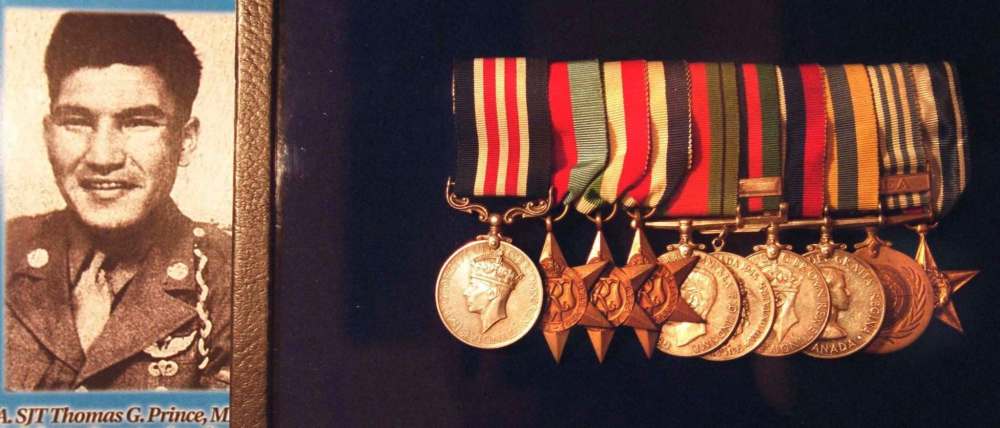

The story of courage: It would be a gross understatement to say the wartime exploits of Sgt. Thomas George (Tommy) Prince are the stuff of legend. “He was a quiet, ordinary man who had greatness thrust upon him by the force of one of the greatest conflicts in the history of western civilization. It’s as if he was born and bred for one great task and then cast aside by the very society he fought for. He was a true son of his people and a great warrior,” the Indigenous newspaper First Nations Drum declared. Born in a canvas tent in 1915 and raised on Brokenhead Ojibway Nation, about 70 kilometres northeast of Winnipeg, Prince was the great-great-grandson of Saulteaux Chief Peguis. One of 11 children in his family, he became a marksman when he joined the army cadets. “As soon as I put on my uniform,” he once remarked, according to a feature in the Ottawa Citizen, “I felt like a better man. I even tried to wear it to class.” From humble beginnings, this Manitoba hero went on to become one of the most decorated Indigenous soldiers in Canadian history, fighting heroically in both the Second World War and the Korean War. He was honoured with 11 medals during his service, including receiving the Military Medal from King George VI. He was one of only 59 Canadians to receive the Silver Star from the United States. In 1942, he answered a call for parachutists for the Canadian Parachute Battalion, which was then attached to an elite U.S.-Canadian commando unit known as the First Special Service Force, or “Devil’s Brigade.” One of his most celebrated exploits came in Anzio, Italy, in 1944, when he famously volunteered to run a communication line 1,400 metres to an abandoned farmhouse just spitting distance from a German artillery position. For three days, he reported on German movements via a communication wire. “When the wire was severed during shelling, he disguised himself as a peasant farmer and pretended to work the land around the farmhouse,” The Canadian Encyclopedia recalls. “He stooped to tie his shoes and fixed the wire while German soldiers watched, oblivious to his true identity.” Following the end of the Korean War, he returned to Winnipeg, where he suffered from addiction issues. At one point, he sold his medals to feed his addiction. He died in 1977. When a collector put Prince’s medals up for sale at public auction in 1997, a local fundraising effort financed their purchase and return to Winnipeg, where they were presented to the Prince family.
1) The Canadian hero(es): The Pine Street Boys — Sgt. Maj. Frederick William Hall, Lt. Robert Shankland and Cpl. Leo Beaumaurice Clarke
The stories of courage: Three heroic young men. Three Victoria Crosses. And one humble street in Winnipeg. If you’re a Winnipegger — or simply a patriotic Canadian — you know the story of the Pine Street Boys: Leo Clarke, Frederick William Hall and Robert Shankland. All three earned the Victoria Cross while fighting for their country in the First World War. Even more remarkably, all three hailed from the 700 block of what was then called Pine Street in Winnipeg’s West End. In 1925, the street they called home was renamed Valour Road in their honour. Here are their stories: Sgt. Maj. Frederick William Hall was 30 years old on April 24, 1915, during the 2nd Battle of Ypres in Belgium, infamous as the site of the first German gas attack on the western front. Hall was shot in the forehead and killed during a valiant attempt to rescue a wounded comrade calling for help about 15 metres from a trench. Hall was lifting the wounded man when he was struck. Cpl. Leo Clarke was 24 at the Somme front in France on Sept. 9, 1916, when he and his men fought their way into the centre of the enemy position and came under counterattack. Clarke was wounded by a bayonet in the knee but continued to fight alone, killing 18 enemy soldiers and taking one prisoner. Though he was told to go to hospital, he returned to duty the next day. He died when a shell blast buried him in a trench a month later. Lt. Robert Shankland was 30 during the Battle of Passchendaele, Belgium, in October 1917 when he led the remnants of his own platoon and men from other companies to inflict heavy casualties on the retreating enemy. He later stopped a counterattack, then made his way through the battlefield to communicate his company’s position to the battalion headquarters before returning to rejoin his men and hold the position until relieved. He survived the war, served in the Second World War and died at age 80 on Jan. 20, 1968. In 2014, their medals were loaned to the Manitoba Museum for an exhibit to mark the 100th anniversary of the start of the Great War.
Lest we forget.
doug.speirs@freepress.mb.ca
History
Updated on Wednesday, November 14, 2018 9:53 AM CST: Adds photos
Updated on Wednesday, November 14, 2018 12:47 PM CST: Updates headline