City ‘desperately’ needs better drug treatment, mayor tells Ottawa
Read this article for free:
or
Already have an account? Log in here »
To continue reading, please subscribe:

Digital Subscription
One year of digital access for only $205*
- Enjoy unlimited reading on winnipegfreepress.com
- Read the E-Edition, our digital replica newspaper
- Access News Break, our award-winning app
- Play interactive puzzles
*First annual payment billed as $205.00 + GST for one year. This annual subscription will automatically renew at $233.00 + GST every 52 weeks (10% off the regular annual price of $259.35). Offer available to new and qualified returning subscribers only. Cancel any time.
To continue reading, please subscribe:
Add Free Press access to your Brandon Sun subscription for only an additional
$1 for the first 4 weeks*
- Enjoy unlimited reading on winnipegfreepress.com
- Read the E-Edition, our digital replica newspaper
- Access News Break, our award-winning app
- Play interactive puzzles
*Your next Brandon Sun subscription payment will increase by $1.00 and you will be charged $17.95 plus GST for four weeks. After four weeks, your payment will increase to $24.95 plus GST every four weeks.
Read unlimited articles for free today:
or
Already have an account? Log in here »
Hey there, time traveller!
This article was published 11/12/2018 (2841 days ago), so information in it may no longer be current.
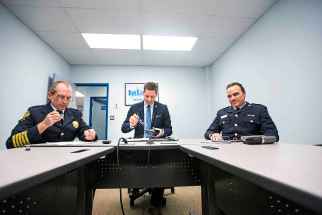
OTTAWA — Curbing Winnipeg’s drug abuse will take “a heck of a lot more” than last Friday’s announced $8.4 million to treat methamphetamine users, Mayor Brian Bowman has told Parliament.
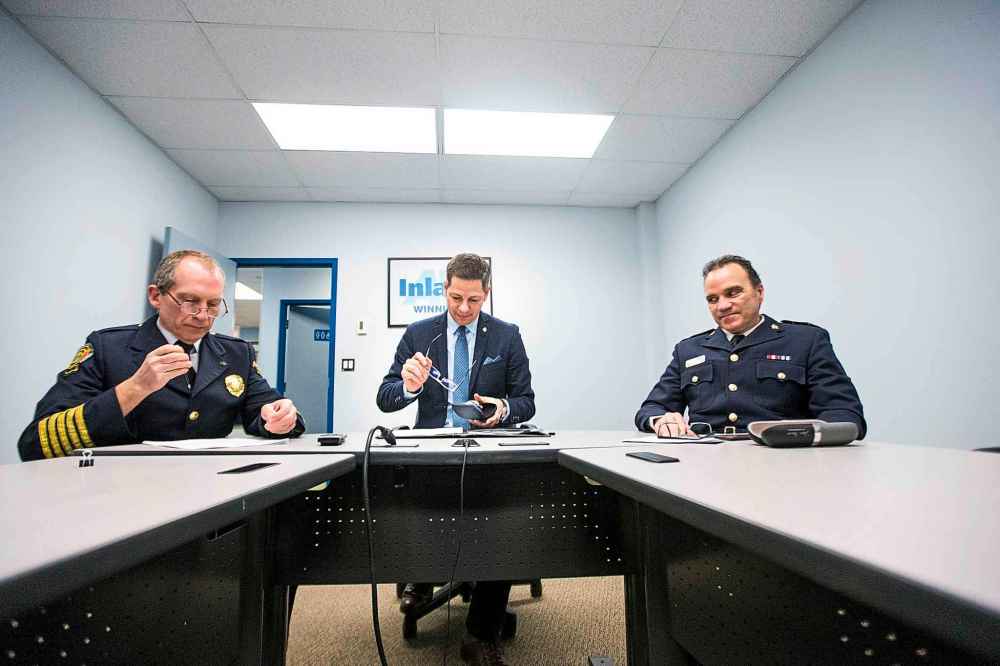
“More needs to be done by all three levels of government,” Bowman said Tuesday in testimony to the House health committee, which is studying the meth crisis ravaging Winnipeg and popping up across Canada.
“We absolutely, desperately need greater long-term treatment for addiction, as well as mental health,” he said.
The committee also heard Tuesday that meth-related incidents are distracting Winnipeg police from other investigations, while a safe-injection site in Calgary has concentrated crime and needles in one area of that city.
Bowman, testifying from Winnipeg through a videoconference, asked Ottawa for three things: “a national strategy on illicit drugs” instead of current moves to craft one focused on opioids; stronger border protections to stem the import of meth ingredients; and better funding for “mental health, addictions and homelessness.”
He said provincial and federal funding announced Friday for long-term withdrawal centres are “a step in the right direction,” as are rapid-treatment clinics the province rolled out this spring, but “they don’t match the scale of the crisis.”
Committee hears of tragedy, hope
OTTAWA —Tuesday’s testimony at House of Commons hearings on the meth crisis touched on numerous issues, from the anguish of parents, to border security and policing backlogs.
Here are samples:
OTTAWA —Tuesday’s testimony at House of Commons hearings on the meth crisis touched on numerous issues, from the anguish of parents, to border security and policing backlogs.
Here are samples:
Brandon mom decries ‘war on drug addicts’
Brandon mother Kim Longstreet described her anguish to MPs, with her son cycling in and out of short-term treatments for years.
“There is no war against drugs, because you can’t (do) war against inanimate objects. There’s only a war on drug addicts, which means we are warring on the most vulnerable and abused segments of society,” said Longstreet.
She founded the RJ Streetz Foundation to provide help to families of people with meth addictions who face inadequate government services.
“After 11 years of coping with my son’s substance-use disorder, I can honestly say that I wish it was over, one way or another. Every time I hear a siren or the phone rings at odd hours, I wonder if this is the call. To some this will make me sound like a terrible parent. But sometimes I do imagine that that call is the call, that my son will finally have peace from the war that our society appears to be losing.”
Meth strains Calgary sex-crime probes
Calgary’s Chief Constable Steve Barlow suggested Calgary police are falling behind in arresting pedophiles because of meth-related crimes:
“(In) my sex-crimes and child-abuse areas, the numbers are going through the roof; I don’t have the officers to be going into those areas, and promoting them into those areas, when I’m leaving them on the street based on the crime rates we have, which are skyrocketing in Calgary,” he said.
Calgary police also testified that it’s easy for them to arrest small-scale dealers, but getting organized-crime networks prosecuted takes millions of dollars and evidence that is hard to find.
Barlow said many dealers are using people with addictions to sell their drugs, and only these middle men tend to get arrested.
Homeless take drugs to protect belongings
David Juurlink, the toxicology head of Toronto’s Sunnybrook hospital, said some homeless people use meth to stay alert:
“They use it to keep moving, to stay awake and protect their meagre belongings. And sometimes to change the mental state that accompanies exposure and discomfort from tthe elements.”
He said the lack of long-term beds in cities like Winnipeg means “patients are brought to hospital after meth use, where there’s a lot of tinkering and turfing, and they’re sent back out.”
Mexico visa change floated for meth
Officials also pushed back on an idea to reintroduce Canada’s visa requirement for Mexican nationals in order to dissuade meth traffickers, fearing that gangs will find other ways to import meth, or simply set up more labs domestically.
Winnipeg Mayor Brian Bowman noted that two months into cannabis legalization, “the concern is whether or not organized crime is increasingly shifting their energies to meth,” he said. “I don’t have any stats to back that concern; I just raise it as something we’ll be watching.”
Bowman believes his city can beat down the problem that same way it recovered from being “plagued” by arsons and car thefts in the early 2000s. “When faced what seems like an impossible task, our community can rise to the challenge,” he said.
—Dylan Robertson
Winnipeg Police Chief Danny Smyth testified some citizens seeking police assistance are waiting longer for officers to arrive because meth is increasing the backlog in calls for service.
“Officers get tied up in health-care facilities and monitoring people that are waiting for treatment, and it prevents us from getting into the community and doing proactive work,” he said. “Our resources get tied up quickly.”
However, Winnipeg Fire Paramedic Service Chief John Lane disagreed with an assertion by Charleswood-area MP Doug Eyolfson that Manitoba’s closure of three city emergency rooms will lead to “less places getting more crowded” with people in meth psychosis.
Lane instead said sedation, and the recent rollout of olanzapine in city ambulances, “really allows them to be safely transported perhaps a further distance,” while the time it takes paramedics to transfer patients to hospital staff is decreasing.
Officials also debated the idea of supervised-injection sites, an idea the Manitoba government opposes.
Calgary’s Chief Constable Steve Barlow testified that placing one of these facilities in a busy commercial area has led to fewer police calls — because so many problems have “migrated” nearby.
“People have stopped calling. We’ve actually put more (officers) down in that area,” he said, adding that some drug users actually leave the site with “spent needles” that are left on the ground and can spread infection.
“The biggest issue we have is that our drug dealers have now, of course, learned where their clients have moved to,” Barlow testified.
Downtown MP Robert-Falcon Ouellette told the Free Press that’s no reason for Winnipeggers to opt against such a site.
“We already have [crime] concentrating in the downtown core. You already have an area of the city that has 1,500 homeless people,” he said. “I don’t think we’re suggesting to open a safe-injection site in the St. Vital (Centre) mall.”

He suggested the provincial government request more funding from his federal Liberal colleagues, and that more social-service providers could offer treatment than the groups currently contracted to do so.
Eyolfson said “the burden of evidence” supports the idea of safe-injection sites. “If it’s something we set up in Winnipeg, we have to deal with whatever consequences happen,” he said.
“If you set up a centre and more [drug users] do come, then you — having brought these problems into one area — that can make it easier to deal with, because you don’t have this problem as spread out all over the city.”
The committee will continue its hearings into the meth crisis next year, likely in late January.
dylan.robertson@freepress.mb.ca
Related Articles
Blame game pointless in meth battle