

Human rights award limit proposed

Advertisement
Read this article for free:
or
Already have an account? Log in here »
To continue reading, please subscribe:
Digital Subscription
One year of digital access for only $1.44 a week*
- Enjoy unlimited reading on winnipegfreepress.com
- Read the E-Edition, our digital replica newspaper
- Access News Break, our award-winning app
- Play interactive puzzles
*Billed as $5.77 plus GST every four weeks. After 52 weeks, price increases to the regular rate of $19.95 plus GST every four weeks. Offer available to new and qualified returning subscribers only. Cancel any time.
To continue reading, please subscribe:
Add Free Press access to your Brandon Sun subscription for only an additional
$1 for the first 4 weeks*
- Enjoy unlimited reading on winnipegfreepress.com
- Read the E-Edition, our digital replica newspaper
- Access News Break, our award-winning app
- Play interactive puzzles
*Your next Brandon Sun subscription payment will increase by $1.00 and you will be charged $17.95 plus GST for four weeks. After four weeks, your payment will increase to $24.95 plus GST every four weeks.
Read unlimited articles for free today:
or
Already have an account? Log in here »
Hey there, time traveller!
This article was published 10/03/2020 (2272 days ago), so information in it may no longer be current.
The Progressive Conservative government has introduced legislation to streamline the operations of the Manitoba Human Rights Commission.
Justice Minister Cliff Cullen says the proposed changes should allow the commission to deal with cases in a more timely fashion.
“Right now, we have a 31/2-to-four-year wait for hearings. So when someone submits a claim, it takes up to four years to get it done,” he said Tuesday, after introducing Bill 31 in the legislature.
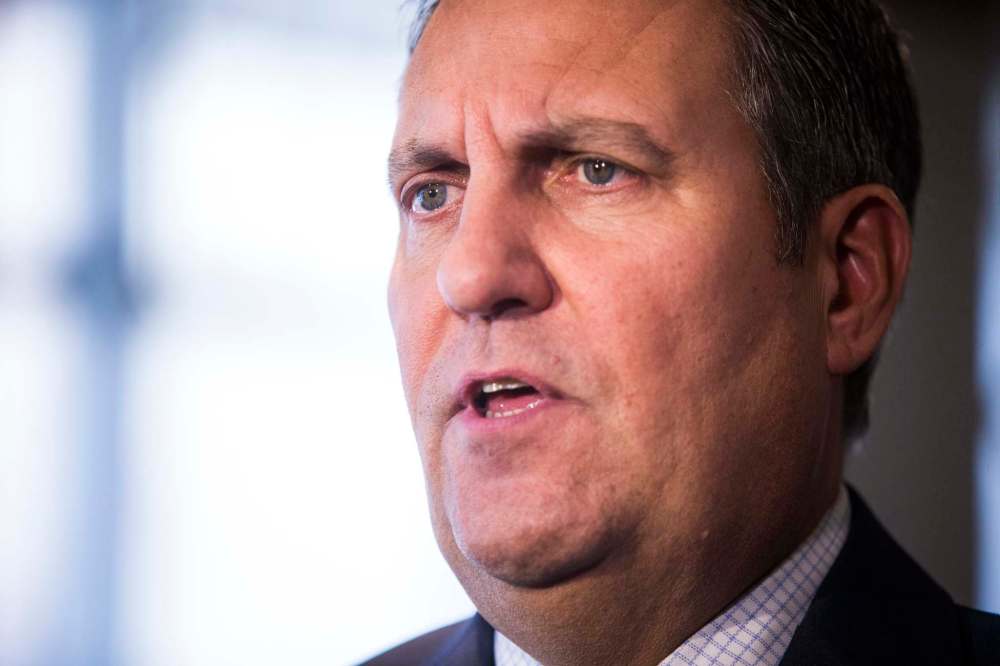
“This legislation allows (the commission) to expedite the process and, obviously, get those rulings to individuals much quicker.”
The proposed amendments would empower the commission’s executive director to dismiss complaints and decline to investigate complaints deemed to be adequately addressed in another forum.
The adjudication process would be improved by giving adjudicators the authority to mediate complaints and set time limits to ensure adjudicators’ hearings and decisions are timely, the government said.
One proposed change would set the maximum financial award for injury to dignity, feelings or self-respect stemming from a human rights complaint at $25,000 — a move that drew the ire of Opposition politicians.
Currently, there is no limit on such awards.
The bill was introduced at a time when the province is appealing a human rights commission award of $75,000 to a gay Métis man who was harassed and verbally abused when he was employed at the Manitoba Youth Centre.
“It certainly looks like the person writing the rules is trying to get out of paying the cheque,” NDP Leader Wab Kinew said.
Reducing possible awards could have a “chilling effect” on future complaints, he said.
“Let’s say you had to pay for your own lawyer to get your case taken up. If you know that there’s a cap on damages and maybe the lawyer’s fees are going to take up a huge chunk of that, I could definitely see a chilling effect here where people don’t actually stand up for their rights because of the move government is trying to make here,” Kinew said.
Liberal Leader Dougald Lamont said he’s unsure of the government’s intent.
“It seems to me the Pallister government wants to make it easier and cheaper for people to violate human rights in Manitoba,” Lamont said after question period.
“There’s an old saying, ‘the punishment should fit the crime.’ The fact that you’re going to say one size fits all no matter how badly someone is treated is totally inappropriate.”

The government said there would continue to be no cap on compensation dealing with lost wages, income or benefits suffered by successful complainants, and existing caps on financial penalties related to malicious or reckless actions remain in place.
Cullen noted the $25,000 cap being considered by Manitoba has also been implemented in Saskatchewan and by the government of Canada.
larry.kusch@freepress.mb.ca
carol.sanders@freepress.mb.ca
Carol Sanders
Legislature reporter
Carol Sanders is a reporter at the Free Press legislature bureau. The former general assignment reporter and copy editor joined the paper in 1997. Read more about Carol.
Every piece of reporting Carol produces is reviewed by an editing team before it is posted online or published in print — part of the Free Press‘s tradition, since 1872, of producing reliable independent journalism. Read more about Free Press’s history and mandate, and learn how our newsroom operates.
Our newsroom depends on a growing audience of readers to power our journalism. If you are not a paid reader, please consider becoming a subscriber.
Our newsroom depends on its audience of readers to power our journalism. Thank you for your support.
Carol Sanders
Legislature reporter
Carol Sanders is a reporter at the Free Press legislature bureau. The former general assignment reporter and copy editor joined the paper in 1997. Read more about Carol.
Every piece of reporting Carol produces is reviewed by an editing team before it is posted online or published in print — part of the Free Press‘s tradition, since 1872, of producing reliable independent journalism. Read more about Free Press’s history and mandate, and learn how our newsroom operates.
Our newsroom depends on a growing audience of readers to power our journalism. If you are not a paid reader, please consider becoming a subscriber.
Our newsroom depends on its audience of readers to power our journalism. Thank you for your support.
Advertisement Advertise With Us
Advertisement Advertise With Us