

Time to stop ignoring hand hygiene
COVID-19 pandemic highlights how bad we are at washing our hands

Advertisement
Read this article for free:
or
Already have an account? Log in here »
To continue reading, please subscribe:
Monthly Digital Subscription
$1 per week for 24 weeks*
- Enjoy unlimited reading on winnipegfreepress.com
- Read the E-Edition, our digital replica newspaper
- Access News Break, our award-winning app
- Play interactive puzzles
*Billed as $4.00 plus GST every four weeks. After 24 weeks, price increases to the regular rate of $19.95 plus GST every four weeks. Offer available to new and qualified returning subscribers only. Cancel any time.
Monthly Digital Subscription
$4.99/week*
- Enjoy unlimited reading on winnipegfreepress.com
- Read the E-Edition, our digital replica newspaper
- Access News Break, our award-winning app
- Play interactive puzzles
*Billed as $19.95 plus GST every four weeks. Cancel any time.
To continue reading, please subscribe:
Add Free Press access to your Brandon Sun subscription for only an additional
$1 for the first 4 weeks*
*Your next subscription payment will increase by $1.00 and you will be charged $16.99 plus GST for four weeks. After four weeks, your payment will increase to $23.99 plus GST every four weeks.
Read unlimited articles for free today:
or
Already have an account? Log in here »
Hey there, time traveller!
This article was published 19/05/2020 (2167 days ago), so information in it may no longer be current.
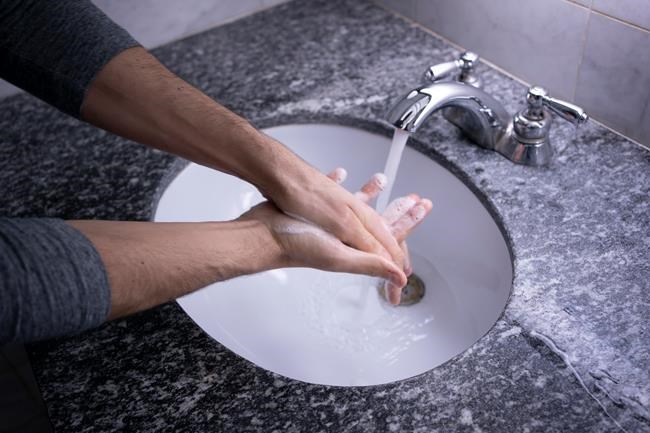
Wash your hands.
It’s such a simple concept it makes you wonder — particularly as we suffer through the spring and, soon, summer of our COVID-19 discontent — why are we so bad at cleaning our hands?
The origin story of the coronavirus will no doubt look at many different factors that aided its swift spread across the planet. And from the public health advice we get on how to slow transmission, we know infected people can spread the disease through droplets we expel when talking, coughing and sneezing, and that it can be theoretically transmitted from hard surfaces.
But when all is said and done, it is quite likely the single greatest mode of transmission will have been our hands, or more specifically, our dirty, filthy hands.
The scientific relationship between hand hygiene and the transmission of infectious diseases is old and unambiguous. In fact, its origins go back more than half a century before the discovery of penicillin.
It was Hungarian physician Dr. Ignaz Semmelweis who discovered in 1846 that Puerperal fever — a virulent infection that ravaged women after childbirth — was being transmitted by the contaminated hands of doctors and nurses. He found that intense hand hygiene dramatically reduced the incidence of the fever and reduced mortality rates.
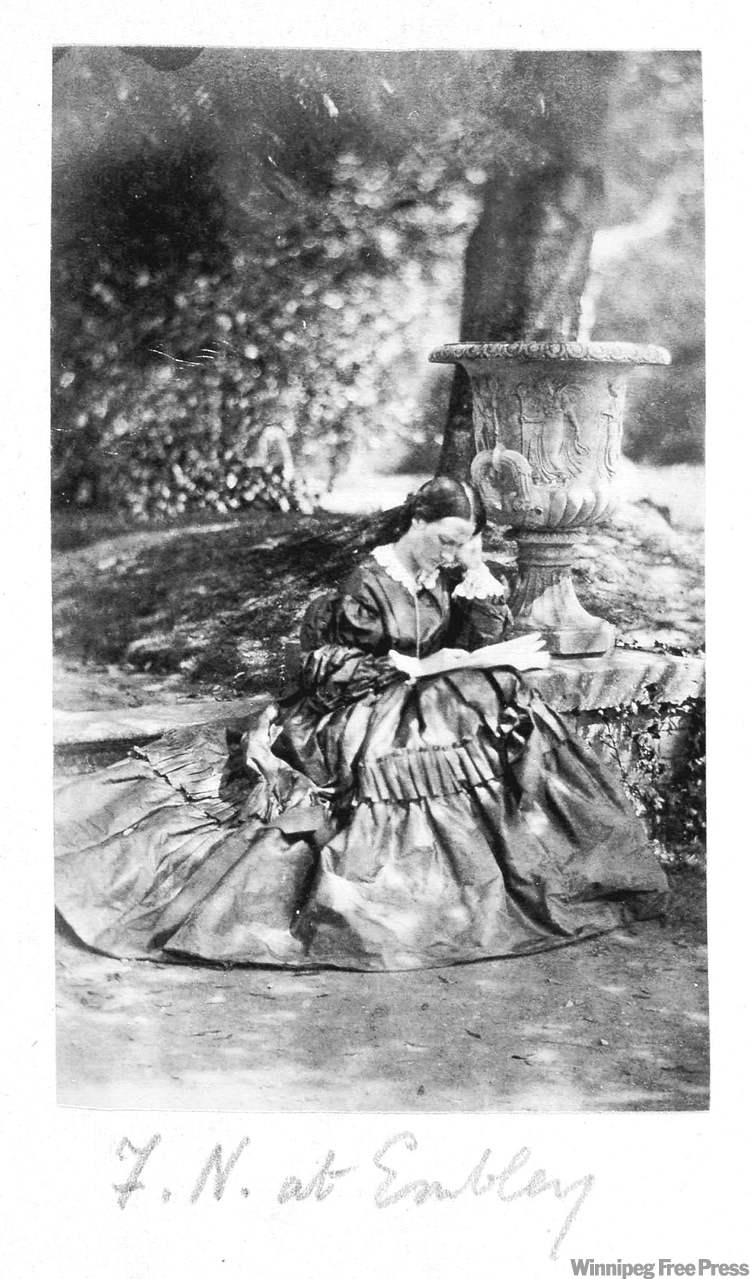
Semmelweis’ work was augmented a few years later when Florence Nightingale helped revolutionize hygiene standards in army hospitals during the Crimean War. Nightingale observed that vigilant handwashing and the disinfecting of all surfaces dramatically reduced mortality rates. In her iconic Notes on Nursing, published in 1860, she advised nurses to wash their hands “very frequently during the day. If her face, too, so much the better.”
The problem is that along with 175 years of data on hand hygiene, we have data showing that we don’t clean our hands.
For example, in the wake of the 2003 SARS outbreak, there was a rash of scientific studies about our profound failure to build hand hygiene into our daily lives.
A 2003 study by the American Society of Microbiology found that about a third of all travellers passing through major U.S. airports do not wash their hands after using the bathroom. The same study found, however, that travellers going through Toronto, the most SARS-affected city in the world, washed their hands 95 per cent of the time.
The study’s authors asked cryptically if it will take “an outbreak of a frightening, potentially fatal infectious disease like severe acute respiratory syndrome (SARS) or a gastrointestinal illness on a cruise ship to get people to follow Mom’s advice to ‘wash your hands after using the bathroom?’”
Along with 175 years of data on hand hygiene, we have data showing that we don’t clean our hands.
In more recent years, researchers have tried to estimate the effect of more thorough, more frequent handwashing on epidemic transmission.
In December 2019, just as COVID-19 was establishing its presence in China, the Massachusetts Institute of Technology published a report that attempted to estimate the benefits of more rigorous hand hygiene among international travellers on the spread of global epidemics.
Using computer modelling, the MIT study estimated that increased handwashing at the 10 largest airports in the U.S. could lower virus transmission rates by 37 per cent. If it were applied across all airports, it could reduce transmission up to 69 per cent.
Still, those studies only capture half the equation when it comes to handwashing.
Remarkably, hand hygiene among health-care workers is equally problematic, so much so that many jurisdictions in Canada and around the world publish real-time data on hand hygiene compliance.
The latest data from the Winnipeg Regional Health Authority captures hand hygiene compliance for Q4 2019-2020, which overlaps with the arrival of COVID-19 in Canada. For years, the WRHA has attempted to get 80 per cent of all those people who work in acute-care facilities to follow a protocol that dictates when hands must be washed or sanitized.
With the coronavirus knocking on the door, the latest data showed that hand hygiene compliance among all kinds of health-care workers, including nurses and doctors, was just under 70 per cent. Of greatest concern, only 48 per cent of physicians were washing their hands enough.
Cleaning your hands when you enter a store should not be optional; in our current dilemma, it should be the minimum standard for admission.
As we attempt to free ourselves from the grip of the pandemic, and restore some semblance of normalcy, is it too much to ask that we start applying more effective hand hygiene protocols in all parts of our daily lives?
That is something more people would likely support after experiencing a pandemic. But even as we continue to be socially and economically suffocated by COVID-19, there are lingering signs we still don’t fully accept the importance of clean hands.
As a sign of the times, it’s not unusual to see hand-cleaning stations just inside the doors of those businesses that have been permitted to open. However, use of these stations is still largely voluntary.
Cleaning your hands when you enter a store should not be optional; in our current dilemma, it should be the minimum standard for admission.
If we are somehow able to fully reopen our economy, it will have to be done with some pretty rigorous expectations around hand hygiene in all places where people gather.
After suffering through COVID-19, would anyone heading into a restaurant, a grocery store, a library, a movie theatre or an airplane refuse to clean their hands?
No, hardly anyone would refuse a demand like that.
But if the last 175 years is any indication, if we don’t make it absolutely necessary, we can very easily ignore it.
dan.lett@freepress.mb.ca
Dan Lett is a columnist for the Free Press, providing opinion and commentary on politics in Winnipeg and beyond. Born and raised in Toronto, Dan joined the Free Press in 1986. Read more about Dan.
Dan’s columns are built on facts and reactions, but offer his personal views through arguments and analysis. The Free Press’ editing team reviews Dan’s columns before they are posted online or published in print — part of the our tradition, since 1872, of producing reliable independent journalism. Read more about Free Press’s history and mandate, and learn how our newsroom operates.
Our newsroom depends on a growing audience of readers to power our journalism. If you are not a paid reader, please consider becoming a subscriber.
Our newsroom depends on its audience of readers to power our journalism. Thank you for your support.
Dan Lett is a columnist for the Free Press, providing opinion and commentary on politics in Winnipeg and beyond. Born and raised in Toronto, Dan joined the Free Press in 1986. Read more about Dan.
Dan’s columns are built on facts and reactions, but offer his personal views through arguments and analysis. The Free Press’ editing team reviews Dan’s columns before they are posted online or published in print — part of the our tradition, since 1872, of producing reliable independent journalism. Read more about Free Press’s history and mandate, and learn how our newsroom operates.
Our newsroom depends on a growing audience of readers to power our journalism. If you are not a paid reader, please consider becoming a subscriber.
Our newsroom depends on its audience of readers to power our journalism. Thank you for your support.
Advertisement Advertise With Us
Advertisement Advertise With Us