

Making a name for themselves
Some of world's biggest icons swapped given monikers for chosen ones
Advertisement
Read this article for free:
or
Already have an account? Log in here »
To continue reading, please subscribe:
Monthly Digital Subscription
$1 per week for 24 weeks*
- Enjoy unlimited reading on winnipegfreepress.com
- Read the E-Edition, our digital replica newspaper
- Access News Break, our award-winning app
- Play interactive puzzles
*Billed as $4.00 plus GST every four weeks. After 24 weeks, price increases to the regular rate of $19.95 plus GST every four weeks. Offer available to new and qualified returning subscribers only. Cancel any time.
Monthly Digital Subscription
$4.99/week*
- Enjoy unlimited reading on winnipegfreepress.com
- Read the E-Edition, our digital replica newspaper
- Access News Break, our award-winning app
- Play interactive puzzles
*Billed as $19.95 plus GST every four weeks. Cancel any time.
To continue reading, please subscribe:
Add Free Press access to your Brandon Sun subscription for only an additional
$1 for the first 4 weeks*
- Enjoy unlimited reading on winnipegfreepress.com
- Read the E-Edition, our digital replica newspaper
- Access News Break, our award-winning app
- Play interactive puzzles
*Your next Brandon Sun subscription payment will increase by $1.00 and you will be charged $17.95 plus GST for four weeks. After four weeks, your payment will increase to $24.95 plus GST every four weeks.
Read unlimited articles for free today:
or
Already have an account? Log in here »
Hey there, time traveller!
This article was published 25/07/2020 (2114 days ago), so information in it may no longer be current.
Names have been big news lately, especially among North American sports teams with controversial branding.
A tidal wave of global protests against racial injustice unleashed by the police killing of George Floyd, a Black man, in May has intensified pressure on teams to abandon Indigenous names, mascots and logos.
In Canada, Edmonton’s Canadian Football League franchise announced Tuesday it would retire the Eskimos nickname, long derided as a derogatory and colonial-era term for Inuit.
Edmonton vowed to begin a “comprehensive engagement process” on a new name. Until then, it will be called EE Football Team and Edmonton Football Team.
It appears the driving force behind the change was the fact corporate sponsors — such as Belair Direct, a car and home insurance company and one of the team’s 13 premier partners — had publicly called for the team to change its branding.
It’s a similar story with the NFL’s Washington Redskins, where the team has agreed to retire its name and logo, long denounced by Native American groups as an ethnic slur and a derogatory reference to skin colour. That change was also driven by pressure from sponsors, including FedEx, which pays the team $8 million per year for naming rights to its stadium.
But pro sports teams are not the only ones who have opted to dramatically alter their identities, as we see from today’s transformative list of Five of the Most Famous Name Changes in History:
5) The famous name: Harry Houdini
The original name: Erik Weisz
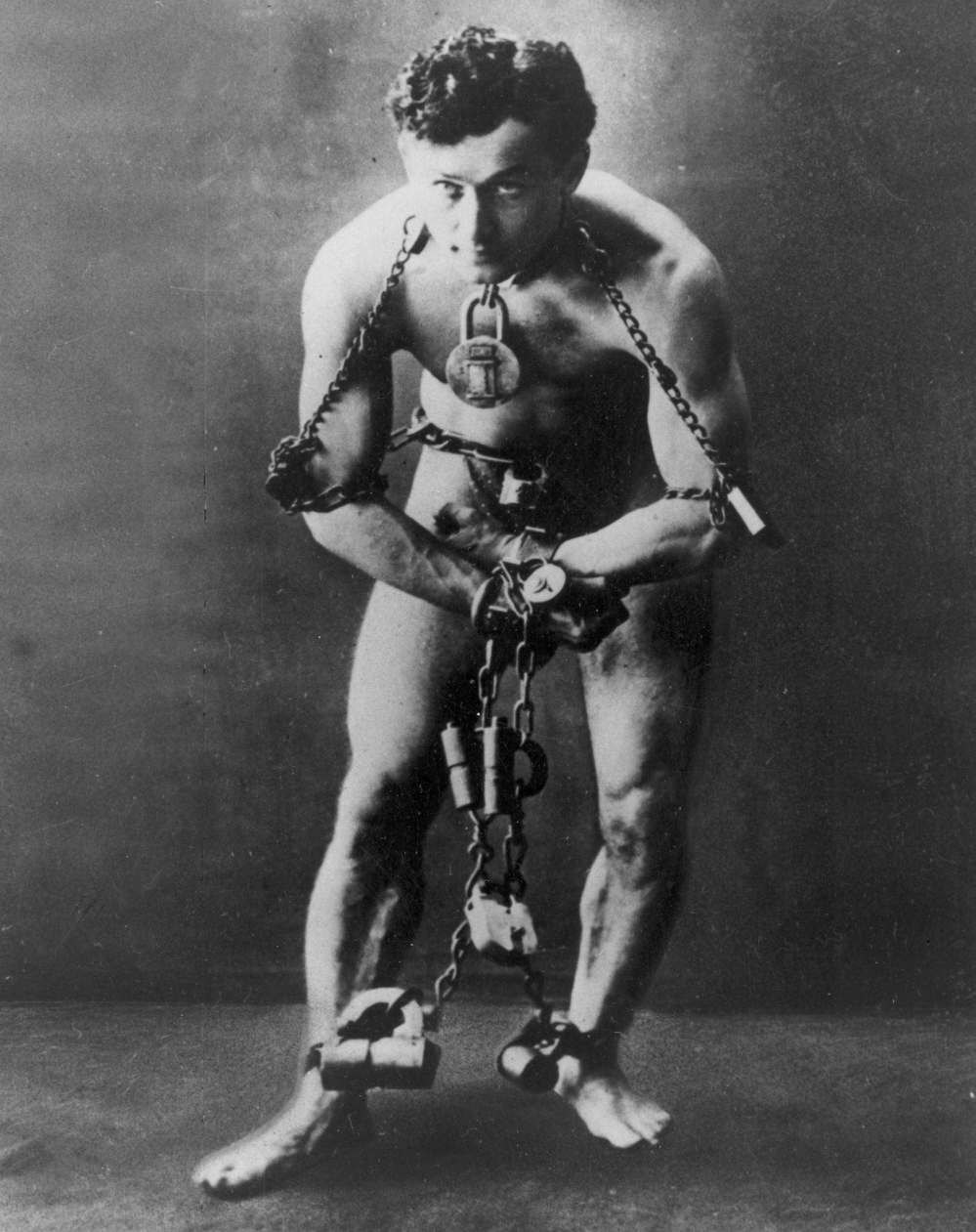
The name game: Houdini is arguably the greatest magician in history, a man who skyrocketed to global fame for his death-defying escape acts. The name Houdini has become synonymous for anyone performing seemingly impossible illusions.
We are talking about a performer who, on Feb. 21, 1923, while suspended nine metres above the old Winnipeg Free Press building on Carlton Street, wormed his way out of a straitjacket in front of about 5,000 Winnipeggers. On Oct. 31, 1982, local escape artist Dean Gunnarson, then 18, recreated the stunt in honour of his idol, beating Houdini’s two-minute time by 20 seconds. But Houdini wasn’t always Houdini. He was born on March 24, 1874 in Budapest, Hungary, with the name of Erik Weisz. When Houdini’s family emigrated to the U.S. in 1878, they changed their family name to the German spelling of “Weiss” and Houdini’s first name to “Ehrich.” On Oct. 28, 1883, nine-year-old Ehrich made his first appearance onstage, performing a trapeze act. He billed himself as “Ehrich, the Prince of the Air.”
He was fascinated with the art of magic, especially the work of the famed French conjurer Jean-Eugene Robert-Houdin. When he launched his own magic career in the 1890s, the young man — nicknamed “Ehrie” — paid homage to his hero by adding an “i” to the name “Houdin” to create the now-legendary stage moniker “Harry Houdini.”
Harry is simply an Americanized version of his nickname, Ehrie, although the escape artist would claim in later life that the first part of his new name was a reference to Harry Kellar, a 19th-century American magician he admired. “In a strange twist, Houdini later courted controversy by accusing his former idol (Houdin) of stealing other magicians’ tricks,” according to history.com.
4) The famous name: Marilyn Monroe
The original name: Norma Jeane Dougherty
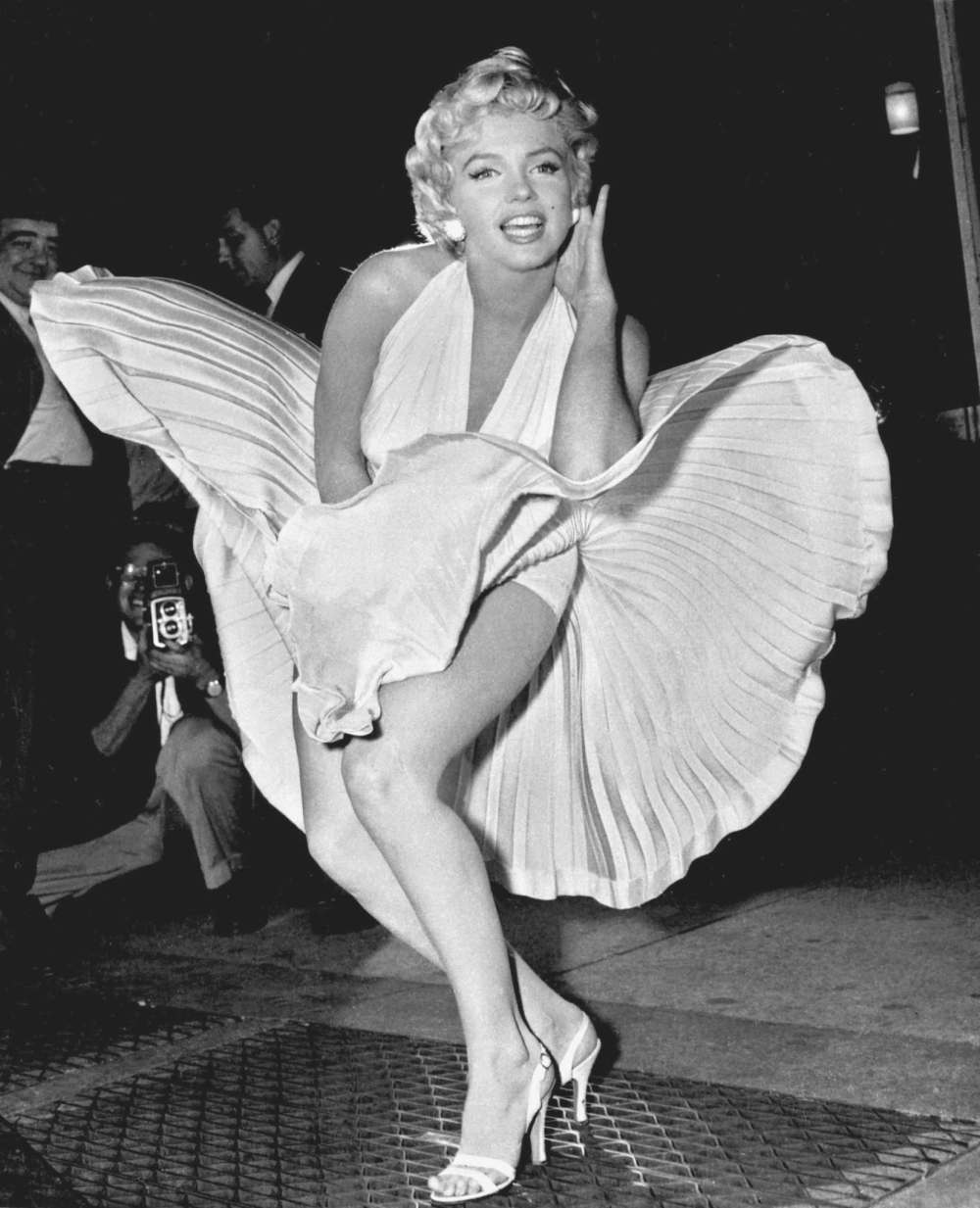
The name game: There is certainly no shortage of big-shot celebrities who have gone on to fame after changing the pedestrian names they were born with. But none of them can hold a candle to the legendary Marilyn Monroe, whose name has become synonymous with the blonde bombshells she portrayed on the silver screen. The screen goddess who became the most popular sex symbol of the 1950s and early 1960s had a few monikers before she became a household name after making it big in Hollywood.
Born June 1, 1926, the name on her birth certificate was Norma Jeane Mortenson, because in 1924 her mother, Gladys, married Martin Edward Mortensen, whom she divorced in 1928. She was baptized Norma Jeane Baker, a nod to John Newton Baker, a man Gladys had married at age 15 and divorced in 1923. Her name changed again after she married factory worker James Dougherty on June 19, 1942, just after her 16th birthday and took his surname. According to Time.com, the search for her new stage name began almost as soon as she signed a contract with 20th Century Fox on Aug. 24, 1946. Ben Lyon, a 20th Century Fox executive, gave her the name Marilyn because she reminded him of actress Marilyn Miller, the Ziegfeld Follies Broadway musical star who starred with him and W.C. Fields in Her Majesty, Love.
“It would also end up being an eerily prescient name choice because Miller died at 37, while Monroe died at 36,” Time noted. The 20-year-old model/actress suggested Monroe, because it was her mother’s maiden name. She didn’t legally change her name to Marilyn Monroe until 1956, but had been publicly known by the moniker since 1946. In an autographed photo, taken during the filming of The Seven Year Itch (1955) Monroe wrote to Lyon: “Dear Ben, You found me, named me and believed in me when no one else did. My thanks and love forever. Marilyn.”
3) The famous name: Muhammad Ali
The original name: Cassius Marcellus Clay Jr.
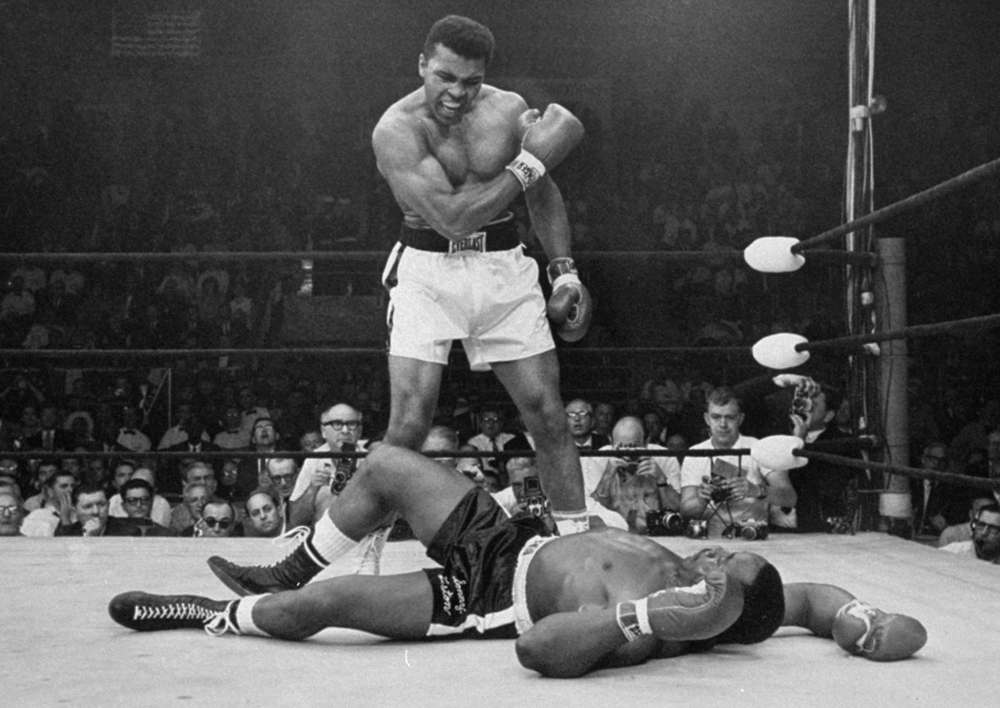
The name game: You can call him one of the greatest sporting figures of the 20th century. You can call him the greatest heavyweight boxer of all time. You can call him an outspoken activist on the issues of race, religion and politics. But when he was born on Jan. 17, 1942, in Louisville, Ky., he was called Cassius Marcellus Clay Jr., the elder son of Cassius Marcellus Clay Sr. and Odessa Grady Clay.
By age 18, Clay had captured two national Golden Gloves titles, two Amateur Athletic Union national titles and 100 victories against eight losses. After graduating high school, he won the light heavyweight gold medal in the 1960 Summer Olympics in Rome. Then, in his first title shot, on Feb. 25, 1964, after promising to “float like a butterfly, sting like a bee,” Clay decimated reigning champ Sonny Liston. In the ring after the fight, the new champ roared at the ringside press: “Eat your words! I am the greatest! I shook up the world. I’m the prettiest thing that ever lived.” At a news conference the next morning, Clay, who had been seen around Miami with controversial Nation of Islam member Malcolm X, confirmed the rumours of his conversion to Islam.
On March 6, 1964, Nation of Islam leader Elijah Muhammad bestowed on Clay the name of Muhammad Ali (Praised one). Few journalists at the time, with the exception of his longtime friend Howard Cosell, accepted the new name, prompting Ali to declare: “Cassius Clay is a slave name. I didn’t choose it and I don’t want it. I am Muhammad Ali, a free name — it means beloved of God, and I insist people use it when people speak to me.”
It would be an understatement to say the change was controversial at the time. “I pity Clay and abhor what he represents,” Jimmy Cannon of The New York Journal American wrote at the time, in a view shared by many Americans. Before taking his new name, he had briefly called himself “Cassius X,” a tribute to his former mentor Malcolm X. In 2016, a USA Today investigation revealed Ali never legally changed his name — because it was not required by law in the 1960s.
2) The famous name: Nelson Mandela
The original name: Rolihlahla Mandela
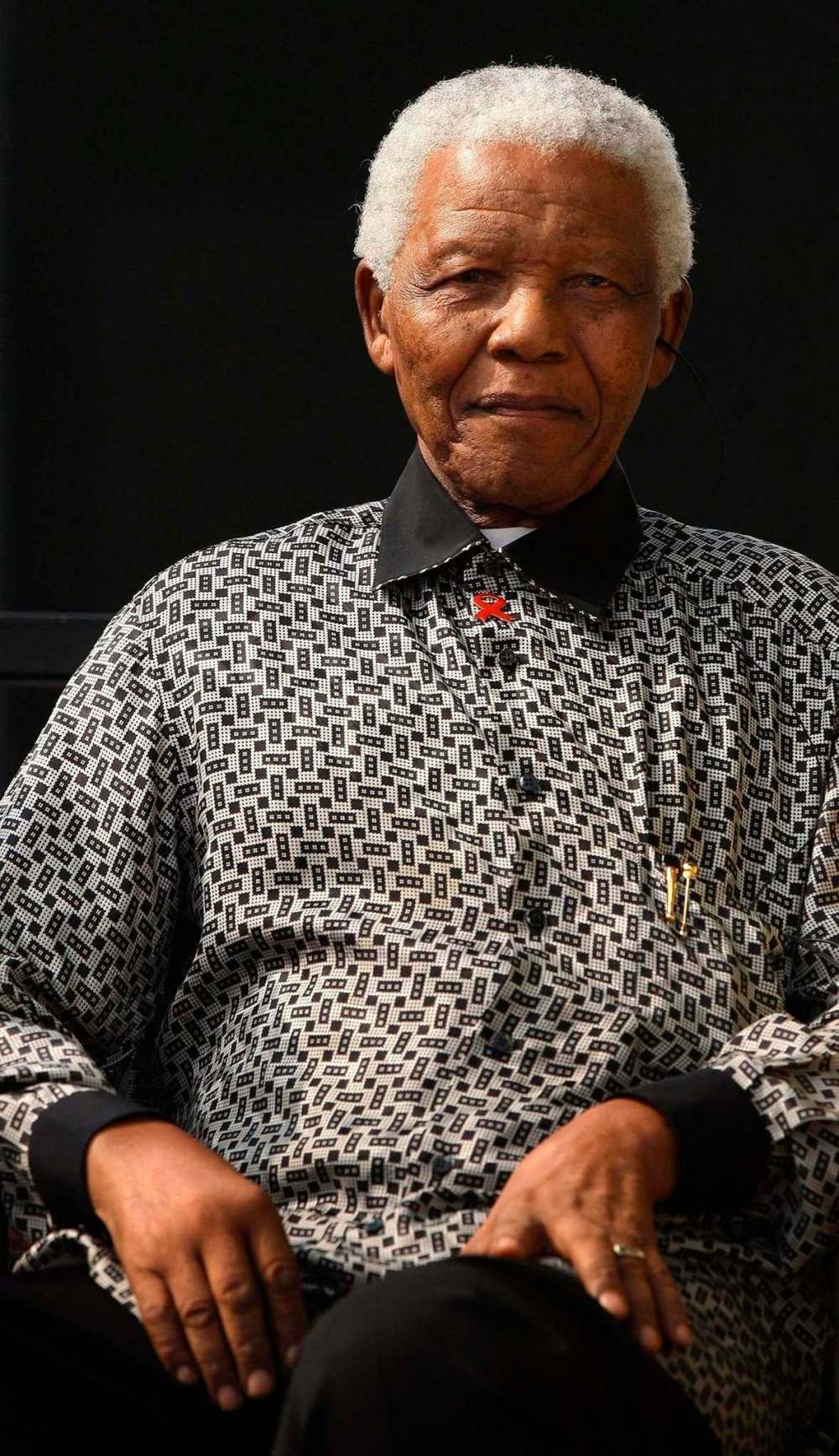
The name game: The world knew him as Nelson Mandela, a hero who endured 27 years in prison for fighting against apartheid, South Africa’s system of racial segregation. But the man who became South Africa’s first Black president and won the Nobel Peace Prize in 1993, was known by a few other names in that country — five, to be exact.
The man considered the founder of South Africa’s democracy was born on July 18, 1918, in the tiny village of Mvezo, on the banks of the Mbashe River in Transkei, South Africa. His birth name was Rolihlahla Mandela. “Rolihlahla” in the Xhosa language literally means “pulling the branch of a tree,” but more commonly translates as “troublemaker.” The name “Nelson” first made an appearance when Mandela was at primary school. According to the Nelson Mandela Foundation, it was given to him by his teacher, Miss Mdingane, on the first day of school in the village of Qunu, but it’s unclear why she chose that particular name.
It was the early 1920s and, at that time, it was customary to give African children English names to make them easier for British colonials to pronounce. “This was the custom among Africans in those days and was undoubtedly due to the British bias of our education. That day, Miss Mdingane told me that my new name was Nelson. Why this particular name I have no idea,” he later said. In South Africa, he was most commonly referred to as Madiba, a reference to a 19th-century clan chief and a sign of great respect. Some simply called him “Tata,” the Xhosa word for “father.” He was also called “Khulu,” which means great, paramount, grand and is a short form for “grandfather.”
At the age of 16, Mandela, like other Xhosa boys, was formally initiated into manhood through a traditional ceremony, and was given the name of “Dalibhunga,” which means “creator or founder of the council” or “convenor of the dialogue.” He died in 2013 at age 95. Many just call him a hero.
1) The famous name: Martin Luther King Jr.
The original name: Michael King Jr.
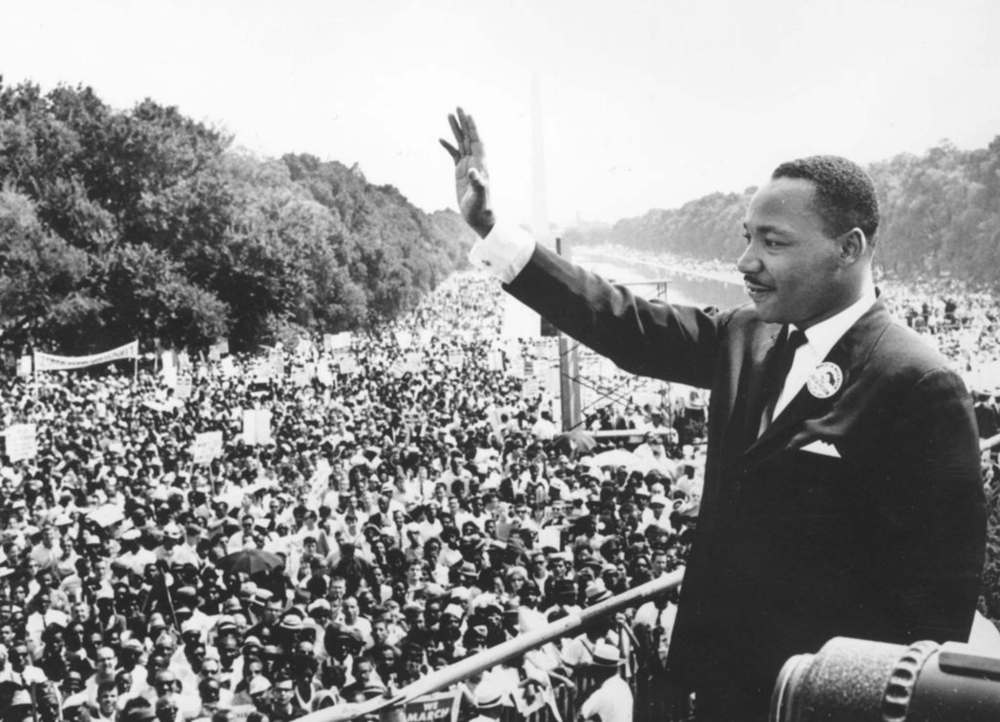
The name game: The name of Martin Luther King Jr., the legendary American civil rights activist, is seared into the hearts and minds of people around the world. But the name on his original birth certificate — filed April 12, 1934, five years after King was born — was not Martin. And it wasn’t Luther. For the first years of his life, he was Michael King.
It wasn’t until he was 28 years old that, on July 23, 1957, his birth certificate was finally revised. According to The Washington Post, Michael’s journey to becoming Martin began in 1934 when his father, who then was known as the Rev. Michael King, was senior pastor of Ebenezer Baptist Church in Atlanta, Georgia. In the summer of 1934, King’s church sent him on a whirlwind trip to Rome, Tunisia, Egypt, Jerusalem and Bethlehem and finally Berlin, where he would attend a Baptist World Alliance meeting. “The trip to Germany, historians say, had a profound effect on the elder King,” according to The Post. “King arrived in Berlin a year after Adolf Hitler became chancellor.
During his trip, the senior King toured the country where, in 1517, the German monk and theologian Martin Luther nailed his 95 Theses to the door of the Wittenberg castle church, challenging the Catholic Church. The act would lead to the Protestant Reformation, the revolution that would split Western Christianity.” When the senior King returned home, he was a changed man. He changed his name to “Martin Luther King Sr.,” in apparent homage to Martin Luther, and his young son became Martin Luther King Jr., a Nobel Peace Prize-winner who would become the most visible leader of the civil rights movement until he was felled by an assassin’s bullets in 1968.
In his final sermon on April 3, 1968, MLK Jr. spoke of travelling in history, saying: “I would even go by the way that the man for whom I’m named had his habitat, and I would watch Martin Luther as he tacks his 95 theses on the door at the church of Wittenberg.” The world still mourns his death.
doug.speirs@freepress.mb.ca