

Indigenous COVID victim meant so much to so many
Teacher worked to bring out the best in his students
Advertisement
Read this article for free:
or
Already have an account? Log in here »
To continue reading, please subscribe:
Monthly Digital Subscription
$1 per week for 24 weeks*
- Enjoy unlimited reading on winnipegfreepress.com
- Read the E-Edition, our digital replica newspaper
- Access News Break, our award-winning app
- Play interactive puzzles
*Billed as $4.00 plus GST every four weeks. After 24 weeks, price increases to the regular rate of $19.95 plus GST every four weeks. Offer available to new and qualified returning subscribers only. Cancel any time.
Monthly Digital Subscription
$4.99/week*
- Enjoy unlimited reading on winnipegfreepress.com
- Read the E-Edition, our digital replica newspaper
- Access News Break, our award-winning app
- Play interactive puzzles
*Billed as $19.95 plus GST every four weeks. Cancel any time.
To continue reading, please subscribe:
Add Free Press access to your Brandon Sun subscription for only an additional
$1 for the first 4 weeks*
*Your next subscription payment will increase by $1.00 and you will be charged $16.99 plus GST for four weeks. After four weeks, your payment will increase to $23.99 plus GST every four weeks.
Read unlimited articles for free today:
or
Already have an account? Log in here »
Hey there, time traveller!
This article was published 13/03/2021 (1846 days ago), so information in it may no longer be current.
If anyone was going to die alone in a hospital, few people at Opaskwayak Cree Nation could’ve guessed it would be Garry Darwin Ross.
The beloved schoolteacher died last December in hospital at age 54 from COVID-19, after a life dedicated to convincing youth that they can exceed expectations.
Like 150 other First Nations people in Manitoba, his life was cut short by a virus that has disproportionately hurt and killed Indigenous people.
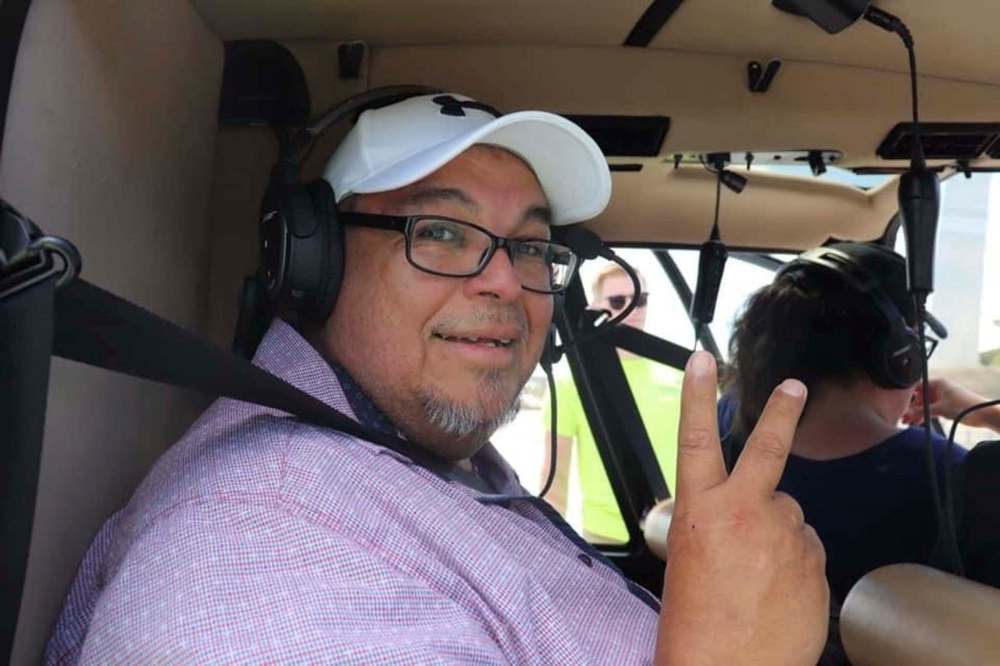
A year since COVID-19 was declared a global pandemic, Garry’s widow says each of the losses has touched many.
“I want people to understand that COVID not only affected our family, but it affected our community as well,” said Rhonda Ross, who met her husband in high school.
Garry excelled at sports, but struggled with classes. He’d come from the small Mosakahiken reserve, where everything was in Cree, but there was no high school. At Opaskwayak, he struggled to express his thoughts in English.
He eventually became a schoolteacher, and instinctively looked out for students who struggled.
“That is why he chose teaching, because he felt he could help children in that way — and, in essence, heal some of the past hurts he had gone through in his life,” Rhonda said.
That made everyday outings a challenge. Rhonda said Garry would always stop if any of “his kids” asked to talk.
“Every time we’d be somewhere in public, we’d have kids come running, saying, ‘Mr. Ross, Mr. Ross,’” she recalled.
“I struggled with that at the beginning, but I came to understand what that meant. He felt a connection to them, and he wanted them to be the best that they could be.”
A 2018 photo shows him grinning, stuck to a brick wall with duct tape. He and a fellow teacher had challenged students to read as much as possible, offering 12 inches of tape for each book. They clearly exceeded expectations.
Against his own children’s wishes, Garry would spoil his grandkids with McDonald’s and candy.
But those meetings were few and far between during the pandemic, which was ruthless when it hit Opaskwayak.
Even reserves with road access and a healthy business community struggle with cramped housing, thanks to decades of federal underfunding. Parts of the Indian Act all but forbid home ownership, making it complicated for bands to fund repairs and new builds.
That makes it hard to maintain physical distancing, or to isolate people exposed to COVID-19. Other reserves have struggled to keep hands clean without running water, or to work from home using spotty, unreliable internet connections.
Even in cities such as Winnipeg, COVID-19 is hitting First Nations people harder because they deal with chronic diseases, many a result of decades of inadequate health care.
So far, First Nations people make up one-third of all COVID-19 cases in Manitoba and half the intensive-care hospitalizations, despite representing only 10.5 per cent of the population in the 2016 census.
Some of the youngest people to die from the coronavirus in Canada have been First Nations living in Manitoba.
At Opaskwayak, the military deployed last November to help after all 28 residents of the reserve’s personal-care home caught the virus.
“This is scary; it is a nightmare scenario for that community,” Indigenous Services Minister Marc Miller said at the time.
The Ross family had stayed home as much as possible, but Garry kept teaching. The band figured that strict protocols could help the most vulnerable children stay engaged through schooling.
Garry and Rhonda both got sick. She recovered, but he kept getting worse, despite having an active lifestyle.
He deteriorated at the hospital in The Pas, and was airlifted to Brandon four days later.
He died alone in the intensive-care unit on Dec. 2. No one had been allowed to visit. Under provincial public-health restrictions at the time, only five people could attend his funeral.
“I wouldn’t want anybody else to go through the things we’ve had to go through as a family,” Rhonda said, urging everyone who can get vaccinated to do so.
One of Garry’s daughters, Tiar Wheatle, cut her hair and braided it like sweetgrass and placed it in his grave. In Cree tradition, hair carries the blood memory passed on through generations.
Garry’s birthday was Aug. 16, and his grandchildren gather on the 16th of every month for what they now call Poppa Day.

After his death, dozens of people offered condolences, overwhelming Rhonda. Panhandlers spoke about him dropping off meals. Strangers remembered him doing small favours.
Rhonda wants Manitobans to remember that every COVID-19 death has a deep impact.
“It was almost like we weren’t carrying the load ourselves,” she said. “It was something, to be able to see how far his passing was being felt.”
The family has set up a bursary fund on Facebook to support 15 students who are persevering through personal struggles. It’s a way for everyone he touched to keep his spirit going.
dylan.robertson@freepress.mb.ca