

Carney shouldn’t squander chance to repair damage, chart new financial course

Advertisement
Read this article for free:
or
Already have an account? Log in here »
To continue reading, please subscribe:

Digital Subscription
One year of digital access for only $205*
- Enjoy unlimited reading on winnipegfreepress.com
- Read the E-Edition, our digital replica newspaper
- Access News Break, our award-winning app
- Play interactive puzzles
*First annual payment billed as $205.00 + GST for one year. This annual subscription will automatically renew at $233.00 + GST every 52 weeks (10% off the regular annual price of $259.35). Offer available to new and qualified returning subscribers only. Cancel any time.
To continue reading, please subscribe:
Add Free Press access to your Brandon Sun subscription for only an additional
$1 for the first 4 weeks*
- Enjoy unlimited reading on winnipegfreepress.com
- Read the E-Edition, our digital replica newspaper
- Access News Break, our award-winning app
- Play interactive puzzles
*Your next Brandon Sun subscription payment will increase by $1.00 and you will be charged $17.95 plus GST for four weeks. After four weeks, your payment will increase to $24.95 plus GST every four weeks.
Read unlimited articles for free today:
or
Already have an account? Log in here »
Hey there, time traveller!
This article was published 20/05/2025 (507 days ago), so information in it may no longer be current.
Prime Minister Mark Carney’s announcement that the federal budget will be delayed until the fall is more than a scheduling decision — it’s a critical juncture in Canada’s fiscal history.
With the Liberals’ decade-long track record of deficits and ballooning debt, Carney’s No. 1 priority must be to restore fiscal discipline and credibility.
Under former prime minister Justin Trudeau, the federal government never balanced the books. Despite repeated promises to do so, the Liberals consistently failed to rein in spending. The result? A structural deficit that has become a permanent feature of the Canadian fiscal landscape.
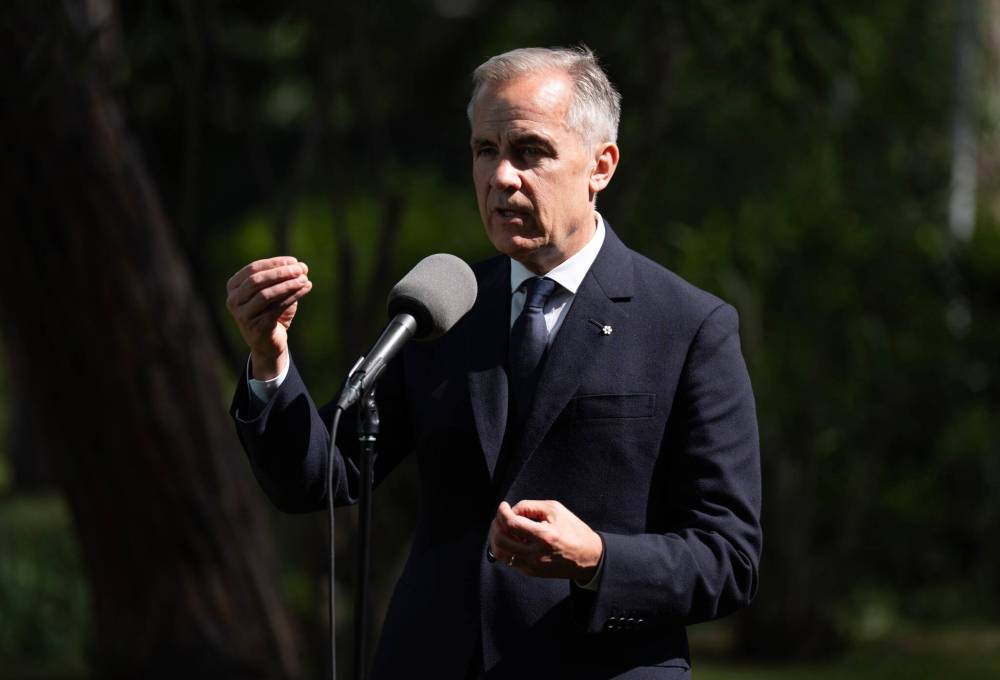
ADRIAN WYLD / THE CANADIAN PRESS
Prime Minister Mark Carney’s decision to delay the budget until fall must be used wisely.
In 2023-2024, the federal deficit reached $62 billion. It was originally projected to be $40 billion. The projected deficit of $39.8 billion for 2024-25 has increased to $48.3 billion.
This fiscal irresponsibility has real consequences. It crowds out essential services, burdens future generations with debt and undermines Canada’s economic competitiveness. Yet, the Liberals have shown little appetite for change. Promises to balance the budget have been repeatedly broken, and deficits have continued to grow.
Enter Mark Carney. Elected on a platform of fiscal responsibility and economic independence, Carney has the opportunity — and the obligation — to chart a new course.
Carney’s primary objective in this budget should be to get the federal government’s finances in order. That doesn’t mean slashing spending and trying to balance the books right away. That would cause more harm than good.
What it does mean is setting a clear path to a balanced budget, starting with a detailed and realistic fiscal plan.
That will be no easy task given the uncertainties around U.S. tariffs on Canadian imports and the economic harm those are already causing. Contingencies will have to be built into the fall budget to reflect those realities.
Still, a new fiscal course is needed.
To understand where we are, it’s worth revisiting how we got here. In 2015, Justin Trudeau stood before Canadians and promised what seemed like a reasonable compromise: a few years of small deficits to “stimulate” the economy, followed by a return to balance in time for the 2019 election.
Many Canadians bought it. Trudeau sold himself as the pragmatic progressive — a leader willing to invest in the future without wrecking the fiscal house.
But once in office, his government threw that plan out the window. By 2016, the Liberals had already abandoned any pretense of balancing the books. The deficits grew, year after year, even during periods of strong economic growth — something economists agree is the time to run surpluses, not pile on more red ink.
Even before the COVID-19 pandemic, Trudeau had racked up tens of billions in annual deficits. And when the pandemic hit — yes, emergency spending was justified — his government used it as political cover to supercharge its spending agenda.
By the time Trudeau left office, the structural deficit was deeply entrenched.
A structural deficit is like a slow leak in your roof. You might not notice it at first, but over time it eats away at the foundation. And by the time you do something about it, the damage is already done.
Canada’s structural deficit means Ottawa is spending more than it’s collecting in revenue every year, regardless of how well the economy is doing. That’s a recipe for disaster, especially with higher interest rates. As debt-servicing costs climb, future governments will be forced to either cut essential services, raise taxes or borrow even more. It’s a vicious cycle.
Worse, it limits Canada’s ability to respond to future crises. When COVID-19 hit in 2020, the federal government had room to act quickly, precisely because debt levels were relatively low at the time. If another major shock hits in the next few years — be it economic, geopolitical, or climate-related — we may not be so lucky.

That’s why Carney’s decision to delay the budget until fall must be used wisely. It’s not enough to “signal” that the government cares about fiscal responsibility. Carney has to show it. He has to make tough decisions. And he has to be honest with Canadians about the consequences of a decade of over-promising and overspending.
Carney has a unique advantage here. Unlike his predecessor, he has a reputation for competence. He is a technocrat who understands numbers. That’s his strength, and he should lean into it. Canadians don’t want another salesman. They want a leader who tells it like it is.
If his fall budget is just another Liberal document filled with lofty goals and deferred decisions, he’ll have blown his chance. Worse, he’ll have confirmed what many Canadians already suspect: that nothing really changes in Ottawa, no matter who’s in charge.
But if Carney uses the fall budget to lay out a bold, realistic plan to repair federal finances, he could earn something far more valuable than applause — he could earn trust. And that’s something in short supply these days.
tom.brodbeck@freepress.mb.ca
Tom Brodbeck is an award-winning author and columnist with over 30 years experience in print media. He joined the Free Press in 2019. Born and raised in Montreal, Tom graduated from the University of Manitoba in 1993 with a Bachelor of Arts degree in economics and commerce. Read more about Tom.
Tom provides commentary and analysis on political and related issues at the municipal, provincial and federal level. His columns are built on research and coverage of local events. The Free Press’s editing team reviews Tom’s columns before they are posted online or published in print – part of the Free Press’s tradition, since 1872, of producing reliable independent journalism. Read more about Free Press’s history and mandate, and learn how our newsroom operates.
Our newsroom depends on a growing audience of readers to power our journalism. If you are not a paid reader, please consider becoming a subscriber.
Our newsroom depends on its audience of readers to power our journalism. Thank you for your support.
Tom Brodbeck is an award-winning author and columnist with over 30 years experience in print media. He joined the Free Press in 2019. Born and raised in Montreal, Tom graduated from the University of Manitoba in 1993 with a Bachelor of Arts degree in economics and commerce. Read more about Tom.
Tom provides commentary and analysis on political and related issues at the municipal, provincial and federal level. His columns are built on research and coverage of local events. The Free Press’s editing team reviews Tom’s columns before they are posted online or published in print – part of the Free Press’s tradition, since 1872, of producing reliable independent journalism. Read more about Free Press’s history and mandate, and learn how our newsroom operates.
Our newsroom depends on a growing audience of readers to power our journalism. If you are not a paid reader, please consider becoming a subscriber.
Our newsroom depends on its audience of readers to power our journalism. Thank you for your support.
Related Articles
Waiting for a fall budget is too long

Advertisement Advertise With Us
Advertisement Advertise With Us