Plenty of blame to go around for long-delayed $7-billion Hydro project
Read this article for free:
or
Already have an account? Log in here »
To continue reading, please subscribe:

Digital Subscription
One year of digital access for only $205*
- Enjoy unlimited reading on winnipegfreepress.com
- Read the E-Edition, our digital replica newspaper
- Access News Break, our award-winning app
- Play interactive puzzles
*First annual payment billed as $205.00 + GST for one year. This annual subscription will automatically renew at $233.00 + GST every 52 weeks (10% off the regular annual price of $259.35). Offer available to new and qualified returning subscribers only. Cancel any time.
To continue reading, please subscribe:
Add Free Press access to your Brandon Sun subscription for only an additional
$1 for the first 4 weeks*
- Enjoy unlimited reading on winnipegfreepress.com
- Read the E-Edition, our digital replica newspaper
- Access News Break, our award-winning app
- Play interactive puzzles
*Your next Brandon Sun subscription payment will increase by $1.00 and you will be charged $17.95 plus GST for four weeks. After four weeks, your payment will increase to $24.95 plus GST every four weeks.
Read unlimited articles for free today:
or
Already have an account? Log in here »
Hey there, time traveller!
This article was published 16/07/2025 (429 days ago), so information in it may no longer be current.
Now that Manitoba Hydro has decided to proceed with a $7-billion plan to overhaul essential components of its two main transmission lines, the political blame game can start in earnest.
It’s not hard to see why the NDP government would be trying to hold the former Progressive Conservative government responsible for delaying investments in Bipoles I and II, which has driven up the total cost, amassed historic levels of debt and triggered unprecedented electricity rate hikes.
But is it a fair allegation? In politics, fair rarely has anything to do with it.

First, some background about what Hydro calls the HVDC (High Voltage Direct Current) Reliability Project.
Bipoles I and II — which carry 70 per cent of all electricity generated by Hydro — are both nearly 1,000 kilometres long. The HVDC Project would see new converters and connectors replaced at both ends of those lines to turn alternating current (AC) from generating stations into direct current (DC) for transmission and then back to AC again when it reaches the end of the transmission lines near Winnipeg. This is needed to reduce the amount of electricity lost during transmission.
The HVDC project will cost at least $7 billion and require annual 3.5 per cent electricity rate hikes for at least 15 years. That’s a sobering reality that has the NDP government nervously twitching.
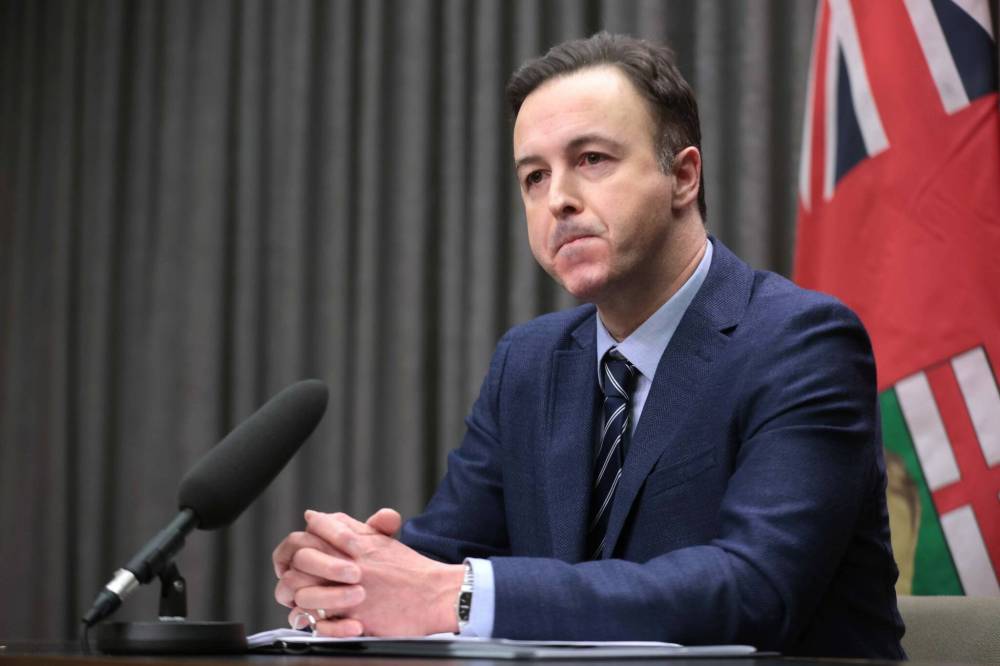
When asked by the Free Press about the project, Finance Minister Adrien Sala wasted little time assigning blame to the Tories, accusing the former government of failing “to make necessary investments to ensure continued reliability at Hydro.”
In pointing the long finger of blame, Sala is relying on the former PC government’s proven track record of deferring and delaying investments in health care, infrastructure and public sector contract settlements to improve its bottom line and pave the way for billions in tax cuts.
However, is this deferral of the much-needed replacement of HVDC equipment the latest example of the Tories kicking a costly can down the road?
In politics, fair rarely has anything to do with it.
Not necessarily.
According to Hydro, the HVDC equipment in question is now decades past its normal service life. Under normal circumstances, the converters and connectors have a roughly 35-year lifespan. Although converters on Bipole I are still within that best-before date, its connectors and the converters and connectors on Bipole II are way past the 35-year service life.
In other words, this has been a concern hovering over NDP and PC governments since at least the early 2000s.
Why didn’t those earlier governments get out ahead of the need to replace HVDC components? In short, both the NDP and Tories had other and — they would both argue — better things to do.
Between 1999 and 2016, NDP premiers Gary Doer and Greg Selinger were focused on adding additional generating capacity and building Bipole III, the much-needed third transmission line that runs down the west side of Lake Manitoba.
In pointing the long finger of blame, (Finance Minister Adrien) Sala is relying on the former PC government’s proven track record of deferring and delaying investments in health care, infrastructure and public sector contract settlements to improve its bottom line and pave the way for billions in tax cuts.
One could fairly argue the construction of Bipole III needed to be done before tackling HVDC concerns on Bipoles I and II. However, it’s impossible to ignore the fact the NDP knew the HVDC equipment was too old, and it still pushed the issue to the back burner. It was a decision that absolutely meant this project was going to become more costly.
And what of the Tories?
From 2016 to 2023, PC premiers Pallister and Stefanson had little interest in making new investments in Hydro. Instead, they seized on every opportunity to assail the NDP government’s mishandling of the $5-billion Bipole III project. Pallister called Bipole III — which on the NDP’s watch ballooned to more than twice its original estimated cost — the greatest political scandal in Manitoba history.
The simple fact is that when you spend so much time protesting a $5-billion investment in a third transmission line, it’s politically impractical to simultaneously launch a $7-billion overhaul of the two oldest transmission lines.
It we take full account, how long have governments in this province been ignoring HVDC investments? That’s a really hard question to answer.
The fairest take is that successive governments, and Hydro itself, deferred work on the HVDC transmission system for a variety of reasons, leaving Manitoba vulnerable to a catastrophic interruption in power service.
Hydro is taking a very politically cautious approach to that question.
The paper trail shows this issue was well known within both Hydro and government going back to the mid 2010s. Officials from the Crown utility would only say that over the years, they have been “working on this issue at a lower level for a number of years” and performing “enhanced maintenance” to ensure the existing converters and connectors remained in service beyond their best before dates.

At the same time, the officials said other major projects — the Manitoba-Minnesota transmission line, the Keeyask generating station and Bipole III — demanded Hydro’s full attention. This year was the first time Hydro included the HVDC project in its budget and rate application to the Public Utilities Board.
So, to whom should blame be assigned?
The fairest take is that successive governments, and Hydro itself, deferred work on the HVDC transmission system for a variety of reasons, leaving Manitoba vulnerable to a catastrophic interruption in power service.
RUTH BONNEVILLE / FREE PRESS FILES
Finance Minister Adrien Sala wasted little time assigning blame to the Tories for the High Voltage Direct Current Reliability project.
Any time controversy erupts, politicians love to point fingers at other people. In this instance, however, every government of every stripe can share in the blame.
dan.lett@freepress.mb.ca

Dan Lett is a columnist for the Free Press, providing opinion and commentary on politics in Winnipeg and beyond. Born and raised in Toronto, Dan joined the Free Press in 1986. Read more about Dan.
Dan’s columns are built on facts and reactions, but offer his personal views through arguments and analysis. The Free Press’ editing team reviews Dan’s columns before they are posted online or published in print — part of the our tradition, since 1872, of producing reliable independent journalism. Read more about Free Press’s history and mandate, and learn how our newsroom operates.
Our newsroom depends on a growing audience of readers to power our journalism. If you are not a paid reader, please consider becoming a subscriber.
Our newsroom depends on its audience of readers to power our journalism. Thank you for your support.