

Food prices will only get worse
Advertisement
Read this article for free:
or
Already have an account? Log in here »
To continue reading, please subscribe:
Monthly Digital Subscription
$1 per week for 24 weeks*
- Enjoy unlimited reading on winnipegfreepress.com
- Read the E-Edition, our digital replica newspaper
- Access News Break, our award-winning app
- Play interactive puzzles
*Billed as $4.00 plus GST every four weeks. After 24 weeks, price increases to the regular rate of $19.95 plus GST every four weeks. Offer available to new and qualified returning subscribers only. Cancel any time.
Monthly Digital Subscription
$4.99/week*
- Enjoy unlimited reading on winnipegfreepress.com
- Read the E-Edition, our digital replica newspaper
- Access News Break, our award-winning app
- Play interactive puzzles
*Billed as $19.95 plus GST every four weeks. Cancel any time.
To continue reading, please subscribe:
Add Free Press access to your Brandon Sun subscription for only an additional
$1 for the first 4 weeks*
*Your next subscription payment will increase by $1.00 and you will be charged $16.99 plus GST for four weeks. After four weeks, your payment will increase to $23.99 plus GST every four weeks.
Read unlimited articles for free today:
or
Already have an account? Log in here »
Headlines this week reveal a food economy that appears to be starving producers while bestowing nearly unlimited riches on grocery retailers.
Caught in the middle are consumers who face skyrocketing prices that show no sign of slowing down.
The Canada Food Report predicted this week that food prices will rise by four to six per cent over the next year, driven largely by the cost of meat products. In case you were wondering, the rate of food inflation is two to four times higher than overall inflation.
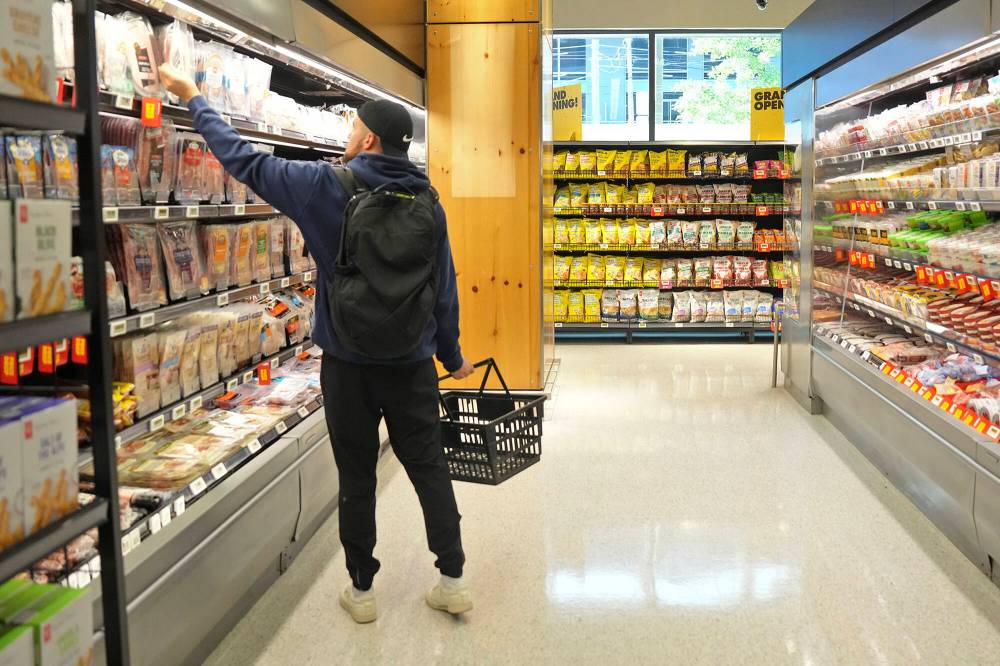
Chris Young / The Canadian Press
A shopper reaches for groceries.
Some premium products, like steak, continue to drive the increase in price. The spike in beef prices is well documented and explained. Changing climate has ravaged the beef industry, leading to lower supply and higher costs of production.
However, the Canada Food Report predicted that “middle section” products — canned and dry goods found in the centre of grocery stores which tend to be more resilient to price spikes — will also see higher than expected price increases.
Nobody likes higher food prices, but the reality is that many Canadians are able to pay the higher cost. Since the worst months of the pandemic, increases in real wages and other forms of income have also risen faster than the inflation rate. However, the constituency of people who simply cannot afford groceries of any kind is growing.
Based on the Canada Food Report, Manitoba Harvest forecast the average annual food bill will rise by nearly $1,000 in 2026. That reality is, in turn, driving more people to food banks than ever before. Food Banks Canada estimates that roughly a quarter of all Canadians are “food insecure,” in that they cannot afford to cover the cost a well-rounded grocery basket. That is manifesting in unprecedented demand at food banks.
Toronto’s Daily Bread Food Bank recently noted it is now serving more than 330,000 families every month. “The number of clients here in Toronto could fill the Rogers Centre (where the Toronto Blue Jays play) eight times every single month,” according to Daily Bread CEO Neil Hetherington.
There is, of course, one constituency that does not seem to be suffering: retail grocers.
Canada’s major grocery chains are expected to earn profits of more than $6 billion, nearly three times the combined profits earned in 2019. The increased profit is the result of continued high demand but also from the fact that retailers have boosted their historically low margins on all food products.

Government leaders have been hard pressed to come up with a solution to the food price crisis. Some, like Ontario’s Doug Ford, have offered across-the-board cash bonuses to citizens. Others, like Premier Wab Kinew, eliminated provincial taxes on gasoline to give people more money to cover basic costs like food.
None of these measures actually resulted in lower or fairer prices. Manitoba did pass a law to stop grocery store chains from hoarding closed locations to prevent competitors from setting up shop. And the NDP government promised in its recent throne speech to do a study into the macro forces driving food prices and draft recommendations on how to bring prices back down.
Government is going to have to be very creative in finding solutions to this problem. Broad subsidies paid directly to citizens will do nothing to convince grocers to lower prices. And if someone came up with a government mechanism to force prices lower, there is a chance producers could be hurt.
The only thing certain is that something needs to be done, and fast.
Even though this is a country of incredible relative wealth, millions of Canadians cannot afford to feed themselves. We should all be ashamed into action.