

Manitobans have heard NDP promises; now they want results

Advertisement
Read this article for free:
or
Already have an account? Log in here »
To continue reading, please subscribe:

Digital Subscription
One year of digital access for only $205*
- Enjoy unlimited reading on winnipegfreepress.com
- Read the E-Edition, our digital replica newspaper
- Access News Break, our award-winning app
- Play interactive puzzles
*First annual payment billed as $205.00 + GST for one year. This annual subscription will automatically renew at $233.00 + GST every 52 weeks (10% off the regular annual price of $259.35). Offer available to new and qualified returning subscribers only. Cancel any time.
To continue reading, please subscribe:
Add Free Press access to your Brandon Sun subscription for only an additional
$1 for the first 4 weeks*
- Enjoy unlimited reading on winnipegfreepress.com
- Read the E-Edition, our digital replica newspaper
- Access News Break, our award-winning app
- Play interactive puzzles
*Your next Brandon Sun subscription payment will increase by $1.00 and you will be charged $17.95 plus GST for four weeks. After four weeks, your payment will increase to $24.95 plus GST every four weeks.
Read unlimited articles for free today:
or
Already have an account? Log in here »
Hey there, time traveller!
This article was published 06/01/2026 (275 days ago), so information in it may no longer be current.
If 2024 was about settling in, and 2025 was about setting the stage for modest progress, then 2026 will be the year Manitoba’s NDP government runs headlong into the fine print of governing.
For the Kinew government, this will be the year when long-promised ideas stop living comfortably in news releases and start colliding with emergency-room wait times, balance sheets and voters’ expectations.
Take the province’s long-anticipated, proposed supervised consumption site. After enough consultations to fill a filing cabinet and enough political hesitation to span multiple governments, 2026 looks like the year it finally opens.
MIKAELA MACKENZIE / FREE PRESS FILES
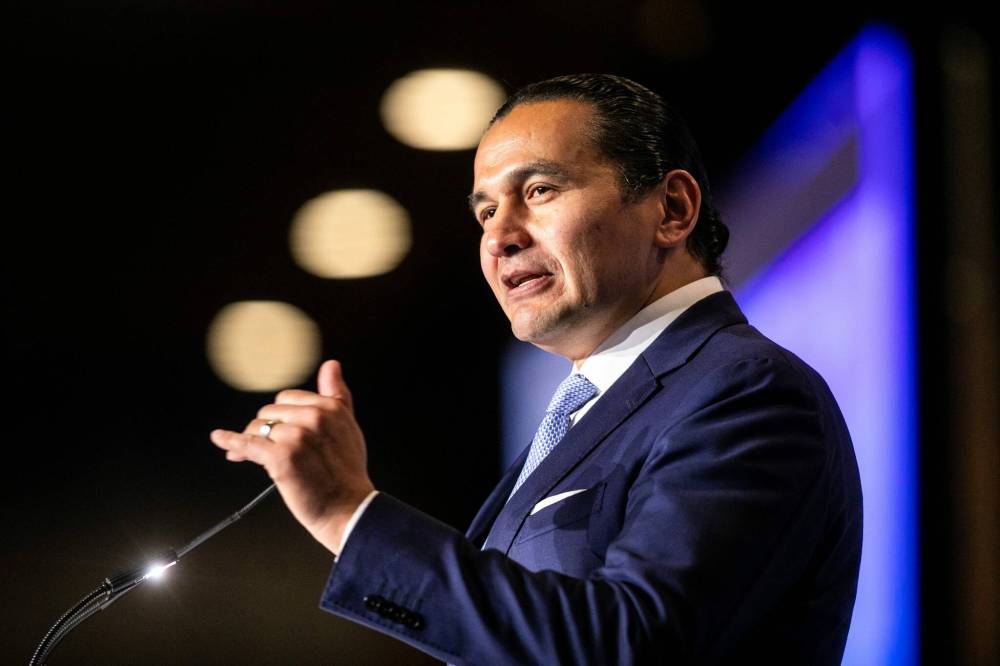
The government still has unfinished business; this is not the year for Premier Wab Kinew to call an election, Tom Brodbeck writes.
The logic is unavoidable: overdose deaths remain historically high, emergency services are stretched thin, and the evidence from other jurisdictions is no longer theoretical.
The Kinew government knows it will take heat for the decision. It also knows that continuing to delay it makes less and less sense, politically or medically.
Expect the site to be framed as one piece of a broader addictions and mental-health response — less ideology and more harm-reduction pragmatism. Whether Manitobans agree or not, this will be a government choosing action over avoidance.
Health care, however, is where the rhetoric-to-reality gap will be most visible.
The NDP’s newly promised patient safety charter is still mostly an outline, a declaration of good intentions rather than enforceable change. That won’t be enough in 2026. This is the year the government will be forced to put meat on those bones — and that means specifics.
For patients waiting 10 to 12 hours in emergency rooms to see a doctor or nurse practitioner, the charter will have to translate into clearer triage standards, expanded scope-of-practice rules for nurses and stronger incentives to staff high-pressure ERs.
For those waiting a year, two years or more for surgeries — especially hip and knee replacements — it will mean guaranteed timelines, out-of-province referrals or expanded contracts with private surgical facilities inside Manitoba.
None of this is cheap. None of it is fast. And none of it will fully solve the problem. But 2026 is the year Manitobans will reasonably expect to see whether the charter is a shield patients can actually hold, or just a banner the government waves while apologizing for delays.
That leads directly to provincial finances, an issue the government has danced around for far too long.
Anyone who follows Manitoba’s finances already knows what the Kinew government will almost certainly acknowledge in 2026: the budget will not be balanced in its first term. That promise, made during the 2023 election and repeated often since — as recently as last month — has been overtaken by reality.
Rising health-care costs, infrastructure spending, homelessness initiatives and public-sector wage pressures have made a first-term balance increasingly implausible. When the admission comes, expect it to be carefully worded and heavily contextualized.
The NDP will argue that fiscal responsibility now means stabilizing services first and balancing later.
The political risk is obvious. The fiscal credibility the party worked hard to establish will take a hit. But the alternative — continuing to pretend the numbers add up — is worse.
At the same time, the NDP will have to show voters it has a realistic plan to get the province’s finances under control.
On housing, the government will likely continue the incremental approach it took in 2025. More homeless Manitobans will be transferred into permanent or transitional housing, building on modest but real progress.
It won’t end homelessness. It won’t even dramatically reduce it. But it will reinforce the NDP’s preference for steady gains over splashy announcements.
And what about politics itself?
Despite Premier Wab Kinew’s musings last year about a possible early election, 2026 is almost certainly not the year for that. There is no compelling trigger and no new mandate to seek. Calling an early election without justification would look like opportunism, not confidence.
More importantly, the government still has unfinished business. Health-care reform is mid-stream, at best. Housing efforts are ongoing. Fiscal honesty has yet to fully land. Premiers don’t go to the polls to explain why their biggest promises are still in progress.

Meanwhile, barring an unforeseen shock, the NDP’s sky-high public approval is likely to continue through 2026. That’s not because the government has been revolutionary, but because it has been broadly competent and uncontroversial.
There is little it has done to actively sour public opinion, at least not to the point where voters start seriously contemplating a change in government.
That is especially true given the state of the opposition. The Progressive Conservatives remain disorganized and inward-looking, while Manitoba’s Liberals continue their slide toward political irrelevance (if they haven’t landed there already). In that context, the NDP benefits as much from comparison as performance.
This will not be a year of dramatic pivots or bold new visions. It will be a year of delivery, admission and adjustment — a year when voters start asking not what the government believes, but what it has actually changed.
tom.brodbeck@freepress.mb.ca
Tom Brodbeck is an award-winning author and columnist with over 30 years experience in print media. He joined the Free Press in 2019. Born and raised in Montreal, Tom graduated from the University of Manitoba in 1993 with a Bachelor of Arts degree in economics and commerce. Read more about Tom.
Tom provides commentary and analysis on political and related issues at the municipal, provincial and federal level. His columns are built on research and coverage of local events. The Free Press’s editing team reviews Tom’s columns before they are posted online or published in print – part of the Free Press’s tradition, since 1872, of producing reliable independent journalism. Read more about Free Press’s history and mandate, and learn how our newsroom operates.
Our newsroom depends on a growing audience of readers to power our journalism. If you are not a paid reader, please consider becoming a subscriber.
Our newsroom depends on its audience of readers to power our journalism. Thank you for your support.
Tom Brodbeck is an award-winning author and columnist with over 30 years experience in print media. He joined the Free Press in 2019. Born and raised in Montreal, Tom graduated from the University of Manitoba in 1993 with a Bachelor of Arts degree in economics and commerce. Read more about Tom.
Tom provides commentary and analysis on political and related issues at the municipal, provincial and federal level. His columns are built on research and coverage of local events. The Free Press’s editing team reviews Tom’s columns before they are posted online or published in print – part of the Free Press’s tradition, since 1872, of producing reliable independent journalism. Read more about Free Press’s history and mandate, and learn how our newsroom operates.
Our newsroom depends on a growing audience of readers to power our journalism. If you are not a paid reader, please consider becoming a subscriber.
Our newsroom depends on its audience of readers to power our journalism. Thank you for your support.
Related Articles
Drug site bid made on day consults were set


Advertisement Advertise With Us
Advertisement Advertise With Us