

Carney told it like it is, and everyone — including the bully — heard him

Advertisement
Read this article for free:
or
Already have an account? Log in here »
To continue reading, please subscribe:

Digital Subscription
One year of digital access for only $205*
- Enjoy unlimited reading on winnipegfreepress.com
- Read the E-Edition, our digital replica newspaper
- Access News Break, our award-winning app
- Play interactive puzzles
*First annual payment billed as $205.00 + GST for one year. This annual subscription will automatically renew at $233.00 + GST every 52 weeks (10% off the regular annual price of $259.35). Offer available to new and qualified returning subscribers only. Cancel any time.
To continue reading, please subscribe:
Add Free Press access to your Brandon Sun subscription for only an additional
$1 for the first 4 weeks*
- Enjoy unlimited reading on winnipegfreepress.com
- Read the E-Edition, our digital replica newspaper
- Access News Break, our award-winning app
- Play interactive puzzles
*Your next Brandon Sun subscription payment will increase by $1.00 and you will be charged $17.95 plus GST for four weeks. After four weeks, your payment will increase to $24.95 plus GST every four weeks.
Read unlimited articles for free today:
or
Already have an account? Log in here »
Hey there, time traveller!
This article was published 22/01/2026 (237 days ago), so information in it may no longer be current.
Prime Minister Mark Carney didn’t walk into the World Economic Forum in Davos this week promising to tame Donald Trump. No sane person would ever make that pledge.
But events over the past few days suggest Carney did something almost as rare: he helped force a volatile, narcissistic American president to blink.
Within a day of Carney delivering what many European leaders and political observers described as the clearest, most honest assessment yet of the rupture between the United States and its traditional allies, Trump backed away from two of his most reckless threats — the use of military force to seize Greenland and punitive tariffs against European countries that dared to oppose the idea.
That is no coincidence. It is diplomacy, executed the Canadian way: quietly, firmly, intelligently and with a sober understanding of how power actually works in a world where the old rules no longer apply.
Carney’s Davos speech was not flashy. Instead, it exposed an uncomfortable truth most leaders have been tiptoeing around since Trump’s return to office: the postwar system of multilateralism, co-operative trade and automatic American leadership is over.
Carney, who did not specifically name Trump or the United States (the implication was obvious), called it a “rupture.” The word landed with seismic force. NATO allies could hear it, European leaders could hear it and, crucially, Trump could hear it, too.
For years, Trump has thrived on the belief that America’s allies are weak, divided and incapable of articulating a coherent alternative to his twisted worldview. What Carney did in Davos was puncture that assumption.
He laid out calmly and methodically why alliances matter not out of nostalgia, but out of cold self-interest — including America’s. He argued that coercion masquerading as strategy weakens, rather than strengthens, collective security.
That message earned Carney something almost unheard of at the WEF: a standing ovation. And it clearly attracted Trump’s attention.
Yes, the U.S. president took a swipe at Carney the following day during his own rambling, bumbling and largely incoherent speech. Trump almost always lashes out when someone lands a punch. What mattered more was what happened next.
A day after Carney spoke, Trump announced he was backing off tariff threats against European countries that opposed U.S. ownership of Greenland. He also explicitly ruled out military force and reframed his demand for outright sovereignty into a vague “framework” negotiated with NATO Secretary General Mark Rutte.
Suddenly, Trump was no longer insisting — at least publicly — that the United States must own Greenland, or else. He was talking about negotiations. About frameworks. About NATO. Those are not Trumpian instincts. They are concessions.
The U.S. already has a military base in Greenland and can, under a decades-old agreement, add as many as it wants. So it’s unclear if anything has really changed under the so-called framework.
Granted, Carney didn’t single-handedly save Greenland from a U.S. hostile takeover. European resistance mattered. Denmark’s firmness mattered. Rutte’s shuttle diplomacy mattered. But Carney helped create the political and intellectual space for that resistance to coalesce.
By articulating the stakes in language that leaders — and markets — understand, Carney reframed the issue. Trump’s Greenland gambit was no longer just another strongman flex.
It was exposed as a destabilizing threat to the very alliance structure that underpins Western security and trade (not to mention the stock market, which Trump is obsessed with).
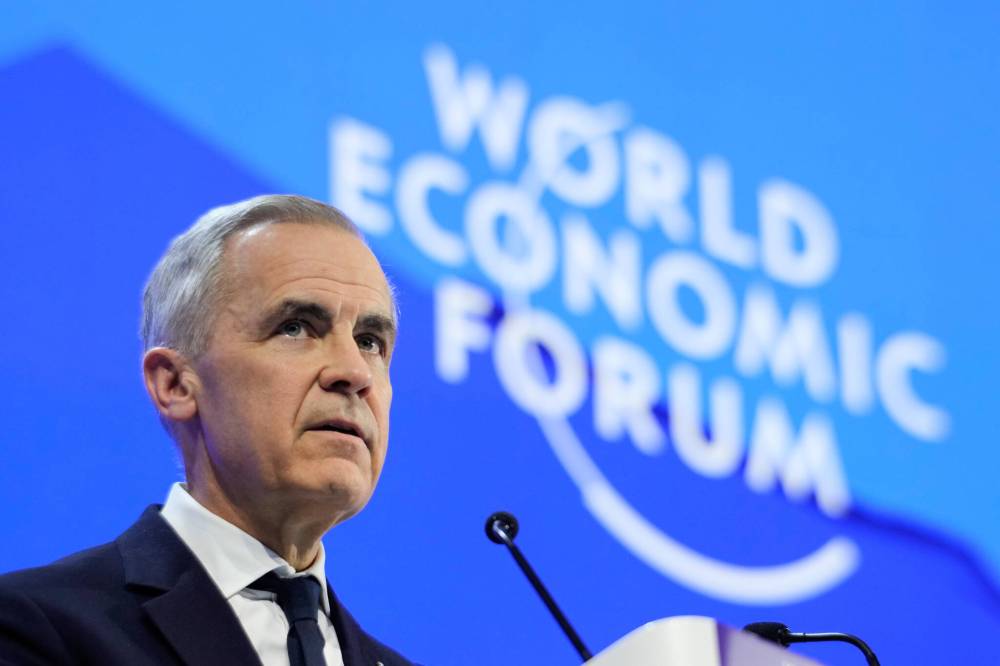
MARKUS SCHREIBER / THE ASSOCIATED PRESS
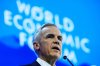
Prime Minister Mark Carney speaks during the Annual Meeting of the World Economic Forum in Davos, Switzerland.
Trump was forced into a compromise that looks like a win for America (at least to his supporters) while preserving NATO and Greenland sovereignty. And it seems the U.S. president can live with that, at least for now (he could change his mind tomorrow).
Carney understood Trump’s psychology. He didn’t lecture him. He didn’t moralize. He simply described reality — a world in which allies are no longer willing to be bullied and in which American power is less effective when wielded alone.
There is also a Canadian lesson here. For too long, Canada has assumed that the best strategy is to keep its head down and hope for the best with Washington. That may have seemed like a reasonable strategy in the early days of Trump’s second term. No one really knew how to respond to his unprecedented attacks against Canadian sovereignty.
Now, Carney is signalling something different: that middle powers around the world can still shape outcomes if they speak clearly, build coalitions and stop pretending the status quo still exists.

That doesn’t mean Canada should seek confrontation with the United States. It means it should stop mistaking silence for influence.
The irony is that Carney’s speech may have done Trump a favour. By backing down, Trump avoided a crisis that would have hardened European resistance and further isolated Washington. If Trump were inclined toward gratitude, he might even thank Carney.
He won’t, of course. But the evidence is there all the same. In a moment of escalating tension, Canada’s prime minister helped steady the ground — not by clinging to illusions about American benevolence, but by acknowledging that the world has changed and that NATO allies should act accordingly.
That is what leadership looks like in an age of rupture.
tom.brodbeck@freepress.mb.ca
Tom Brodbeck is an award-winning author and columnist with over 30 years experience in print media. He joined the Free Press in 2019. Born and raised in Montreal, Tom graduated from the University of Manitoba in 1993 with a Bachelor of Arts degree in economics and commerce. Read more about Tom.
Tom provides commentary and analysis on political and related issues at the municipal, provincial and federal level. His columns are built on research and coverage of local events. The Free Press’s editing team reviews Tom’s columns before they are posted online or published in print – part of the Free Press’s tradition, since 1872, of producing reliable independent journalism. Read more about Free Press’s history and mandate, and learn how our newsroom operates.
Our newsroom depends on a growing audience of readers to power our journalism. If you are not a paid reader, please consider becoming a subscriber.
Our newsroom depends on its audience of readers to power our journalism. Thank you for your support.
Tom Brodbeck is an award-winning author and columnist with over 30 years experience in print media. He joined the Free Press in 2019. Born and raised in Montreal, Tom graduated from the University of Manitoba in 1993 with a Bachelor of Arts degree in economics and commerce. Read more about Tom.
Tom provides commentary and analysis on political and related issues at the municipal, provincial and federal level. His columns are built on research and coverage of local events. The Free Press’s editing team reviews Tom’s columns before they are posted online or published in print – part of the Free Press’s tradition, since 1872, of producing reliable independent journalism. Read more about Free Press’s history and mandate, and learn how our newsroom operates.
Our newsroom depends on a growing audience of readers to power our journalism. If you are not a paid reader, please consider becoming a subscriber.
Our newsroom depends on its audience of readers to power our journalism. Thank you for your support.
Related Articles
Lutnick calls Carney's speech 'political noise' and cautions Canada on China deal




Advertisement Advertise With Us
Advertisement Advertise With Us