

Carney knows calling snap election would undermine promise to Canadians

Advertisement
Read this article for free:
or
Already have an account? Log in here »
To continue reading, please subscribe:

Digital Subscription
One year of digital access for only $205*
- Enjoy unlimited reading on winnipegfreepress.com
- Read the E-Edition, our digital replica newspaper
- Access News Break, our award-winning app
- Play interactive puzzles
*First annual payment billed as $205.00 + GST for one year. This annual subscription will automatically renew at $233.00 + GST every 52 weeks (10% off the regular annual price of $259.35). Offer available to new and qualified returning subscribers only. Cancel any time.
To continue reading, please subscribe:
Add Free Press access to your Brandon Sun subscription for only an additional
$1 for the first 4 weeks*
- Enjoy unlimited reading on winnipegfreepress.com
- Read the E-Edition, our digital replica newspaper
- Access News Break, our award-winning app
- Play interactive puzzles
*Your next Brandon Sun subscription payment will increase by $1.00 and you will be charged $17.95 plus GST for four weeks. After four weeks, your payment will increase to $24.95 plus GST every four weeks.
Read unlimited articles for free today:
or
Already have an account? Log in here »
Hey there, time traveller!
This article was published 27/01/2026 (230 days ago), so information in it may no longer be current.
There is a familiar Ottawa reflex that kicks in whenever a prime minister enjoys a bump in the polls: call an election before the mood changes.
Bank the goodwill. Lock in a majority. Worry about the consequences later.
On paper, that logic applies neatly to Mark Carney. His personal approval ratings have jumped noticeably in recent weeks (an increase to 60 per cent from 52 per cent, according to a recent Angus Reid Institute poll) fuelled, in large part, by his widely praised address at the World Economic Forum earlier this month.
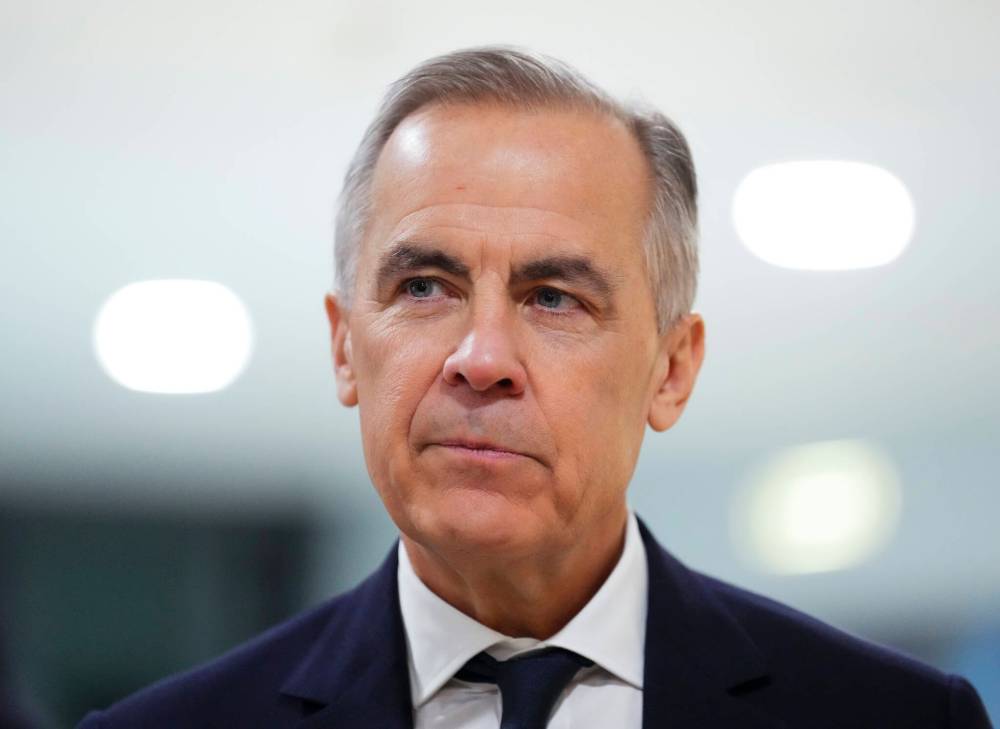
SEAN KILPATRICK / THE CANADIAN PRESS FILES
Prime Minister Mark Carney
In Davos, Carney sounded like a grown-up in a room full of anxious adults, calmly laying out how the global economic order is shifting and how Canada intends to navigate it. For a country unnerved by a volatile United States and a belligerent Donald Trump, it was reassuring stuff.
So why not strike while the iron is hot?
Because politics is not played on paper, and because Carney understands something many of his predecessors learned the hard way: just because you can call an election doesn’t mean you should.
Start with the most basic political reality. Canadians went to the polls less than a year ago. Whatever else they may be feeling right now — anxiety about affordability, anger at Trump, cautious optimism about Carney — enthusiasm for another federal election is not among them.
A snap election this spring would be widely viewed not as a democratic necessity, but as naked political ambition, the kind of opportunism voters increasingly despise.
Carney, who has built his political brand on restraint and seriousness, would be especially vulnerable to that charge. This is not a leader who came to office promising to “shake things up” or bulldoze Parliament in the name of bold change.
He promised stability, competence and focus in an unsettled world. Turning around and forcing an election simply because the polls look friendly would undermine that entire premise.
The timing would be particularly tone-deaf given the broader context in which Canada finds itself. The country is once again in Donald Trump’s crosshairs, enduring a steady barrage of threats, insults and trade-related bluster from a U.S. president who views Canada as a convenient punching bag.
Tariff threats, economic coercion and casual disregard for diplomatic norms are now part of the daily noise.
In that environment, Canadians are not looking for partisan gamesmanship. They want their government at the table, focused outward, defending national interests and shoring up economic resilience — not consumed by the inward-looking circus of a federal campaign.
A snap election would freeze Parliament, delay legislation and distract ministers at precisely the wrong moment.
Carney has been explicit about this point, insisting his government is “focused on results for Canadians” and not contemplating a spring election. Cynics will roll their eyes — prime ministers have lied before — but in this case the explanation actually fits the facts.
Those facts include the small but crucial detail that the Liberals are just two seats shy of a majority government. That is not a precarious minority hanging on by its fingernails. It is a near-majority that can function, legislate and govern with minimal drama.
With a bit of co-operation — and there is plenty of incentive for co-operation — Carney can pass virtually everything he needs to pass.
None of the opposition parties want an election right now, either. The Conservatives are dealing with their own internal turbulence after two MPs crossed the floor to the Liberals in the fall and another announced plans to resign this spring. The NDP and Bloc Québécois, meanwhile, have no appetite for forcing a campaign that would likely result in little, if any, gain for them in the House of Commons.

The government’s recent communications — including Monday’s grocery-store announcement boosting the GST credit — have been seized upon by some as evidence of pre-election positioning. It certainly looked like a campaign stop.
But governments still have to govern and make policy announcements. Not every photo-op is a prelude to a writ drop, no matter how conditioned Ottawa has become to see elections lurking behind every podium.
The deeper irony is that Carney’s refusal to rush to an election may ultimately strengthen him far more than an early campaign ever could. Canadians tend to reward leaders who appear to resist the temptations of power, not indulge them. In a political era defined by volatility, restraint is not weakness; it is a signal of confidence.
Carney does not look like a prime minister itching for an election. He looks like one who understands that the mandate he already has is more valuable than the one he might try to manufacture. For now, governing is the safer bet.
tom.brodbeck@freepress.mb.ca
Tom Brodbeck is an award-winning author and columnist with over 30 years experience in print media. He joined the Free Press in 2019. Born and raised in Montreal, Tom graduated from the University of Manitoba in 1993 with a Bachelor of Arts degree in economics and commerce. Read more about Tom.
Tom provides commentary and analysis on political and related issues at the municipal, provincial and federal level. His columns are built on research and coverage of local events. The Free Press’s editing team reviews Tom’s columns before they are posted online or published in print – part of the Free Press’s tradition, since 1872, of producing reliable independent journalism. Read more about Free Press’s history and mandate, and learn how our newsroom operates.
Our newsroom depends on a growing audience of readers to power our journalism. If you are not a paid reader, please consider becoming a subscriber.
Our newsroom depends on its audience of readers to power our journalism. Thank you for your support.
Tom Brodbeck is an award-winning author and columnist with over 30 years experience in print media. He joined the Free Press in 2019. Born and raised in Montreal, Tom graduated from the University of Manitoba in 1993 with a Bachelor of Arts degree in economics and commerce. Read more about Tom.
Tom provides commentary and analysis on political and related issues at the municipal, provincial and federal level. His columns are built on research and coverage of local events. The Free Press’s editing team reviews Tom’s columns before they are posted online or published in print – part of the Free Press’s tradition, since 1872, of producing reliable independent journalism. Read more about Free Press’s history and mandate, and learn how our newsroom operates.
Our newsroom depends on a growing audience of readers to power our journalism. If you are not a paid reader, please consider becoming a subscriber.
Our newsroom depends on its audience of readers to power our journalism. Thank you for your support.
Related Articles
Manitobans’ support for Carney’s Liberals ‘strong and stable’ as federal NDP slumps: poll
Advertisement Advertise With Us
Advertisement Advertise With Us