

Asagwara takes black-and-white safety issue, turns it into ugly, political shade of grey

Advertisement
Read this article for free:
or
Already have an account? Log in here »
To continue reading, please subscribe:

Digital Subscription
One year of digital access for only $205*
- Enjoy unlimited reading on winnipegfreepress.com
- Read the E-Edition, our digital replica newspaper
- Access News Break, our award-winning app
- Play interactive puzzles
*First annual payment billed as $205.00 + GST for one year. This annual subscription will automatically renew at $233.00 + GST every 52 weeks (10% off the regular annual price of $259.35). Offer available to new and qualified returning subscribers only. Cancel any time.
To continue reading, please subscribe:
Add Free Press access to your Brandon Sun subscription for only an additional
$1 for the first 4 weeks*
- Enjoy unlimited reading on winnipegfreepress.com
- Read the E-Edition, our digital replica newspaper
- Access News Break, our award-winning app
- Play interactive puzzles
*Your next Brandon Sun subscription payment will increase by $1.00 and you will be charged $17.95 plus GST for four weeks. After four weeks, your payment will increase to $24.95 plus GST every four weeks.
Read unlimited articles for free today:
or
Already have an account? Log in here »
Hey there, time traveller!
This article was published 29/01/2026 (254 days ago), so information in it may no longer be current.
There are plenty of legitimate debates to be had about “grey-listing” — the blunt, uniquely Manitoban tactic the Manitoba Nurses Union uses to warn its members to stay away from unsafe workplaces.
But there’s one debate we should not be having in 2026: whether the union’s safety concerns are really just politics.
And yet that’s exactly where Health Minister Uzoma Asagwara has chosen to take this.
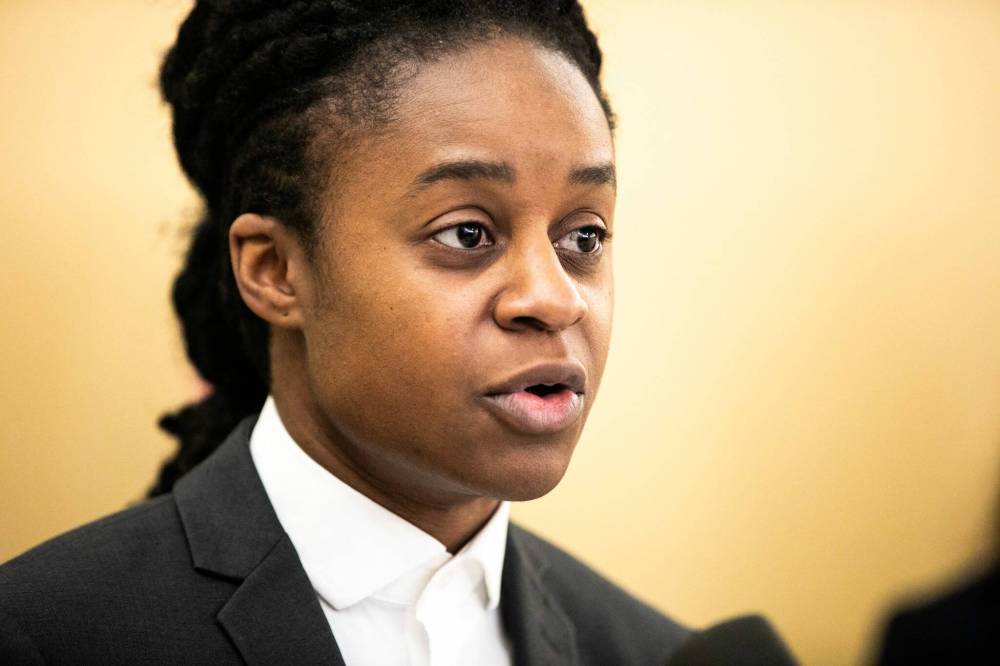
MIKAELA MACKENZIE / FREE PRESS FILES
This week, Health Minister Uzoma Asagwara said the Manitoba Nurses Union votes on grey-listing hospitals only when the NDP is in power.
With nurses at St. Boniface Hospital preparing to vote on whether to grey-list their workplace, Asagwara responded this week by suggesting the MNU tends to reach for this weapon only when the NDP is in power — as if that’s proof it isn’t truly about safety at all, but some kind of partisan pressure campaign.
“This is kind of what we’ve seen from them before, when a previous NDP government came into power and this is what MNU did,” Asagwara said.
It’s hard to overstate how unhelpful that is.
Not because unions are above politics — they aren’t. Not because governments shouldn’t push back when they believe a union tactic is counterproductive. They should.
But because the minister’s comment tries to discredit the motive instead of addressing the reality. And the reality is that Manitoba hospitals are increasingly unsafe places to work.
That’s not a talking point. It’s the lived experience of nurses, health-care aides, doctors, security officers and clerks who have watched violence become normalized and who are tired of being told to just “be careful” while the system slowly reacts.
If grey-listing feels like an extreme measure, it’s because the problem has become extreme.
We’re talking about hospitals where staff have faced sexual assaults, where security incidents are frequent enough that “alerts” start blending into the background noise and where a nurse can be assaulted in a parkade and the story is met with resignation, not shock.
When that becomes the context, a minister trying to frame grey-listing as a union tradition that conveniently resurfaces whenever New Democrats form government isn’t just politically cynical, it’s counterproductive.
Grey-listing, by design, is meant to create reputational pressure. It warns nurses not to apply for jobs or accept shifts at a facility because the union membership working there has declared it unsafe. The MNU has used it rarely — only a handful of times in 45 years — precisely because it’s a last resort.
You don’t have to like the tactic to understand what drives it.
And if Asagwara truly believes grey-listing is more about politics than safety, the minister should ask a basic question: why would nurses vote overwhelmingly for it if their workplace was reasonably safe?
At Health Sciences Centre in August, 94 per cent supported grey-listing. At Thompson General Hospital in November, the vote was 97 per cent. Those aren’t narrow margins whipped up by a few activists. Those are near-consensus numbers that reflect deep alarm.
Asagwara insists the province and hospital leadership are “laser-focused” on practical measures that will lead to measurable improvements.That’s encouraging, and the minister deserves credit for taking workplace violence seriously, including efforts to expand institutional safety officers and introduce layered security approaches.
But none of that is helped by implying the union is playing games.
In fact, it risks poisoning the very collaboration the minister says is happening.
The MNU doesn’t grey-list because it hates the NDP. It does it because it has leverage only when it publicly embarrasses the employer and the government.
And the employer — whether it’s Shared Health, a regional health authority or hospital leadership — tends to respond faster when the problem becomes public.
That isn’t unique to Manitoba. That’s how power works in every workplace.
But instead of conceding the point — that violence in hospitals has become intolerable — the government tries to reframe the story as an attack against the NDP, which is absurd.
It’s the oldest move in politics: when you can’t win the argument on facts, you question the motives.
The most frustrating part is that Asagwara doesn’t need to take this tack. The NDP has a genuine opportunity to lead here, not just with security initiatives, but with a clear moral stance.
They could say: “Grey-listing is serious. We don’t want it. But we understand why nurses feel driven to it. We will meet their safety demands with urgency, transparency and timelines.”
They could challenge the union on specifics without dismissing the overall concern. They could commit to written agreements, measurable benchmarks and public reporting, the kind of accountability that would make the measure unnecessary.
Instead, we’re getting political insinuation.
And that’s dangerous, because it encourages the public to treat nurses’ warnings like partisan noise. It normalizes the idea that workplace violence is just another political football.

It isn’t.
In the end, grey-listing is a symptom of a deeper breakdown: the sense among front-line staff that they must escalate to be heard.
If the health minister wants to end grey-listing, the solution isn’t to accuse the union of political theatre.
The solution is to make hospitals safe enough that nurses don’t feel they have to warn others away.
tom.brodbeck@freepress.mb.ca
Tom Brodbeck is an award-winning author and columnist with over 30 years experience in print media. He joined the Free Press in 2019. Born and raised in Montreal, Tom graduated from the University of Manitoba in 1993 with a Bachelor of Arts degree in economics and commerce. Read more about Tom.
Tom provides commentary and analysis on political and related issues at the municipal, provincial and federal level. His columns are built on research and coverage of local events. The Free Press’s editing team reviews Tom’s columns before they are posted online or published in print – part of the Free Press’s tradition, since 1872, of producing reliable independent journalism. Read more about Free Press’s history and mandate, and learn how our newsroom operates.
Our newsroom depends on a growing audience of readers to power our journalism. If you are not a paid reader, please consider becoming a subscriber.
Our newsroom depends on its audience of readers to power our journalism. Thank you for your support.
Tom Brodbeck is an award-winning author and columnist with over 30 years experience in print media. He joined the Free Press in 2019. Born and raised in Montreal, Tom graduated from the University of Manitoba in 1993 with a Bachelor of Arts degree in economics and commerce. Read more about Tom.
Tom provides commentary and analysis on political and related issues at the municipal, provincial and federal level. His columns are built on research and coverage of local events. The Free Press’s editing team reviews Tom’s columns before they are posted online or published in print – part of the Free Press’s tradition, since 1872, of producing reliable independent journalism. Read more about Free Press’s history and mandate, and learn how our newsroom operates.
Our newsroom depends on a growing audience of readers to power our journalism. If you are not a paid reader, please consider becoming a subscriber.
Our newsroom depends on its audience of readers to power our journalism. Thank you for your support.
Related Articles
Nurses union paints health facilities grey only when NDP in power, health minister says




Advertisement Advertise With Us
Advertisement Advertise With Us