

Justice system has means to protect children from repeat sex offenders, but is loath to use them

Advertisement
Read this article for free:
or
Already have an account? Log in here »
To continue reading, please subscribe:

Digital Subscription
One year of digital access for only $205*
- Enjoy unlimited reading on winnipegfreepress.com
- Read the E-Edition, our digital replica newspaper
- Access News Break, our award-winning app
- Play interactive puzzles
*First annual payment billed as $205.00 + GST for one year. This annual subscription will automatically renew at $233.00 + GST every 52 weeks (10% off the regular annual price of $259.35). Offer available to new and qualified returning subscribers only. Cancel any time.
To continue reading, please subscribe:
Add Free Press access to your Brandon Sun subscription for only an additional
$1 for the first 4 weeks*
- Enjoy unlimited reading on winnipegfreepress.com
- Read the E-Edition, our digital replica newspaper
- Access News Break, our award-winning app
- Play interactive puzzles
*Your next Brandon Sun subscription payment will increase by $1.00 and you will be charged $17.95 plus GST for four weeks. After four weeks, your payment will increase to $24.95 plus GST every four weeks.
Read unlimited articles for free today:
or
Already have an account? Log in here »
Hey there, time traveller!
This article was published 03/02/2026 (255 days ago), so information in it may no longer be current.
Manitobans have every right to be furious — and more than a little frightened — reading the latest details about Ryan James Knight.
Knight, 44, is a convicted child sex offender who has recently been charged with sexually assaulting two teenage boys after allegedly grooming them and ingratiating himself with their families.
Police describe the allegations as “classic predatory grooming behaviours” — the kind that child-protection experts warn about constantly: playing the long game, building trust, getting access to children and then offending.
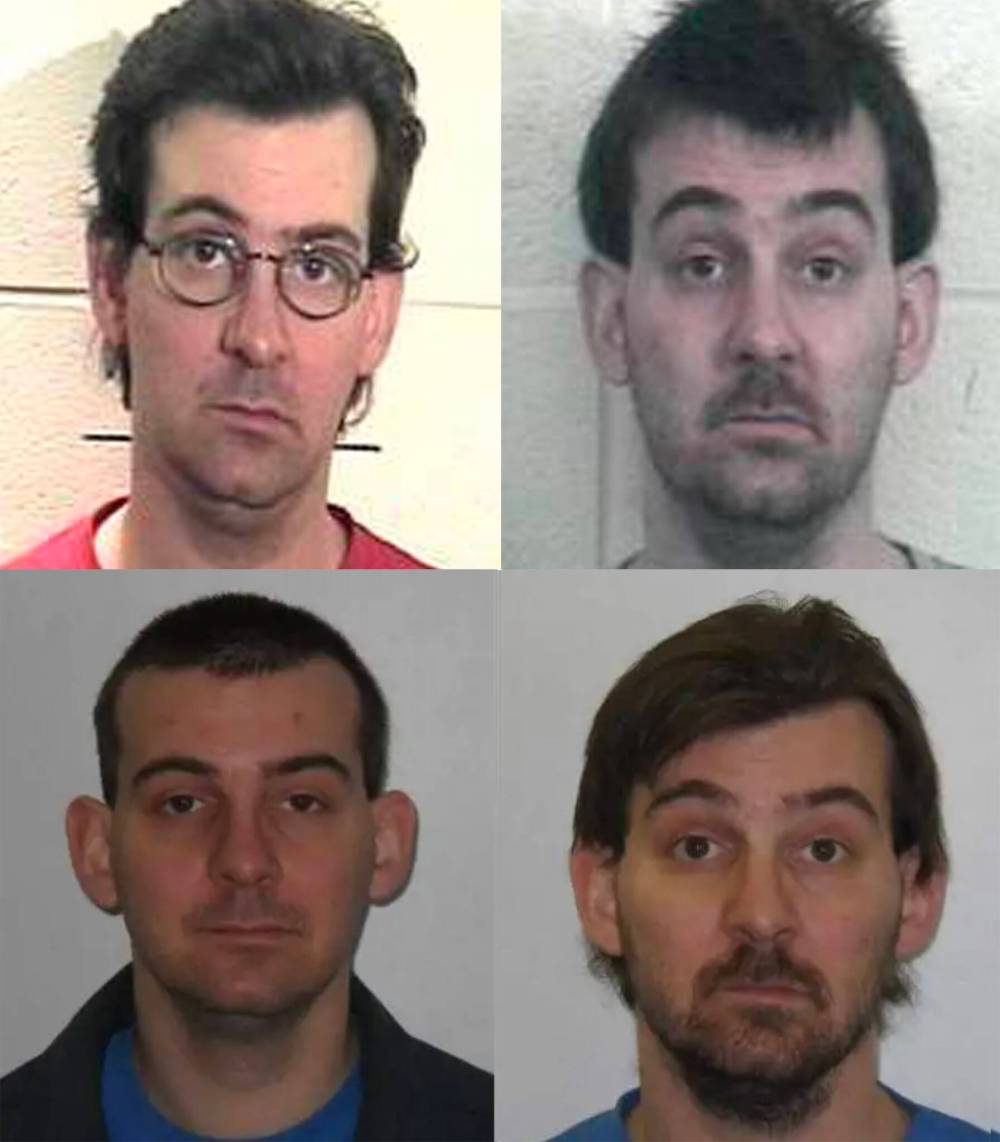
Police mugshots of Ryan Gabourie released to media in 2013 and 2014. He later changed his name to Ryan Knight. (Supplied)
The latest charges against Knight have not been proven in court. But what makes this story so egregious is the part we’ve all seen before: Knight (who was born Ryan James Gabourie and legally changed his name following a prison sentence) has been released from jail multiple times over more than a dozen years. And each time, the public is told — in official offender notifications — that he is a high-risk to reoffend.
The question is: why hasn’t he been designated a long-term offender, or a dangerous offender? If the justice system repeatedly warns the public that people like Knight will likely commit sexual crimes again, why does it keep returning them to the community?
There are legal tools that exist to prevent this from happening. Canada has mechanisms specifically designed for repeat offenders such as Knight.
A dangerous offender designation, for example, can result in an indeterminate sentence, meaning the offender stays in prison until the parole board is satisfied they no longer pose an unacceptable risk. It’s not a “life sentence” in name, but it can amount to one in practice.
A long-term offender designation is another tool, used when the offender is deemed likely to reoffend but can potentially be managed in the community under strict supervision. That designation allows courts to impose up to 10 years of long-term supervision after the custodial sentence ends.
These are not obscure provisions buried in the Criminal Code. They are meant to be used in precisely these kinds of cases — chronic, high-risk offenders, particularly sexual predators.
Which is why it’s hard to understand why Knight — a repeat offender whose risk has been publicly flagged for years — has not been dealt with through either route.
There is something deeply backwards about a justice system that issues a warning to the public, essentially saying: we are releasing someone we believe is likely to reoffend, including against children, yet there are few — if any — measures in place to protect society.
Community notifications have their place. Parents deserve information. Communities deserve transparency.
But notifications are not a safety plan. They are not a substitute for incarceration. They do not put an offender under 24-7 supervision. They do not prevent grooming.
When the state tells the public someone is high-risk and releases them anyway, it is quietly transferring responsibility from the justice system to ordinary citizens — parents, schools, coaches and neighbours — who are not trained investigators and do not have access to police intelligence.
It’s not just unfair. It’s dangerous.
People who repeatedly violate release conditions, repeatedly manipulate environments to gain access to children, and repeatedly end up back in the criminal justice system are not sending a complicated message.
They are telling society plainly that they have no interest in reforming their behaviour.
And yet we keep defaulting to the same approach: a sentence, release, conditions, breach, another offence, repeat.
Long-term offender designations are not used often, and for good reason.
Dangerous offender applications require extensive evidence, psychological assessments, expert testimony and significant Crown resources. They can be time-consuming and expensive. They also require prosecutors to meet a high legal threshold, because the consequences for the offender are severe.
But if dangerous offender provisions aren’t being used for repeat child sex offenders with a documented high risk to reoffend, then who exactly are they for?
Every time a repeat offender is arrested again, officials speak solemnly about how serious the allegations are. They should.

But it is not enough to be serious after the fact.
If the state knows someone is high risk — not “might be,” but is — then releasing them into the community and hoping conditions will manage the risk is not prevention. It’s knowingly exposing society to potential danger.
Rehabilitation is important and offenders deserve the chance to change their behaviour. But the justice system’s first duty is not to preserve optimism about rehabilitation. It is to protect the public — especially children — from foreseeable harm.
If the system can predict the harm well enough to warn Manitobans in official notifications, it can predict it well enough to justify stronger measures in court.
tom.brodbeck@freepress.mb.ca
Tom Brodbeck is an award-winning author and columnist with over 30 years experience in print media. He joined the Free Press in 2019. Born and raised in Montreal, Tom graduated from the University of Manitoba in 1993 with a Bachelor of Arts degree in economics and commerce. Read more about Tom.
Tom provides commentary and analysis on political and related issues at the municipal, provincial and federal level. His columns are built on research and coverage of local events. The Free Press’s editing team reviews Tom’s columns before they are posted online or published in print – part of the Free Press’s tradition, since 1872, of producing reliable independent journalism. Read more about Free Press’s history and mandate, and learn how our newsroom operates.
Our newsroom depends on a growing audience of readers to power our journalism. If you are not a paid reader, please consider becoming a subscriber.
Our newsroom depends on its audience of readers to power our journalism. Thank you for your support.
Tom Brodbeck is an award-winning author and columnist with over 30 years experience in print media. He joined the Free Press in 2019. Born and raised in Montreal, Tom graduated from the University of Manitoba in 1993 with a Bachelor of Arts degree in economics and commerce. Read more about Tom.
Tom provides commentary and analysis on political and related issues at the municipal, provincial and federal level. His columns are built on research and coverage of local events. The Free Press’s editing team reviews Tom’s columns before they are posted online or published in print – part of the Free Press’s tradition, since 1872, of producing reliable independent journalism. Read more about Free Press’s history and mandate, and learn how our newsroom operates.
Our newsroom depends on a growing audience of readers to power our journalism. If you are not a paid reader, please consider becoming a subscriber.
Our newsroom depends on its audience of readers to power our journalism. Thank you for your support.
Related Articles
New charges for convicted sex offender who changed name


Advertisement Advertise With Us
Advertisement Advertise With Us