

Keeping public in the dark about patient deaths erodes trust in health care

Advertisement
Read this article for free:
or
Already have an account? Log in here »
To continue reading, please subscribe:

Digital Subscription
One year of digital access for only $205*
- Enjoy unlimited reading on winnipegfreepress.com
- Read the E-Edition, our digital replica newspaper
- Access News Break, our award-winning app
- Play interactive puzzles
*First annual payment billed as $205.00 + GST for one year. This annual subscription will automatically renew at $233.00 + GST every 52 weeks (10% off the regular annual price of $259.35). Offer available to new and qualified returning subscribers only. Cancel any time.
To continue reading, please subscribe:
Add Free Press access to your Brandon Sun subscription for only an additional
$1 for the first 4 weeks*
- Enjoy unlimited reading on winnipegfreepress.com
- Read the E-Edition, our digital replica newspaper
- Access News Break, our award-winning app
- Play interactive puzzles
*Your next Brandon Sun subscription payment will increase by $1.00 and you will be charged $17.95 plus GST for four weeks. After four weeks, your payment will increase to $24.95 plus GST every four weeks.
Read unlimited articles for free today:
or
Already have an account? Log in here »
Hey there, time traveller!
This article was published 04/02/2026 (230 days ago), so information in it may no longer be current.
Twice in the last month, Manitobans learned troubling details about potentially preventable deaths that raised enormous concerns about the quality of care at St. Boniface Hospital.
In one case, a 68-year-old woman died after spending three days in hospital with what appears to have been an undiagnosed ulcer. The family said that before she died on Jan. 21, multiple health-care providers ignored their concerns about a more serious medical condition. The family has said an internal investigation is being undertaken.
In the second instance, a 55-year-old Winnipeg woman died after waiting 11 hours in the St. Boniface waiting room before being discharged. Shortly afterwards, the woman became gravely ill and after returning to hospital, died on Jan. 16. The Winnipeg Regional Health Authority confirmed this case is being investigated as a critical incident.
MIKE DEAL / FREE PRESS FILES Two potentially preventable deaths in the last month have raised concerns about the quality of care at St. Boniface Hospital.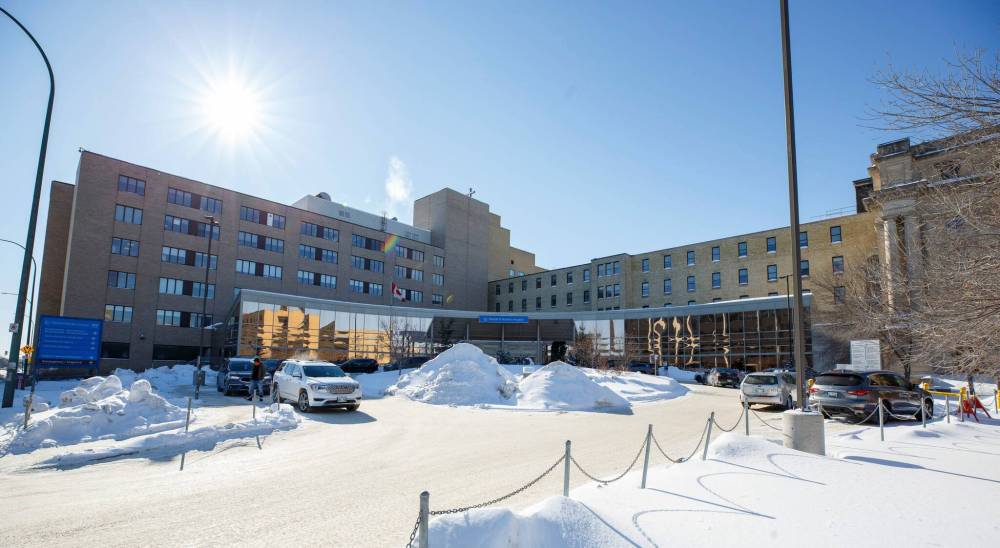
Medically speaking, these two cases may not necessarily be connected. The underlying health concerns were different, as were the apparent causes of death. That said, there are two serious issues that bind these cases together.
First, allegations that health-care professionals ignored the concerns of family members that a more serious medical problem was occurring. And second, that there was no official admission that something seemingly unintended happened.
We learned the details only because the families decided to go public. That certainly makes you wonder how many other people die each year because of errors of omission or commission by the health-care system?
SUPPLIED Judy Burns, 68, died three days after being admitted to St. Boniface Hospital.
As it stands, Canadians do not have a broad legal right to know when a critical incident occurs. Critical incidents do not include cases where gravely ill people die from conditions for which they were being treated, or harmed by a risk that was inherent in a particular type of treatment.
Simply put, critical incidents are the worst examples in which the system failed to prevent an otherwise preventable death, either by failing to diagnose the specific threat or by making people wait too long for treatment.
Although almost all provinces and their health authorities make an attempt to publish some form of aggregate data about critical incidents, most admit these numbers are not comprehensive. Critical incidents are further suppressed by legal constraints on releasing information, even to patients and their families.
There are good reasons for holding back some of the details of critical incidents. Patient privacy is at the top of that list, reflecting the fact that not everyone wants the intimate details of their medical condition exposed to public scrutiny. There is also a strong argument that publishing specific details about a critical incident might discourage other health-care professionals from admitting their mistakes.
Even so, provincial health-care systems and provincial governments that oversee their operation need to do a much better job of reporting both the number and types of critical incidents. Right now, doctors, nurses and politicians are united in a veil of secrecy that denies the public an important metric about the quality of health care.
SUPPLIED Stacey Ross, 55, died after waiting 11 hours in the St. Boniface Hospital emergency room.
There have been some efforts to breach this veil of secrecy. SecondStreet.org, a private think tank, publishes an annual report on how many patients died annually while waiting for medical treatment or procedures. SecondStreet does this by filing freedom of information requests.
In November 2025, SecondStreet found more than 23,000 Canadians had died waiting for surgeries or diagnostic scans from April 2024 to March 2025. That is an alarming number, even if there are limitations to the data.
For example, SecondStreet is not able to determine whether someone died as a result of the condition for which they were being treated, or some other condition that arose while they were waiting for surgery or diagnostic testing. It is unable to determine how many people died from a condition that went undiagnosed despite exposure to the health-care system.
Those limits have prompted some health-care providers to go public with their own data. In mid-January, Dr. Paul Parks, an Alberta emergency room physician, revealed that he and colleagues had found six cases in which patients died while waiting in an ER, and a host of other close calls where patients nearly died because of prolonged delays in receiving treatment.

The really startling aspect of Parks’ revelations is the fact we can easily extrapolate that every province is seeing patients die while waiting for ER treatment and not telling us about it. We know that because all provinces are suffering from too much demand for health services and too few resources to provide it.
So, how many patients have died waiting for treatment in Manitoba ERs or on surgical or diagnostic procedure wait lists? Is the number of patients increasing or decreasing?
These are not just idle statistical markers. This is essential information we need to have in the public domain to ensure we are getting the best health care possible.
The only thing we know for sure is that the health-care system almost certainly knows — and that they just won’t tell us.
dan.lett@freepress.mb.ca
Dan Lett is a columnist for the Free Press, providing opinion and commentary on politics in Winnipeg and beyond. Born and raised in Toronto, Dan joined the Free Press in 1986. Read more about Dan.
Dan’s columns are built on facts and reactions, but offer his personal views through arguments and analysis. The Free Press’ editing team reviews Dan’s columns before they are posted online or published in print — part of the our tradition, since 1872, of producing reliable independent journalism. Read more about Free Press’s history and mandate, and learn how our newsroom operates.
Our newsroom depends on a growing audience of readers to power our journalism. If you are not a paid reader, please consider becoming a subscriber.
Our newsroom depends on its audience of readers to power our journalism. Thank you for your support.
Dan Lett is a columnist for the Free Press, providing opinion and commentary on politics in Winnipeg and beyond. Born and raised in Toronto, Dan joined the Free Press in 1986. Read more about Dan.
Dan’s columns are built on facts and reactions, but offer his personal views through arguments and analysis. The Free Press’ editing team reviews Dan’s columns before they are posted online or published in print — part of the our tradition, since 1872, of producing reliable independent journalism. Read more about Free Press’s history and mandate, and learn how our newsroom operates.
Our newsroom depends on a growing audience of readers to power our journalism. If you are not a paid reader, please consider becoming a subscriber.
Our newsroom depends on its audience of readers to power our journalism. Thank you for your support.
Related Articles
Investigations underway after patients die following multiple-hour ER waits at St. B

Advertisement Advertise With Us
Advertisement Advertise With Us
History
Updated on Wednesday, February 4, 2026 5:32 PM CST: Adds photos