

Mystery grows thicker in police HQ scandal: why was no one charged?

Advertisement
Read this article for free:
or
Already have an account? Log in here »
To continue reading, please subscribe:

Digital Subscription
One year of digital access for only $205*
- Enjoy unlimited reading on winnipegfreepress.com
- Read the E-Edition, our digital replica newspaper
- Access News Break, our award-winning app
- Play interactive puzzles
*First annual payment billed as $205.00 + GST for one year. This annual subscription will automatically renew at $233.00 + GST every 52 weeks (10% off the regular annual price of $259.35). Offer available to new and qualified returning subscribers only. Cancel any time.
To continue reading, please subscribe:
Add Free Press access to your Brandon Sun subscription for only an additional
$1 for the first 4 weeks*
- Enjoy unlimited reading on winnipegfreepress.com
- Read the E-Edition, our digital replica newspaper
- Access News Break, our award-winning app
- Play interactive puzzles
*Your next Brandon Sun subscription payment will increase by $1.00 and you will be charged $17.95 plus GST for four weeks. After four weeks, your payment will increase to $24.95 plus GST every four weeks.
Read unlimited articles for free today:
or
Already have an account? Log in here »
Was a highly suspicious handshake deal to sell an acre of Arizona pasture land enough to create reasonable doubt?
Among all the questions hanging in the air at the inquiry into the Winnipeg Police Service headquarters project, that is perhaps the most important.
Despite the fact the RCMP conducted an intensive, years-long investigation of the awarding and management of the project, and had recommended criminal charges be laid, Manitoba Justice declined. That decision, justice officials would later say, was backed up by an out-of-province review of the file.
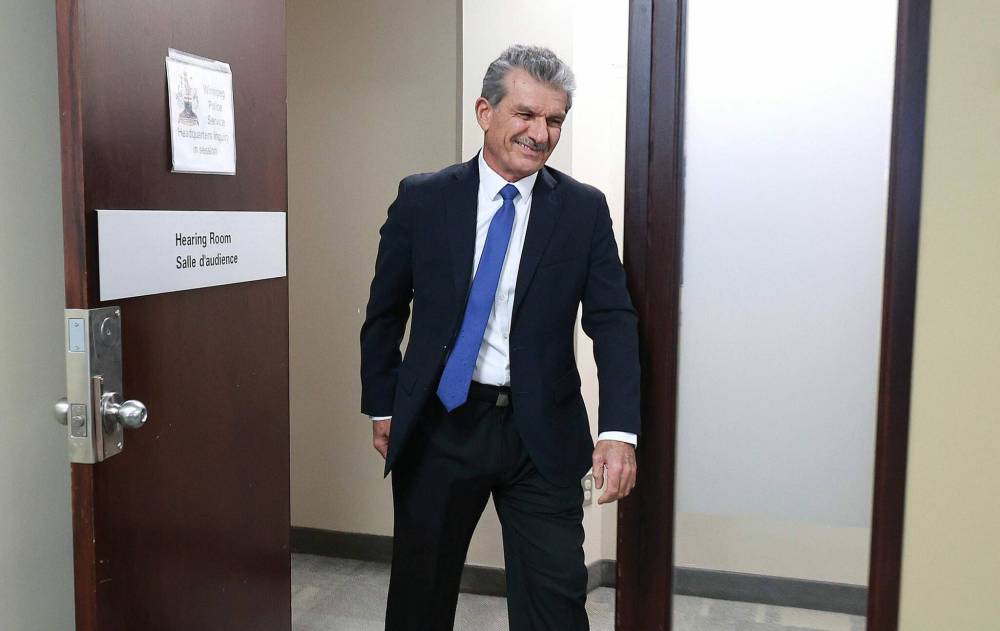
RUTH BONNEVILLE / FREE PRESS FILES
Armik Babakhanians
It was in that context — finality on the decision not to lay criminal charges — that Premier Wab Kinew ordered a judicial inquiry. After several weeks of testimony, what have we learned?
Although the testimony cannot be used to launch a criminal case, the inquiry has been effective in providing the intimate and tawdry details about efforts made by former city chief administrative officer Phil Sheegl and former mayor Sam Katz to help a contractor and business colleague, Armik Babakhanians, secure a nine-figure contract to renovate the former Canada Post terminal downtown into a new headquarters for the police service.
It has detailed the questionable invoices that were submitted by Babakhanians’ company, Caspian Construction, that a forensic accountant believes were fraudulently inflated by at least $45 million.
At the centre of this project, we heard about how Katz and Sheegl entered into a handshake deal with Babakhanians to sell a single acre of Arizona land for what was, at that time, a significantly inflated price. This happened at the same time Babakhanians was closing in on the massive contract to build the police headquarters.
Testimony has revealed that Sheegl, in particular, was in constant contact with Babakhanians during deliberations on awarding the contract. He provided information and advice and ultimately changed the rules for performance bonds to allow Caspian, a smaller contractor by industry standards, to compete with larger firms.
Testimony at the inquiry has established that no written contracts were involved and no appraisals were done on the land. Other Manitoba investors in the consortium that owned the Arizona land were not told that one acre was being sold to a new investor.
The $200,000 Babakhanians agreed to pay changed hands in the form of handwritten cheques to Sheegl, who in turn wrote a cheque to Katz. The cheques were labelled in the memo field as “loan” and “consulting services,” and there was no reference at all to a land deal.
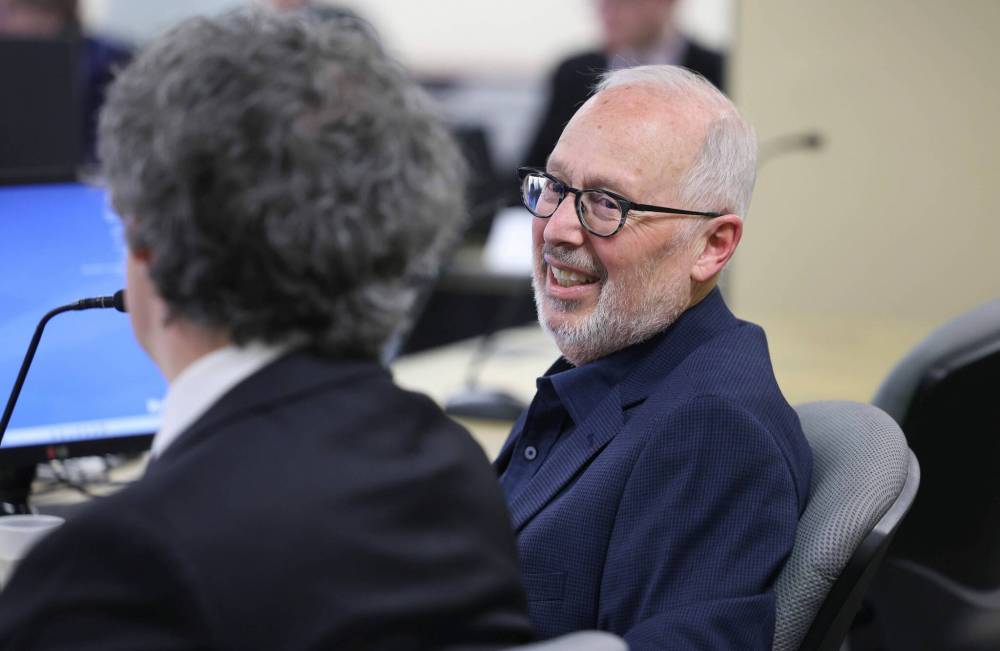
RUTH BONNEVILLE / FREE PRESS FILES
Sam Katz, right, with attorney Danny Gunn
This is the transaction that Court of King’s Bench Chief Justice Glenn Joyal referred to as a “fiction” when he presided over a civil suit brought by the City of Winnipeg that found Sheegl had received a $327,000 bribe to help Babakhanians secure the contract. Joyal determined that Sheegl was guilty, in a civil context, of an egregious “breach of trust.”
The standards for establishing guilt in a civil proceeding are different than those in a criminal trial. Even so, the language used by Joyal and by the Manitoba Court of Appeal — which dismissed Sheegl’s attempt to overturn a civil verdict that required him to repay more than $1 million in severance and the value of the bribe — clearly showed a concern about possible criminal culpability.
In the appellate court verdict, Justice Chris Mainella went even further. He categorized the actions of Sheegl as “so serious and so reprehensible” that they could have easily justified a much harsher financial penalty.
“The integrity of public finances must be protected by the courts from large-scale bribery and the systemic ignorance of fiduciary duties, particularly those involving the most senior public officials,” Mainella wrote.
The subtle signals written into the civil and appeal decisions are noteworthy. Before they were appointed to the bench, Joyal and Mainella worked as prosecutors. Their career paths suggest both judges were fully aware that terms such as “breach of trust” and “systemic ignorance of fiduciary duties” live within both a criminal and civil context.
It’s not just the details of the transaction between Sheegl, Katz and Babakhanians that raises more questions about a possible criminal prosecution, it is also the lack of credibility each of the men had when denying that their dealings on this project amounted to payola.

When Katz, Sheegl and Babakhanians were confronted with these facts at the inquiry, they adopted three basic postures: the first was to deny any wrongdoing or influence peddling; the second was to claim they did not remember exactly why they said or did the things they did; the third was to express outrage at the fact that anyone would accuse them of wrongdoing.
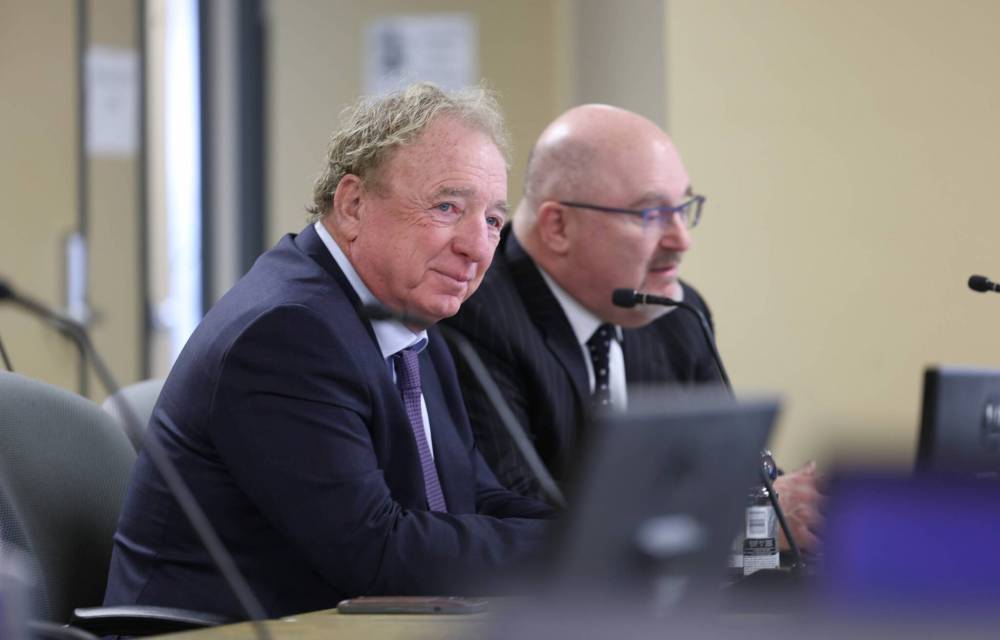
RUTH BONNEVILLE / FREE PRESS FILES
Phil Sheegl, left, with counsel Evan Roitenberg
The outlandish and incredible efforts to deny wrongdoing continued in testimony this week from a forensic accountant, who found that “fudge letters,” “dummy invoices” and forged invoices for the work on the HQ project were inflated by at least $45 million. Even as clear-cut evidence of wrongdoing was presented, Babakhanians simply refused to accept the findings.
Some members of the provincial government may have thought a judicial inquiry that exposed the ugly details of this case would dull the public’s appetite for accountability.
Ironically, the inquiry has done nothing to extinguish the intrigue about why charges were not laid. If anything, it has made that intrigue burn hotter.
dan.lett@freepress.mb.ca
Dan Lett is a columnist for the Free Press, providing opinion and commentary on politics in Winnipeg and beyond. Born and raised in Toronto, Dan joined the Free Press in 1986. Read more about Dan.
Dan’s columns are built on facts and reactions, but offer his personal views through arguments and analysis. The Free Press’ editing team reviews Dan’s columns before they are posted online or published in print — part of the our tradition, since 1872, of producing reliable independent journalism. Read more about Free Press’s history and mandate, and learn how our newsroom operates.
Our newsroom depends on a growing audience of readers to power our journalism. If you are not a paid reader, please consider becoming a subscriber.
Our newsroom depends on its audience of readers to power our journalism. Thank you for your support.
Dan Lett is a columnist for the Free Press, providing opinion and commentary on politics in Winnipeg and beyond. Born and raised in Toronto, Dan joined the Free Press in 1986. Read more about Dan.
Dan’s columns are built on facts and reactions, but offer his personal views through arguments and analysis. The Free Press’ editing team reviews Dan’s columns before they are posted online or published in print — part of the our tradition, since 1872, of producing reliable independent journalism. Read more about Free Press’s history and mandate, and learn how our newsroom operates.
Our newsroom depends on a growing audience of readers to power our journalism. If you are not a paid reader, please consider becoming a subscriber.
Our newsroom depends on its audience of readers to power our journalism. Thank you for your support.
Related Articles
‘Every which way we looked, we saw some concerns’: contractor billing didn’t add up, police HQ inquiry told

























Advertisement Advertise With Us
Advertisement Advertise With Us
History
Updated on Friday, March 13, 2026 3:42 PM CDT: Photos added.