

More accurate wait-time estimates will do nothing to heal critically ill system

Advertisement
Read this article for free:
or
Already have an account? Log in here »
To continue reading, please subscribe:

Digital Subscription
One year of digital access for only $205*
- Enjoy unlimited reading on winnipegfreepress.com
- Read the E-Edition, our digital replica newspaper
- Access News Break, our award-winning app
- Play interactive puzzles
*First annual payment billed as $205.00 + GST for one year. This annual subscription will automatically renew at $233.00 + GST every 52 weeks (10% off the regular annual price of $259.35). Offer available to new and qualified returning subscribers only. Cancel any time.
To continue reading, please subscribe:
Add Free Press access to your Brandon Sun subscription for only an additional
$1 for the first 4 weeks*
- Enjoy unlimited reading on winnipegfreepress.com
- Read the E-Edition, our digital replica newspaper
- Access News Break, our award-winning app
- Play interactive puzzles
*Your next Brandon Sun subscription payment will increase by $1.00 and you will be charged $17.95 plus GST for four weeks. After four weeks, your payment will increase to $24.95 plus GST every four weeks.
Read unlimited articles for free today:
or
Already have an account? Log in here »
Hey there, time traveller!
This article was published 17/03/2026 (203 days ago), so information in it may no longer be current.
Long waits in Winnipeg emergency rooms have become so common they barely register anymore. A 10-hour wait, or longer, to see a doctor in an ER would have once been considered outrageous. Now it happens all the time.
The latest numbers show the median wait time in Winnipeg emergency departments and urgent-care centres was nearly four hours in January — the most recent data available.
That means half of patients waited even longer than that to be seen by a physician. That’s almost double what it was prior to the pandemic. And it’s been hovering around that level for more than two years.
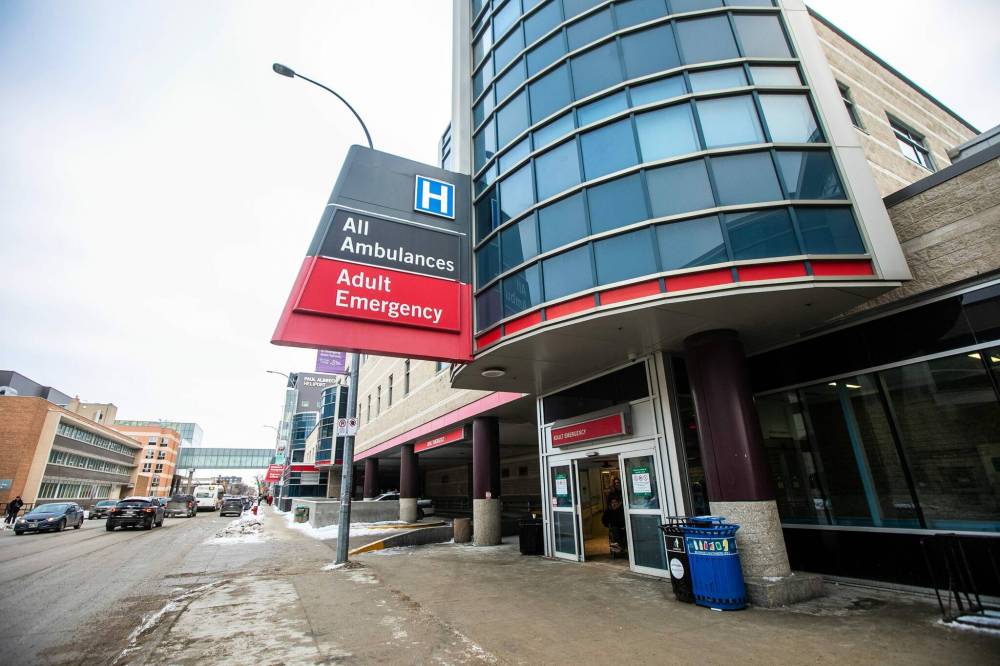
What’s particularly frustrating is that these persistently high wait times remain despite a steady stream of government announcements about new beds, new staff and various health system improvements. Every few months it seems there’s another news release promising better access to care.
Yet the ER numbers stubbornly refuse to budge.
And now we learn that even the information patients rely on to decide where to go for care may not be accurate.
A memo sent to staff by Shared Health and the Winnipeg Regional Health Authority last month reveals longstanding flaws in the system used to estimate wait times at Winnipeg emergency departments.
According to the memo, the wait-time boards — both online and previously in waiting rooms — were sometimes “quite inaccurate.” (Those are separate data from the monthly ER and urgent-care wait times the WRHA publishes online).
“As many of you know, the publicly facing waiting times boards are not always reflective of the actual number of patients in the department, nor have they always given wait times that prepare our patients for the wait that they will experience,” the memo states.
“As many of you know, the publicly facing waiting times boards are not always reflective of the actual number of patients in the department.”
In other words, the numbers people were seeing could be significantly lower than the reality they would face once they walked through the doors.
The memo warns inaccurate estimates can sometimes lead to “safety events” where patients leave one facility and head to another because they think they’ll be seen faster.
Imagine sitting in a crowded waiting room for hours, only to discover the system told you the wait would be much shorter. Frustration builds quickly in those situations, and it’s usually front-line staff — nurses, clerks and doctors — who bear the brunt of it.
Health Minister Uzoma Asagwara says the inaccurate estimates were partly caused by a “cap” in the data used to calculate wait times, meaning the system would account only for a certain number of patients, even if the waiting room was far more crowded.
Remarkably, that cap dated back eight to 10 years and had never been changed.
That’s an astonishing admission.
For nearly a decade, Manitobans may have been relying on wait-time estimates built on outdated assumptions about patient volumes, assumptions that no longer reflect the reality of today’s overburdened emergency departments.
To their credit, health officials say they’re now working with the vendor behind the system to improve accuracy. The predictive model has been updated with newer data through the end of 2024, and the cap on patient numbers has reportedly been removed.
Those fixes may help.
But they won’t solve the bigger problem.
Even if wait-time boards suddenly become perfectly accurate, they’ll still be showing numbers that are far too high for a functioning emergency care system.
Even if wait-time boards suddenly become perfectly accurate, they’ll still be showing numbers that are far too high for a functioning emergency care system.
A four-hour median wait is not a sign of a healthy system.
And remember, that’s just the median wait to see a physician. The total time a patient spends in the ER — from arrival to discharge — is often far longer.
The deeper issue is that emergency departments are absorbing problems from across the entire health-care system.
Patients waiting for long-term care spots remain stuck in hospital beds, preventing admitted ER patients from being moved to a medical ward. And there is still a shortage of staffed medical beds in the system.
Emergency rooms exist for urgent medical situations — chest pain, broken bones, severe infections, traumatic injuries. When someone believes they may be facing a serious health crisis, they shouldn’t have to mentally prepare for a 10- or 12-hour wait in an ER before seeing a doctor.
Unfortunately, that’s exactly what many Winnipeg patients now expect.
And expectations matter. Once long waits become normalized, the urgency to fix them tends to fade.
When someone believes they may be facing a serious health crisis, they shouldn’t have to mentally prepare for a 10- or 12-hour wait in an ER before seeing a doctor.
Governments begin celebrating small improvements that barely dent the overall problem. Health authorities tweak dashboards and prediction models.
Meanwhile, the waiting rooms remain packed.
Fixing ER wait times will require far more than adjusting a software algorithm. It means tackling primary-care shortages, expanding community care options, improving patient flow through hospitals and ensuring long-term care capacity keeps pace with demand.

None of that is easy. All of it takes time.
But the first step is acknowledging that what Winnipeg has right now simply isn’t good enough.
Ten-hour waits in emergency rooms should not be the norm.
They should be the alarm bell telling us the system is in crisis.
tom.brodbeck@freepress.mb.ca
Tom Brodbeck is an award-winning author and columnist with over 30 years experience in print media. He joined the Free Press in 2019. Born and raised in Montreal, Tom graduated from the University of Manitoba in 1993 with a Bachelor of Arts degree in economics and commerce. Read more about Tom.
Tom provides commentary and analysis on political and related issues at the municipal, provincial and federal level. His columns are built on research and coverage of local events. The Free Press’s editing team reviews Tom’s columns before they are posted online or published in print – part of the Free Press’s tradition, since 1872, of producing reliable independent journalism. Read more about Free Press’s history and mandate, and learn how our newsroom operates.
Our newsroom depends on a growing audience of readers to power our journalism. If you are not a paid reader, please consider becoming a subscriber.
Our newsroom depends on its audience of readers to power our journalism. Thank you for your support.
Tom Brodbeck is an award-winning author and columnist with over 30 years experience in print media. He joined the Free Press in 2019. Born and raised in Montreal, Tom graduated from the University of Manitoba in 1993 with a Bachelor of Arts degree in economics and commerce. Read more about Tom.
Tom provides commentary and analysis on political and related issues at the municipal, provincial and federal level. His columns are built on research and coverage of local events. The Free Press’s editing team reviews Tom’s columns before they are posted online or published in print – part of the Free Press’s tradition, since 1872, of producing reliable independent journalism. Read more about Free Press’s history and mandate, and learn how our newsroom operates.
Our newsroom depends on a growing audience of readers to power our journalism. If you are not a paid reader, please consider becoming a subscriber.
Our newsroom depends on its audience of readers to power our journalism. Thank you for your support.
Related Articles
Defective dashboard erred on ER wait times





Advertisement Advertise With Us
Advertisement Advertise With Us