

NDP’s spin machine kicks into high gear when it comes to deficit

Advertisement
Read this article for free:
or
Already have an account? Log in here »
To continue reading, please subscribe:

Digital Subscription
One year of digital access for only $205*
- Enjoy unlimited reading on winnipegfreepress.com
- Read the E-Edition, our digital replica newspaper
- Access News Break, our award-winning app
- Play interactive puzzles
*First annual payment billed as $205.00 + GST for one year. This annual subscription will automatically renew at $233.00 + GST every 52 weeks (10% off the regular annual price of $259.35). Offer available to new and qualified returning subscribers only. Cancel any time.
To continue reading, please subscribe:
Add Free Press access to your Brandon Sun subscription for only an additional
$1 for the first 4 weeks*
- Enjoy unlimited reading on winnipegfreepress.com
- Read the E-Edition, our digital replica newspaper
- Access News Break, our award-winning app
- Play interactive puzzles
*Your next Brandon Sun subscription payment will increase by $1.00 and you will be charged $17.95 plus GST for four weeks. After four weeks, your payment will increase to $24.95 plus GST every four weeks.
Read unlimited articles for free today:
or
Already have an account? Log in here »
Hey there, time traveller!
This article was published 24/03/2026 (190 days ago), so information in it may no longer be current.
If “huge progress” looks like this, Manitobans should brace themselves for what failure might bring.
Finance Minister Adrien Sala declared on Tuesday that the NDP government has made “huge progress” in tackling Manitoba’s deficit. That’s a bold claim. It’s also one that collapses under the most basic scrutiny of the province’s own financial statements.
There are plenty of ways governments can spin numbers to put themselves in a favourable light — that’s politics — but there are limits. No government can credibly claim major progress on deficit reduction when the deficit is essentially unchanged from the day it took office.

MIKAELA MACKENZIE / FREE PRESS
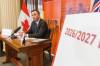
Manitoba Finance minister Adrien Sala tables the budget in the legislative chamber on Tuesday.
Manitoba Finance’s own data show that’s exactly where things stand.
Sala insists the NDP inherited a $2-billion deficit from the previous Progressive Conservative government. That’s not accurate.
The NDP was sworn in to office in October 2023, nearly seven months into the 2023-24 fiscal year. At that point, the province’s second-quarter report pegged the deficit at $1.62 billion.
By the end of that fiscal year, the deficit had grown to $2 billion — meaning it increased by roughly $400 million under the NDP’s watch.
To be fair, the PCs were responsible for the bulk of that year’s shortfall, but that’s not the point. The point is that the deficit hasn’t improved in any meaningful way since the NDP took over.
The deficit for 2025-26 is now projected at $1.66 billion — nearly double the $794-million shortfall the NDP had budgeted and largely unchanged from October 2023.
That’s not “huge progress.” It’s not progress at all.
Sala points to last summer’s devastating wildfires and reduced Manitoba Hydro revenues owing to drought as key reasons for the ballooning deficit. Those factors are real, and they’ve had a significant impact, but they’re not a complete explanation.
Budgeting isn’t something governments just do once a year. It’s an ongoing responsibility. Governments are expected to actively manage finances throughout the year, especially when unexpected costs arise.
That means making adjustments. It means finding savings in administrative overhead, particularly in sprawling systems such as health care, and it often means making politically difficult decisions.
There’s little evidence of that kind of discipline under this government.
What the NDP has demonstrated instead is a clear comfort with spending — and with handing out targeted tax relief, including another $50 million in tax cuts in this year’s budget.
That may be politically popular, but it does nothing to address the structural imbalance between what the province brings in and what it spends.
More concerning is what appears to be a lack of serious contingency planning.
Budgeting isn’t something governments just do once a year. It’s an ongoing responsibility.
When asked what would happen if Manitoba has another summer like last year — with widespread wildfires and enormous firefighting costs — Sala’s response was that the government doesn’t expect that to happen.
That’s not a plan. That’s a hope.
And hope is not a fiscal strategy, particularly in an era where extreme weather events are becoming more frequent, not less.
The NDP budget projects a deficit of $498 million for 2026-27. If it could hit that target, it would certainly represent meaningful progress. But here’s the problem: the NDP’s track record.
Over the past two-and-a-half years, this government has consistently missed its fiscal projections, and not by small margins.
So why should Manitobans believe this time will be different?
There’s little in the 2026-27 budget to inspire that confidence. The government’s projections rely heavily on optimistic economic growth assumptions, despite a highly uncertain global environment marked by volatile oil prices, persistent inflation risks and the possibility of rising interest rates.
Add to that the absence of any meaningful contingencies for predictable risks such as drought and wildfires, and the $498-million deficit target starts to look less like a plan and more like wishful thinking.
Then there’s the NDP’s oft-repeated promise to balance the books within its first term.
According to this budget, that will happen in 2027-28 — just in time for the next election — with a wafer-thin $8-million surplus.
That projection strains credulity.
It assumes near-perfect execution, stable economic conditions and no major external shocks over the next two years. Given the volatility of recent years, that’s a heroic set of assumptions.
Meanwhile, the province’s debt continues to climb.
Manitoba’s net debt is projected to hit $39.7 billion this year, up sharply from $29.25 billion in 2021-22.
The cost of servicing that debt is rising along with it. It’s expected to reach $2.38 billion this year, compared to $1.8 billion five years ago.
That’s money that doesn’t get spent on health care, education or infrastructure.
The province’s debt burden relative to the size of its economy is also heading in the wrong direction. Manitoba’s debt-to-GDP ratio is projected to climb to 38.2 per cent this year, up from 34.2 per cent just a few years ago.

None of this is to suggest Manitoba needs to slash spending indiscriminately or abandon support for critical public services. However, it does mean the government needs to level with Manitobans about the state of the province’s finances.
Calling a stagnant deficit “huge progress” isn’t just misleading, it undermines the credibility the government needs to make tough choices about spending.
Because sooner or later, those choices are coming. And the longer they’re delayed, the more painful they’ll be.
tom.brodbeck@freepress.mb.ca
Tom Brodbeck is an award-winning author and columnist with over 30 years experience in print media. He joined the Free Press in 2019. Born and raised in Montreal, Tom graduated from the University of Manitoba in 1993 with a Bachelor of Arts degree in economics and commerce. Read more about Tom.
Tom provides commentary and analysis on political and related issues at the municipal, provincial and federal level. His columns are built on research and coverage of local events. The Free Press’s editing team reviews Tom’s columns before they are posted online or published in print – part of the Free Press’s tradition, since 1872, of producing reliable independent journalism. Read more about Free Press’s history and mandate, and learn how our newsroom operates.
Our newsroom depends on a growing audience of readers to power our journalism. If you are not a paid reader, please consider becoming a subscriber.
Our newsroom depends on its audience of readers to power our journalism. Thank you for your support.
Tom Brodbeck is an award-winning author and columnist with over 30 years experience in print media. He joined the Free Press in 2019. Born and raised in Montreal, Tom graduated from the University of Manitoba in 1993 with a Bachelor of Arts degree in economics and commerce. Read more about Tom.
Tom provides commentary and analysis on political and related issues at the municipal, provincial and federal level. His columns are built on research and coverage of local events. The Free Press’s editing team reviews Tom’s columns before they are posted online or published in print – part of the Free Press’s tradition, since 1872, of producing reliable independent journalism. Read more about Free Press’s history and mandate, and learn how our newsroom operates.
Our newsroom depends on a growing audience of readers to power our journalism. If you are not a paid reader, please consider becoming a subscriber.
Our newsroom depends on its audience of readers to power our journalism. Thank you for your support.
Related Articles
NDP budget highlights cost-of-living help, health care, funds for Churchill port expansion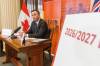


Advertisement Advertise With Us
Advertisement Advertise With Us