

Health, social crises worsen despite NDP’s undeniable efforts to address them

Advertisement
Read this article for free:
or
Already have an account? Log in here »
To continue reading, please subscribe:

Digital Subscription
One year of digital access for only $205*
- Enjoy unlimited reading on winnipegfreepress.com
- Read the E-Edition, our digital replica newspaper
- Access News Break, our award-winning app
- Play interactive puzzles
*First annual payment billed as $205.00 + GST for one year. This annual subscription will automatically renew at $233.00 + GST every 52 weeks (10% off the regular annual price of $259.35). Offer available to new and qualified returning subscribers only. Cancel any time.
To continue reading, please subscribe:
Add Free Press access to your Brandon Sun subscription for only an additional
$1 for the first 4 weeks*
- Enjoy unlimited reading on winnipegfreepress.com
- Read the E-Edition, our digital replica newspaper
- Access News Break, our award-winning app
- Play interactive puzzles
*Your next Brandon Sun subscription payment will increase by $1.00 and you will be charged $17.95 plus GST for four weeks. After four weeks, your payment will increase to $24.95 plus GST every four weeks.
Read unlimited articles for free today:
or
Already have an account? Log in here »
Manitoba is currently staring down a tsunami of suffering.
The number of homeless people is growing. So are the numbers of people with addictions, drug overdoses and mental-health challenges. Emergency responders are under water. The people who live, work and own businesses downtown are pleading for help with increased incidents of random violence, open drug use and general mayhem.
Considering all of that, it is, perhaps, unsurprising that this is the only province in the country that has declared a public health emergency over rapidly increasing rates of HIV infection. More vulnerable people living rough with a broader range of challenges is fertile ground for a crisis-level outbreak of the virus.
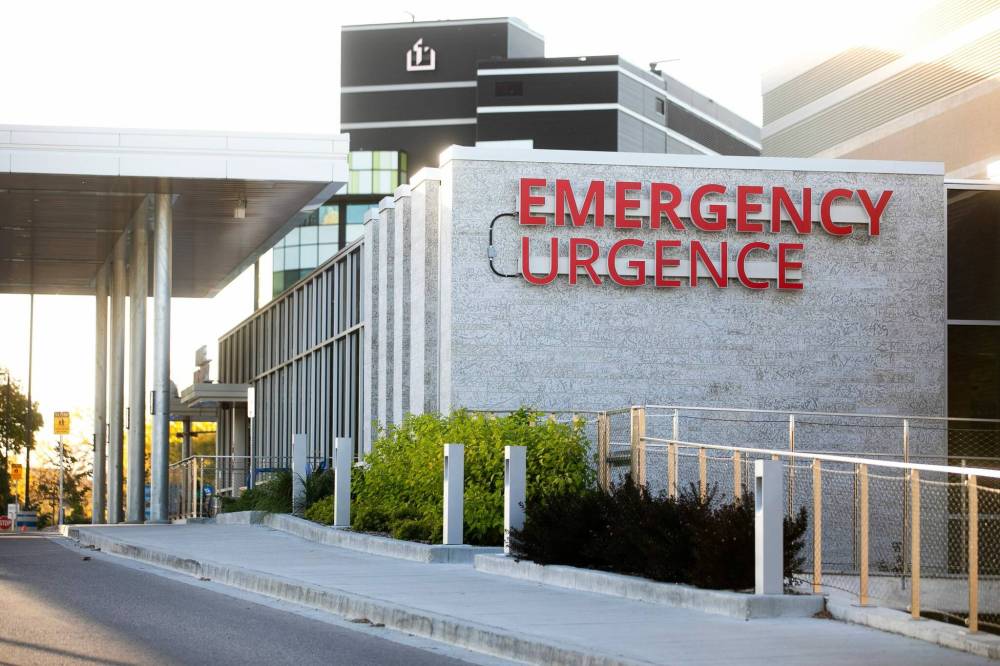
MIKAELA MACKENZIE / FREE PRESS FILES
There is a rising tide of human suffering in Manitoba, despite significant government spending on health care.
Last week, Dr. Brent Roussin, Manitoba’s chief public health officer, said there had been a steady increase in the number of HIV cases over the last six years; in 2025, the province confirmed 328 new cases, up from 90 in 2019.
Manitoba’s rate of HIV infection is now nearly 20 per 100,000 people, which is 3.5 times higher than the national rate.
(Of note: this isn’t just a Manitoba problem; Saskatchewan is experiencing very nearly the same level of new infections but has decided not, for the time being, to declare a state of emergency).
It is natural to look at issues such as the HIV outbreak in isolation. But in reality, this is just another symptom of a much bigger problem with poverty, homelessness, addictions and mental-health challenges. These are all problems that, despite genuinely high levels of attention and funding by government, continue to grow in magnitude and severity.
You need only look at health care, and its connection to the broader issues of human suffering, to see how genuine progress is being derailed.
The NDP government is spending significantly on health care. This has resulted in more doctors and nurses working in the province, and record numbers of priority elective surgeries being done.
And yet, wait times for those surgeries and in Winnipeg hospital emergency rooms continue to be stubbornly high.
There is no single reason why increases in funding and in the number of health-care professionals have not done more to alleviate the problems. It can be argued, with some justification, that the current government is still trying to dig itself out of a hole created by its predecessor, which crippled health-care capacity with funding cuts.
However, even if that’s true, it is the current government that has to deal with the rising tide of human suffering. And the fact that all the time, effort and money we spend dealing with increased levels of poverty, homelessness, addictions and mental health mean there is less time, effort and money to devote to other aspects of health care.
This can be seen most clearly in stubbornly high ER wait times.
Higher numbers of vulnerable people suffering from homelessness, addictions and mental illness mean more ambulances and walk-in traffic at ERs. Every overdose or instance of drug-induced psychosis translates into untold hours of work by police, fire and paramedic services and, ultimately, hospital ERs.
Once again, it would be intellectually dishonest to claim that all these problems are the result of a lack of effort or commitment by the NDP. No government can do everything all the time, and there is no perfect state for something such as health care. But the province has, in general, put its money where its mouth is on both health care and helping vulnerable Manitobans.
And yet, it doesn’t seem to be enough. Is it just a matter of doing more, or have we reached the point where the NDP has to change its approach?
Premier Wab Kinew and his government have put major resources into Your Way Home, an ambitious program based on the Housing First model of combating homelessness by moving people into stable, long-term housing and providing wraparound health and social services.
Even with intense efforts through Your Way Home, according to some estimates, the number of homeless people is increasing even as the program is moving more people into supportive housing.
And some of the housing options have completely backfired. As an example, homeless people relocated to a seniors apartment complex have generated concerns about disorderly conduct, open drug use and vandalism. The homeless tenants were reportedly placed in the building without adequate services or security.

At the same time, the province has refused to support a city proposal to establish a semi-permanent, managed homeless encampment to provide stable housing until longer-term options become available.
The Kinew government is 100-per-cent right when it argues that Your Way Home is, ultimately, the key to alleviating suffering and reducing the burden on the health-care and emergency service systems. It is wrong, however, to reject any good idea that provides stable transitional housing while placing the homeless in situations where they are destined to fail and return to the street.
The government has not been lacking in good intentions, or wrong in its strategies. But all available metrics suggest these measures may not be working.
The NDP has shown a willingness to innovate and change the approach used by previous governments. Two years into these efforts, however, it may be time for them to change the change.
dan.lett@freepress.mb.ca
Dan Lett is a columnist for the Free Press, providing opinion and commentary on politics in Winnipeg and beyond. Born and raised in Toronto, Dan joined the Free Press in 1986. Read more about Dan.
Dan’s columns are built on facts and reactions, but offer his personal views through arguments and analysis. The Free Press’ editing team reviews Dan’s columns before they are posted online or published in print — part of the our tradition, since 1872, of producing reliable independent journalism. Read more about Free Press’s history and mandate, and learn how our newsroom operates.
Our newsroom depends on a growing audience of readers to power our journalism. If you are not a paid reader, please consider becoming a subscriber.
Our newsroom depends on its audience of readers to power our journalism. Thank you for your support.
Dan Lett is a columnist for the Free Press, providing opinion and commentary on politics in Winnipeg and beyond. Born and raised in Toronto, Dan joined the Free Press in 1986. Read more about Dan.
Dan’s columns are built on facts and reactions, but offer his personal views through arguments and analysis. The Free Press’ editing team reviews Dan’s columns before they are posted online or published in print — part of the our tradition, since 1872, of producing reliable independent journalism. Read more about Free Press’s history and mandate, and learn how our newsroom operates.
Our newsroom depends on a growing audience of readers to power our journalism. If you are not a paid reader, please consider becoming a subscriber.
Our newsroom depends on its audience of readers to power our journalism. Thank you for your support.
Related Articles
Governments blasted for inaction as HIV rates rise



Advertisement Advertise With Us
Advertisement Advertise With Us