

This not just in: treaty rights carry legal force and are protected in the Constitution

Advertisement
Read this article for free:
or
Already have an account? Log in here »
To continue reading, please subscribe:

Digital Subscription
One year of digital access for only $205*
- Enjoy unlimited reading on winnipegfreepress.com
- Read the E-Edition, our digital replica newspaper
- Access News Break, our award-winning app
- Play interactive puzzles
*First annual payment billed as $205.00 + GST for one year. This annual subscription will automatically renew at $233.00 + GST every 52 weeks (10% off the regular annual price of $259.35). Offer available to new and qualified returning subscribers only. Cancel any time.
To continue reading, please subscribe:
Add Free Press access to your Brandon Sun subscription for only an additional
$1 for the first 4 weeks*
- Enjoy unlimited reading on winnipegfreepress.com
- Read the E-Edition, our digital replica newspaper
- Access News Break, our award-winning app
- Play interactive puzzles
*Your next Brandon Sun subscription payment will increase by $1.00 and you will be charged $17.95 plus GST for four weeks. After four weeks, your payment will increase to $24.95 plus GST every four weeks.
Read unlimited articles for free today:
or
Already have an account? Log in here »
More than a century after the numbered treaties were signed across Western Canada, the courts delivered a blunt reminder last week that those agreements are not ancient historical footnotes.
They still carry legal force and governments cannot ignore them.
Two major court rulings — one in Manitoba and one in Alberta — reinforced a reality many Canadians still do not fully understand: treaties between First Nations and the Crown remain constitutionally protected agreements that continue to shape Canadian law, public policy and governments’ obligations today.
MIKAELA MACKENZIE / FREE PRESS FILES
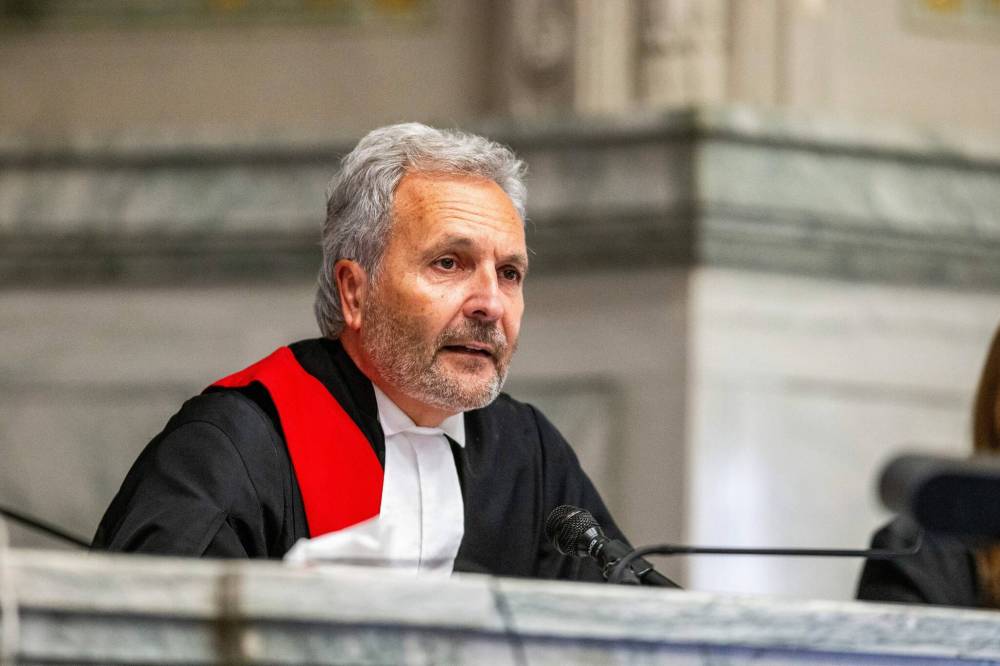
Manitoba Court of King’s Bench Chief justice Glenn Joyal issued a sweeping ruling that federal and provincial governments breached the constitutional rights of First Nations via child-welfare funding.
The decisions also underscored something else: Canadians would benefit greatly from learning more about treaties, why they were negotiated as Canada expanded westward and why courts continue to uphold Indigenous and treaty rights.
In Manitoba, Chief Justice Glenn Joyal of the Court of King’s Bench issued a sweeping ruling that federal and provincial governments breached the constitutional rights of First Nations through the way child-welfare services were funded, regulated and delivered over decades.
The ruling stems from a class-action lawsuit launched by Black River First Nation, Pimicikamak Cree Nation, Misipawistik Cree Nation and the Assembly of Manitoba Chiefs.
Joyal concluded the governments unjustifiably infringed on First Nations’ inherent right to self-government in child and family services, including the right to raise children within their own cultures and traditions.
It was an extraordinary decision, not only because of its scope, but because it recognized something Indigenous leaders have argued for generations: First Nations never surrendered their responsibility and authority over their children and families.
The governments, meanwhile, imposed systems that severed cultural ties and produced devastating consequences.
The numbers alone are staggering. More than 9,000 children are currently in care in Manitoba, and roughly 91 per cent are Indigenous.
Joyal noted the overrepresentation of Indigenous children in care has persisted for decades despite repeated government interventions that have largely failed to reduce apprehensions or improve outcomes.
Instead, the system disproportionately emphasizes child apprehension over prevention and family support.
That finding should force serious reflection among Canadians. The residential school system may be over, but the large-scale removal of Indigenous children from their families never truly ended.
It simply evolved into modern child-welfare systems that continued separating children from their communities and cultures.
The ruling recognizes that this carries constitutional implications.
Meanwhile in Alberta, another court ruling underscored the continuing force of treaty obligations in a completely different context.
An Alberta judge struck down a separatist referendum petition, ruling the province had a duty to consult First Nations because Alberta leaving Canada would directly affect treaty rights.
That should not have been remotely controversial.
Treaties 7 and 8 were negotiated between First Nations and the Crown — not with the province of Alberta. Those treaties formed part of the legal and constitutional foundation upon which Western Canada was settled.
The idea that a province could potentially separate from Canada without consulting the First Nations whose treaties helped make that province possible was always legally dubious.
Justice Shaina Leonard recognized that reality plainly.
“As a matter of logic and common sense,” she wrote, Alberta’s secession from Canada would unquestionably affect treaty rights.
Yet Alberta Premier Danielle Smith called the ruling “anti-democratic” and promised an appeal.
That response missed the point entirely.
Treaty rights are part of Canada’s constitutional order. Democracy in Canada does not operate independently of the Constitution; it operates within it.
Governments cannot simply sidestep constitutional obligations because they are politically inconvenient.
These rulings also expose a broader problem in Canada: too many Canadians still know very little about treaties, why they were negotiated, and what they actually mean.
The numbered treaties were not land sales in the simplistic way they are sometimes portrayed. They were nation-to-nation agreements negotiated as Canada expanded westward in the late 19th century. The Crown negotiated 11 treaties between 1871 and 1921.
The Crown sought peaceful settlement, railway expansion and agricultural development. First Nations sought assurances their people, cultures and ways of life would survive amid enormous change and that they would retain the legal right to govern themselves.
Section 35 of the Constitution Act, 1982 affirmed and recognized existing Aboriginal and treaty rights, giving them constitutional protection.
That is why courts continue ruling in favour of First Nations when governments fail to uphold those obligations.
This is not judicial activism, as critics sometimes claim. It is the Constitution functioning exactly as intended.
And Canadians would benefit enormously from understanding this history better.
Many frustrations surrounding Indigenous issues in Canada stem from a lack of public knowledge about treaties and constitutional obligations. Court rulings can appear confusing or unfair to people unfamiliar with the legal and historical foundations involved.

But when Canadians understand that treaties helped make modern Canada possible — and that they remain legally enforceable agreements — these decisions make much more sense.
The Manitoba and Alberta rulings were not radical departures from Canadian law. They were reaffirmations of it.
More than 100 years after the numbered treaties were signed, Canadian courts continue to deliver the same message to governments: treaties matter, constitutional rights matter and those obligations do not disappear with time.
That is something every Canadian should understand better.
tom.brodbeck@freepress.mb.ca
Tom Brodbeck is an award-winning author and columnist with over 30 years experience in print media. He joined the Free Press in 2019. Born and raised in Montreal, Tom graduated from the University of Manitoba in 1993 with a Bachelor of Arts degree in economics and commerce. Read more about Tom.
Tom provides commentary and analysis on political and related issues at the municipal, provincial and federal level. His columns are built on research and coverage of local events. The Free Press’s editing team reviews Tom’s columns before they are posted online or published in print – part of the Free Press’s tradition, since 1872, of producing reliable independent journalism. Read more about Free Press’s history and mandate, and learn how our newsroom operates.
Our newsroom depends on a growing audience of readers to power our journalism. If you are not a paid reader, please consider becoming a subscriber.
Our newsroom depends on its audience of readers to power our journalism. Thank you for your support.
Tom Brodbeck is an award-winning author and columnist with over 30 years experience in print media. He joined the Free Press in 2019. Born and raised in Montreal, Tom graduated from the University of Manitoba in 1993 with a Bachelor of Arts degree in economics and commerce. Read more about Tom.
Tom provides commentary and analysis on political and related issues at the municipal, provincial and federal level. His columns are built on research and coverage of local events. The Free Press’s editing team reviews Tom’s columns before they are posted online or published in print – part of the Free Press’s tradition, since 1872, of producing reliable independent journalism. Read more about Free Press’s history and mandate, and learn how our newsroom operates.
Our newsroom depends on a growing audience of readers to power our journalism. If you are not a paid reader, please consider becoming a subscriber.
Our newsroom depends on its audience of readers to power our journalism. Thank you for your support.
Related Articles
Ottawa, province breached First Nations’ constitutional rights, Manitoba judge says in ‘historic’ ruling


Advertisement Advertise With Us
Advertisement Advertise With Us