Massive drug bust a big deal, but police alone cannot end misery
Read this article for free:
or
Already have an account? Log in here »
To continue reading, please subscribe:

Digital Subscription
One year of digital access for only $205*
- Enjoy unlimited reading on winnipegfreepress.com
- Read the E-Edition, our digital replica newspaper
- Access News Break, our award-winning app
- Play interactive puzzles
*First annual payment billed as $205.00 + GST for one year. This annual subscription will automatically renew at $233.00 + GST every 52 weeks (10% off the regular annual price of $259.35). Offer available to new and qualified returning subscribers only. Cancel any time.
To continue reading, please subscribe:
Add Free Press access to your Brandon Sun subscription for only an additional
$1 for the first 4 weeks*
- Enjoy unlimited reading on winnipegfreepress.com
- Read the E-Edition, our digital replica newspaper
- Access News Break, our award-winning app
- Play interactive puzzles
*Your next Brandon Sun subscription payment will increase by $1.00 and you will be charged $17.95 plus GST for four weeks. After four weeks, your payment will increase to $24.95 plus GST every four weeks.
Read unlimited articles for free today:
or
Already have an account? Log in here »
The largest drug bust in Manitoba history deserves to be recognized for what it is: a major victory against organized crime and a meaningful disruption to a drug trade that has devastated communities across Winnipeg and beyond.
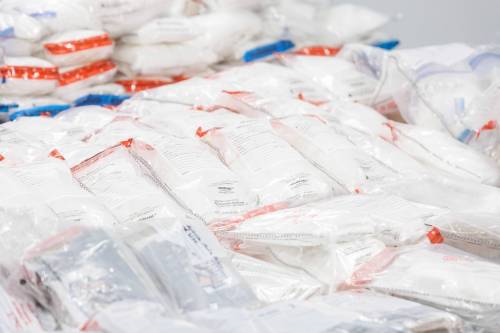
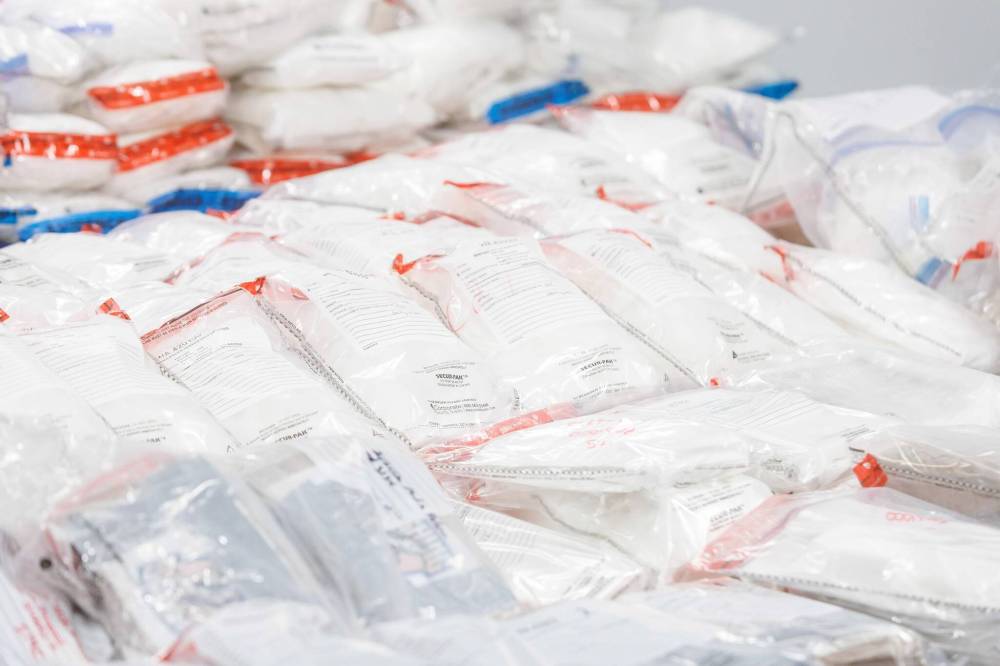
The Winnipeg Police Service Project Puma investigation, which led to the arrest of more than 30 people and the seizure of drugs worth nearly $40 million, is no small accomplishment.
It took two years of painstaking police work, collaboration among multiple law enforcement agencies across Canada, undercover operations, surveillance and hundreds of judicial authorizations to dismantle what police describe as a sophisticated trafficking network tied to the Hells Angels, the Wolf Pack Alliance and Mexican cartels.
MIKE DEAL / FREE PRESS
The Winnipeg Police Service Project Puma investigation led to the arrest of more than 30 people and the seizure of drugs worth nearly $40 million.
For too long, Manitoba has been caught in the grip of a relentless drug crisis that has fuelled violence, addiction, homelessness and despair.
Methamphetamine, in particular, has ravaged Winnipeg streets, overwhelmed emergency services, destabilized neighbourhoods and destroyed countless lives and families. Fentanyl has only made things worse, adding a deadly layer to an already catastrophic public health emergency.
Removing millions of dollars’ worth of meth, cocaine and fentanyl from circulation will disrupt supply chains, weaken criminal organizations and make it harder — at least temporarily — for drugs to flood Manitoba communities.
Police deserve credit for that.
Too often, law enforcement receives criticism, regardless of the outcome. But when police agencies successfully dismantle large criminal enterprises, seize weapons and drugs and secure convictions, the public should acknowledge the importance of that work.
Organized crime is not some abstract problem confined to biker gangs and cartel operatives. Its effects are seen every day in emergency rooms, shelters, downtown streets, family homes and funeral chapels.
The damage is enormous.
At the same time, Manitobans should resist the temptation to believe that even a historic drug bust represents anything close to a solution.
It doesn’t.
For too long, Manitoba has been caught in the grip of a relentless drug crisis.
If history has shown anything, it’s that organized crime networks are remarkably adaptable. When one trafficking route is shut down, another emerges. When one group is dismantled, others move in to fill the void. The profits are simply too enormous and the demand too persistent.
That’s why enforcement alone cannot solve the drug crisis.
It is an essential component. Without strong policing, criminal organizations would operate with impunity and communities would become even less safe. But enforcement is only one piece of a much larger puzzle.
The reality is the drug crisis is deeply intertwined with other social crises that Manitoba has struggled to address for decades.
Poverty remains entrenched in many Winnipeg neighbourhoods. Homelessness continues to rise. Mental-health services remain difficult to access.
Intergenerational trauma tied to colonialism, abuse, racism and social exclusion continues to affect many Indigenous communities and families. Addictions often flourish where hopelessness, instability and untreated trauma already exist.
People do not simply wake up one morning and decide to destroy their lives with meth or fentanyl.
Addiction is frequently rooted in pain, trauma and despair. Until society confronts those root causes more seriously, Manitoba will continue fighting the same battle over and over again.
It still takes far too long for many people struggling with severe addictions to access detox beds, treatment programs and long-term recovery supports. Families desperate to help loved ones often encounter waiting lists, bureaucratic obstacles and a fragmented system that lacks continuity of care.
When police agencies successfully dismantle large criminal enterprises… the public should acknowledge the importance of that work.
When someone is finally ready to seek help, the system should be prepared. Immediately; delays can be deadly.
The province also needs to move more aggressively on harm-reduction strategies, including finally opening Manitoba’s first supervised consumption site.
The proposal has been stalled for more than two years by political hesitation, public misconceptions and ideological opposition despite overwhelming evidence from other jurisdictions that supervised consumption sites reduce overdose deaths, connect users to health services and improve public safety.
These facilities are not about endorsing drug use. They are about keeping people alive long enough to access treatment and recovery.
Dead people do not recover from addiction.
Harm reduction should not be viewed as competing with enforcement or treatment. It should operate alongside them as part of a comprehensive strategy. The most effective responses to addiction crises recognize that policing, treatment, prevention and harm reduction are all necessary and interconnected.
The same applies to housing and mental-health supports.
It is nearly impossible for someone struggling with severe addiction to stabilize their life while living on the street or cycling through shelters. Supportive housing, outreach programs and accessible mental-health care are every bit as important to long-term public safety as police investigations.
That requires political courage and sustained investment, not short-term announcements designed to generate headlines.
The deeper challenge remains.

Project Puma generated headlines because of its sheer scale, and rightly so. Thirty-three arrests, 174 charges, firearms, cash, illegal cigarettes and nearly $40 million in drugs removed from circulation represent a significant blow against organized crime in Manitoba.
But the deeper challenge remains.
If Manitoba truly wants to reduce addiction, overdose deaths and drug-related crime over the long term, it cannot simply arrest its way out of the crisis. It must also treat, house, support and heal its way out of it.
That is the harder work. It is also the more important work.
tom.brodbeck@freepress.mb.ca

Tom Brodbeck is an award-winning author and columnist with over 30 years experience in print media. He joined the Free Press in 2019. Born and raised in Montreal, Tom graduated from the University of Manitoba in 1993 with a Bachelor of Arts degree in economics and commerce. Read more about Tom.
Tom provides commentary and analysis on political and related issues at the municipal, provincial and federal level. His columns are built on research and coverage of local events. The Free Press’s editing team reviews Tom’s columns before they are posted online or published in print – part of the Free Press’s tradition, since 1872, of producing reliable independent journalism. Read more about Free Press’s history and mandate, and learn how our newsroom operates.
Our newsroom depends on a growing audience of readers to power our journalism. If you are not a paid reader, please consider becoming a subscriber.
Our newsroom depends on its audience of readers to power our journalism. Thank you for your support.
Related Articles
Nearly 30 Manitobans accused in province’s largest drug seizure