

Bread, milk… and ID? Beleaguered biz could eye Liquor Mart model

Advertisement
Read this article for free:
or
Already have an account? Log in here »
To continue reading, please subscribe:

Digital Subscription
One year of digital access for only $205*
- Enjoy unlimited reading on winnipegfreepress.com
- Read the E-Edition, our digital replica newspaper
- Access News Break, our award-winning app
- Play interactive puzzles
*First annual payment billed as $205.00 + GST for one year. This annual subscription will automatically renew at $233.00 + GST every 52 weeks (10% off the regular annual price of $259.35). Offer available to new and qualified returning subscribers only. Cancel any time.
To continue reading, please subscribe:
Add Free Press access to your Brandon Sun subscription for only an additional
$1 for the first 4 weeks*
- Enjoy unlimited reading on winnipegfreepress.com
- Read the E-Edition, our digital replica newspaper
- Access News Break, our award-winning app
- Play interactive puzzles
*Your next Brandon Sun subscription payment will increase by $1.00 and you will be charged $17.95 plus GST for four weeks. After four weeks, your payment will increase to $24.95 plus GST every four weeks.
Read unlimited articles for free today:
or
Already have an account? Log in here »
Not long ago, the idea of lining up and showing identification before entering a retail store in Winnipeg would have seemed absurd. That was something people associated with high-security government buildings, not buying a bottle of wine or picking up groceries.
Today, it has become routine at Manitoba Liquor Marts, and given the growing retail crime crisis in Winnipeg, it may only be a matter of time before more stores follow the same path.
Few customers enjoy waiting at the entrance of a liquor store while security staff check their identification. It’s inconvenient, slows down shopping and creates the uneasy feeling that everyone is being treated with suspicion because of the actions of a relatively small group of chronic offenders.

But after years of escalating shoplifting, violent incidents and threats against Liquor Mart employees, Manitoba Liquor and Lotteries made a decision that produced undeniable results.
Incidents of theft and violence against workers at liquor stores have been virtually eliminated since the measure was brought in a few years ago. Employees feel safer going to work and customers, while not necessarily enthusiastic about the policy, largely adapted to it.
That success has not gone unnoticed by other retailers struggling with the same problems.
Across Winnipeg, stores are increasingly operating in defensive mode. Many retail outlets, including grocery stores, pharmacies and jewelry stores, hire security guards to deter theft. Some businesses have even hired off-duty Winnipeg police officers to deter theft.
Yet despite those measures, retail theft remains rampant.
The closure of another Winnipeg 7-Eleven store — this time on St. Anne’s Road in St. Vital — is the latest sign that many businesses are reaching a breaking point. Incidents of theft at the location had become almost a daily occurrence.
Nearby businesses, including a Dollarama and a Domo gas station, reportedly deal with the same repeat offenders who steal merchandise on a regular basis.
Employees at the Domo station told the Free Press that shoplifters often enter carrying large bags and simply fill them with products before leaving. The station now remotely unlocks its front entrance for customers and posts photographs of the alleged thieves on its windows.
That is not normal retail activity. That is businesses trying to survive in an environment where theft has become routine and consequences often appear minimal.
Retailers are increasingly frustrated because many traditional security measures have limited effectiveness. Security guards can observe and report incidents, but their authority to physically intervene is restricted.
Employees are instructed not to confront shoplifters because of safety concerns. Police resources are stretched, and officers understandably prioritize violent emergencies over retail theft calls where suspects are often long gone before anyone arrives.
The result is a growing sense among retail owners that they are largely on their own.
That is precisely why the Liquor Mart model is attracting attention.
What makes mandatory ID screening so effective is it changes the dynamic entirely. Instead of trying to stop theft after someone is inside the store, it prevents many repeat offenders from entering in the first place. It acts as both a deterrent and a filtering system.
No retailer wants to create that kind of shopping experience. Businesses understand that customers value convenience and accessibility. Nobody wants Winnipeg stores turning into controlled-access facilities where shoppers queue outside as they wait for permission to enter.
But business owners also cannot continue absorbing escalating losses while asking employees to work in unsafe conditions.
At some point, difficult decisions have to be made.
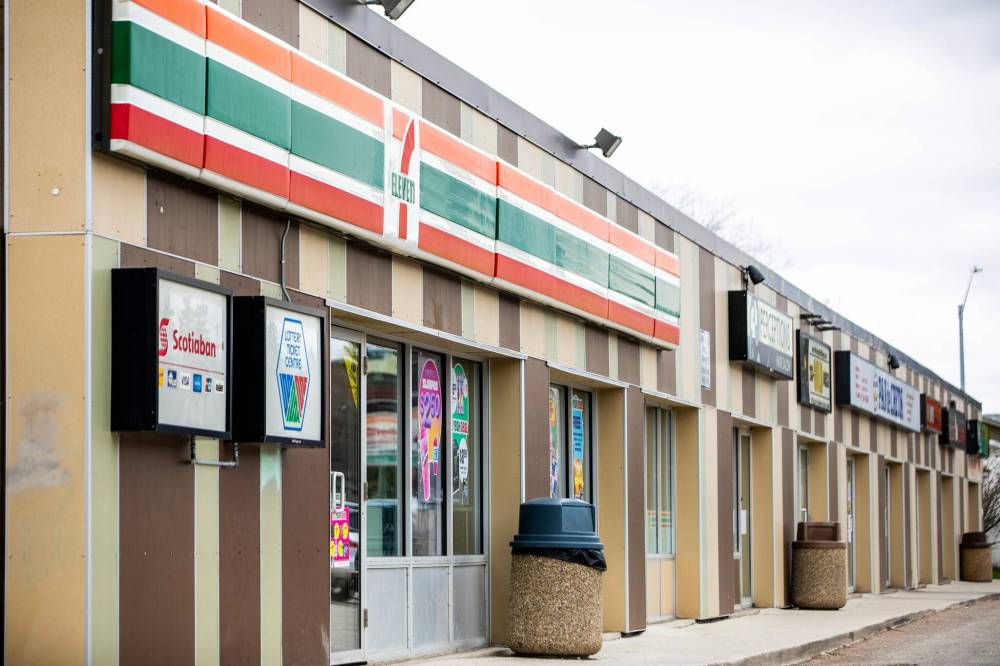
MIKAELA MACKENZIE / FREE PRESS FILES
A St. Vital 7-Eleven will be closing at the end of the month.
Some businesses close entirely, including several 7-Eleven locations, others reduce operating hours or limit services. Increasingly, some may conclude that controlled entry is the only consistently reliable way to reduce theft and protect workers.
That would have sounded extreme a few years ago, but not today.
The uncomfortable truth is many customers may ultimately accept it if the alternative is losing more neighbourhood businesses.
That is especially important in communities where store closures create real hardship. When convenience stores, pharmacies or grocery outlets shut down because crime makes them financially unsustainable, residents lose access to essential services, jobs and investment.
In lower-income neighbourhoods, those losses can be particularly damaging.
Retail crime is not victimless, it affects workers, businesses, consumers and entire communities.
It also affects prices. Businesses facing chronic theft pass those losses on to paying customers through higher prices and increased security costs.
Honest shoppers ultimately help cover the cost of stolen merchandise.

The province’s $10-million retail security fund acknowledges how serious the situation has become. Helping businesses pay for security upgrades and repairs is worthwhile, but cameras, guards and alarm systems only go so far if repeat offenders believe there are few meaningful consequences for theft.
The larger issues — addiction, homelessness, untreated mental illness and chronic offending — require broader social and justice system responses that retailers themselves cannot provide.
In the meantime, businesses are adapting however they can.
If mandatory ID screening continues to be one of the few measures that significantly reduces theft and violence, more retailers may inevitably consider it. And who could blame them?
tom.brodbeck@freepress.mb.ca
Tom Brodbeck is an award-winning author and columnist with over 30 years experience in print media. He joined the Free Press in 2019. Born and raised in Montreal, Tom graduated from the University of Manitoba in 1993 with a Bachelor of Arts degree in economics and commerce. Read more about Tom.
Tom provides commentary and analysis on political and related issues at the municipal, provincial and federal level. His columns are built on research and coverage of local events. The Free Press’s editing team reviews Tom’s columns before they are posted online or published in print – part of the Free Press’s tradition, since 1872, of producing reliable independent journalism. Read more about Free Press’s history and mandate, and learn how our newsroom operates.
Our newsroom depends on a growing audience of readers to power our journalism. If you are not a paid reader, please consider becoming a subscriber.
Our newsroom depends on its audience of readers to power our journalism. Thank you for your support.
Tom Brodbeck is an award-winning author and columnist with over 30 years experience in print media. He joined the Free Press in 2019. Born and raised in Montreal, Tom graduated from the University of Manitoba in 1993 with a Bachelor of Arts degree in economics and commerce. Read more about Tom.
Tom provides commentary and analysis on political and related issues at the municipal, provincial and federal level. His columns are built on research and coverage of local events. The Free Press’s editing team reviews Tom’s columns before they are posted online or published in print – part of the Free Press’s tradition, since 1872, of producing reliable independent journalism. Read more about Free Press’s history and mandate, and learn how our newsroom operates.
Our newsroom depends on a growing audience of readers to power our journalism. If you are not a paid reader, please consider becoming a subscriber.
Our newsroom depends on its audience of readers to power our journalism. Thank you for your support.
Related Articles
Retail crime claims another 7-Eleven in city; shoplifters target stretch of St. Anne’s Road ‘almost daily’



Advertisement Advertise With Us
Advertisement Advertise With Us