

System to address violence in schools a no-brainer

Advertisement
Read this article for free:
or
Already have an account? Log in here »
To continue reading, please subscribe:

Digital Subscription
One year of digital access for only $205*
- Enjoy unlimited reading on winnipegfreepress.com
- Read the E-Edition, our digital replica newspaper
- Access News Break, our award-winning app
- Play interactive puzzles
*First annual payment billed as $205.00 + GST for one year. This annual subscription will automatically renew at $233.00 + GST every 52 weeks (10% off the regular annual price of $259.35). Offer available to new and qualified returning subscribers only. Cancel any time.
To continue reading, please subscribe:
Add Free Press access to your Brandon Sun subscription for only an additional
$1 for the first 4 weeks*
- Enjoy unlimited reading on winnipegfreepress.com
- Read the E-Edition, our digital replica newspaper
- Access News Break, our award-winning app
- Play interactive puzzles
*Your next Brandon Sun subscription payment will increase by $1.00 and you will be charged $17.95 plus GST for four weeks. After four weeks, your payment will increase to $24.95 plus GST every four weeks.
Read unlimited articles for free today:
or
Already have an account? Log in here »
For too long, violence in Manitoba classrooms has been treated as an uncomfortable problem discussed quietly in staff rooms, but rarely confronted publicly.
That silence is beginning to crack.
As more teachers come forward with stories of classroom evacuations, physical assaults and workplaces increasingly defined by fear and disruption, the province can no longer dismiss these incidents as isolated or unavoidable.

MIKE DEAL / FREE PRESS FILES
Far more needs to be done to provide teachers — and students — with safe learning and working environments.
Far more needs to be done to provide teachers — and students — with safe learning and working environments.
The evidence is becoming impossible to ignore.
A Winnipeg teacher recently resigned after a nine-year-old student allegedly ripped a lanyard from her neck, kicked her, destroyed classroom materials and forced the evacuation of a Grades 4/5 classroom. By the teacher’s estimate, repeated outbursts cost students 7½ hours of instructional time in a single week.
That story was shocking, but hardly isolated.
A recent Manitoba Teachers’ Society survey conducted by Probe Research paints an alarming picture. More than half of teachers surveyed said violence in schools is making their job difficult.
Many reported both the frequency and severity of incidents have increased over the course of their careers. Half believe school administrators are not treating the problem seriously enough.
Meanwhile, Workers Compensation Board data show time-loss injury claims by non-teacher school employees surged dramatically over the last decade.
This is not a handful of isolated incidents or exaggerated complaints from frustrated educators. It is a system under strain.
And yet, one of the most troubling aspects of this issue is how normalized violence appears to have become in some schools.
Teachers describe being asked what they did to provoke violent behaviour or being told to interpret aggression as a sign of trust from troubled students. Others speak anonymously for fear of professional repercussions, describing workplaces where they feel constantly on edge.
That should concern everyone.
No one enters the teaching profession expecting a danger-free workplace. Teachers deal with complex student needs, emotional struggles and behavioural challenges every day. Most do so with remarkable compassion and professionalism.
But compassion cannot mean accepting violence as simply part of the job.
Nor should concern for vulnerable students come at the expense of protecting teachers and classmates.
This debate is sometimes framed in simplistic and unhelpful terms, as though society must choose between inclusion and safety.
That is a false choice.
The vast majority of students with learning disabilities, autism, ADHD or trauma histories are not violent and should never be stigmatized because of the actions of a small number of children experiencing severe behavioural challenges.
But inclusion cannot become an ideological goal pursued without adequate supports, staffing and realistic planning.
Teachers themselves are making that point.
Many say classrooms increasingly include students with significant emotional, behavioural and developmental needs without sufficient resources to support them. When those supports are absent, everyone suffers — the struggling student, the teacher and the rest of the class.
The result is often chaos rather than inclusion.
The province’s policy direction encouraging reduced use of suspensions is understandable. Nobody wants schools relying unnecessarily on exclusion or punishment. Keeping students engaged and supported matters.
But policies cannot operate in a vacuum.
If students remain in classrooms despite repeated violent behaviour, schools must have the staff, training and specialized supports necessary to manage those situations safely. Otherwise, lofty policy goals risk colliding with classroom reality
When teachers describe classrooms being routinely cleared, principals developing PTSD and students becoming accustomed to emergency protocols, policymakers should stop debating whether a problem exists and start asking how to address it.
The good news is this conversation is finally beginning to happen more openly.
The Manitoba Teachers’ Society’s push for a public-awareness campaign and a universal incident-reporting system deserves serious attention. One cannot effectively solve a problem that is inconsistently documented or hidden from public view.
Likewise, proposals emerging from researchers and front-line educators — ranging from crisis-intervention training to improved classroom supports and smaller class sizes — warrant careful examination.
That does not mean every recommendation should be accepted automatically.
Education policy is complicated. Resources are limited. Some proposals may prove impractical or ineffective.
But dismissing concerns outright or treating violence as inevitable is no longer acceptable.
There is also a broader issue at stake.
Schools are not merely workplaces. They are where children learn what society considers normal and acceptable behaviour.
When students regularly witness adults being yelled at, threatened or physically harmed with limited consequences, important boundaries begin to erode. Respect for authority, already under pressure in many parts of society, becomes harder to reinforce.
That carries long-term consequences extending far beyond classroom walls.
Teachers are not asking for perfect classrooms or impossible guarantees. They understand better than anyone that children struggle, emotions boil over and complex needs require patience.

What they are asking for is something far more reasonable: a system that acknowledges the seriousness of school violence and takes meaningful steps to address it.
That should not be controversial.
A safe classroom is not a luxury or an optional enhancement to education policy.
It is the foundation upon which learning depends. Without it, everybody loses.
tom.brodbeck@freepress.mb.ca
Tom Brodbeck is an award-winning author and columnist with over 30 years experience in print media. He joined the Free Press in 2019. Born and raised in Montreal, Tom graduated from the University of Manitoba in 1993 with a Bachelor of Arts degree in economics and commerce. Read more about Tom.
Tom provides commentary and analysis on political and related issues at the municipal, provincial and federal level. His columns are built on research and coverage of local events. The Free Press’s editing team reviews Tom’s columns before they are posted online or published in print – part of the Free Press’s tradition, since 1872, of producing reliable independent journalism. Read more about Free Press’s history and mandate, and learn how our newsroom operates.
Our newsroom depends on a growing audience of readers to power our journalism. If you are not a paid reader, please consider becoming a subscriber.
Our newsroom depends on its audience of readers to power our journalism. Thank you for your support.
Tom Brodbeck is an award-winning author and columnist with over 30 years experience in print media. He joined the Free Press in 2019. Born and raised in Montreal, Tom graduated from the University of Manitoba in 1993 with a Bachelor of Arts degree in economics and commerce. Read more about Tom.
Tom provides commentary and analysis on political and related issues at the municipal, provincial and federal level. His columns are built on research and coverage of local events. The Free Press’s editing team reviews Tom’s columns before they are posted online or published in print – part of the Free Press’s tradition, since 1872, of producing reliable independent journalism. Read more about Free Press’s history and mandate, and learn how our newsroom operates.
Our newsroom depends on a growing audience of readers to power our journalism. If you are not a paid reader, please consider becoming a subscriber.
Our newsroom depends on its audience of readers to power our journalism. Thank you for your support.
Related Articles
Combat in the classroom: Many Manitoba public school teachers are concerned violence is making their jobs more difficult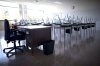



Advertisement Advertise With Us
Advertisement Advertise With Us