

Inability to compromise dooms political career in Canada’s democracy

Advertisement
Read this article for free:
or
Already have an account? Log in here »
To continue reading, please subscribe:

Digital Subscription
One year of digital access for only $205*
- Enjoy unlimited reading on winnipegfreepress.com
- Read the E-Edition, our digital replica newspaper
- Access News Break, our award-winning app
- Play interactive puzzles
*First annual payment billed as $205.00 + GST for one year. This annual subscription will automatically renew at $233.00 + GST every 52 weeks (10% off the regular annual price of $259.35). Offer available to new and qualified returning subscribers only. Cancel any time.
To continue reading, please subscribe:
Add Free Press access to your Brandon Sun subscription for only an additional
$1 for the first 4 weeks*
- Enjoy unlimited reading on winnipegfreepress.com
- Read the E-Edition, our digital replica newspaper
- Access News Break, our award-winning app
- Play interactive puzzles
*Your next Brandon Sun subscription payment will increase by $1.00 and you will be charged $17.95 plus GST for four weeks. After four weeks, your payment will increase to $24.95 plus GST every four weeks.
Read unlimited articles for free today:
or
Already have an account? Log in here »
Former environment minister Steven Guilbeault’s departure from federal politics is being portrayed by some environmental advocates as a crisis moment for climate action in Canada. Others see it as evidence the Liberal government has abandoned its environmental principles in pursuit of pipelines and economic development.
It is neither.
What Guilbeault’s resignation really highlights is something far less dramatic, but far more enduring about democratic politics: compromise is not a flaw in the system, it is the system.
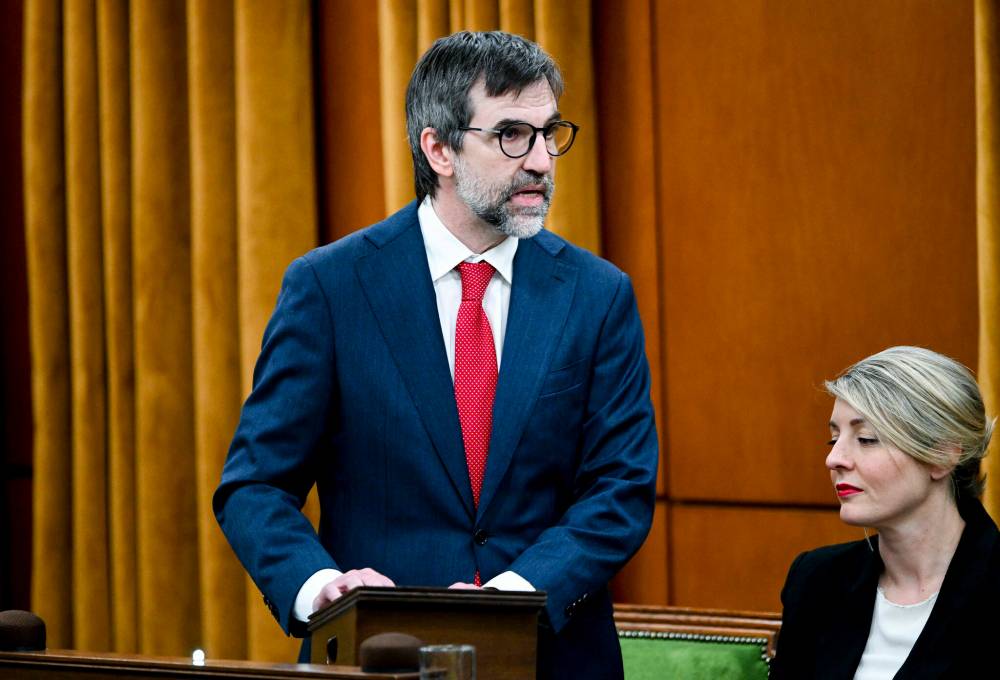
SPENCER COLBY/ THE CANADIAN PRESS FILES
Liberal MP Steven Guilbeault announced Wednesday he will leave Parliament this summer after seven years in federal politics.
And politicians who struggle to live with that reality rarely stay in elected office for long.
Guilbeault announced Wednesday he will leave Parliament this summer after seven years in federal politics, saying he wants to continue his fight against climate change and environmental degradation outside government.
His frustration was no secret.
Since Mark Carney became prime minister in 2025, the Liberals have shifted course on several climate files, including consumer carbon pricing, industrial regulations and energy development. Guilbeault publicly opposed Ottawa’s agreement with Alberta, particularly provisions tied to pipeline development and exemptions to clean electricity regulations, and resigned from cabinet last November.
For environmental groups, his decision to leave politics symbolizes surrender.
But politics was never going to offer Guilbeault — or anyone else — an unbroken path toward ideological purity.
That is because politics, particularly in a party-based liberal democracy such as Canada’s, is fundamentally a team sport.
It always has been.
That reality frustrates idealists on both the left and right who enter public life convinced they possess the singular correct answer to society’s problems. But elected government does not function as a debating society where the strongest moral argument automatically prevails. Nor should it.
Society is made up of competing interests, competing values and competing priorities. Good governance requires acknowledging that reality rather than pretending it does not exist.
Climate policy is a perfect example.
There is broad public support for reducing emissions and addressing climate change. But there is also public concern about affordability, employment, energy security and regional economic stability.
Alberta’s economy remains heavily tied to oil and gas development. Thousands of families depend on that sector for their livelihoods. Provincial governments defend those industries aggressively because voters expect them to.
That does not mean climate concerns are illegitimate. It means they exist alongside other legitimate concerns.
Politics is where those competing demands collide.
And compromise is how democratic governments navigate the collision.
Carney’s energy agreement with Alberta reflects that political reality, whether one supports the deal or not.
The prime minister made little effort Wednesday to disguise his position when asked whether the agreement was worth Guilbeault’s departure.
“Absolutely,” he said.
That response was not dismissive of Guilbeault’s contributions. It was an acknowledgement of governing realities.
Carney leads a government with a razor-thin majority. He faces trade instability, geopolitical turmoil and growing pressure to strengthen Canada’s economy and energy infrastructure. Western alienation remains a potent political force. Relations with Alberta cannot simply be ignored.
Guilbeault deserves credit for recognizing his own limits within that framework.
He entered politics motivated primarily by environmental advocacy. Before becoming an MP, he built his reputation through Greenpeace and Équiterre activism. He helped shape significant climate policies during his time as environment minister, including emissions regulations and legislation entrenching climate targets.
Supporters are right to note those accomplishments.
But advocacy and governing are not the same profession.
Advocates are expected to push relentlessly toward clear objectives and resist dilution of their goals. Their role is to pressure institutions and shift public opinion.
Politicians occupy a different space entirely.
Their job is not merely to champion causes but to reconcile conflicting interests while maintaining public legitimacy and political stability.
Those roles overlap at times, but they are not interchangeable.
Many politicians enter office carrying strong ideological convictions. Some maintain them successfully while adapting to political realities. Others discover the compromises required by governing sit uneasily with their principles.
Guilbeault fell into the latter category. He concluded he could better advance his environmental goals outside Parliament than within a government he was increasingly at odds with.
There is dignity in that decision. But there is also a broader lesson.
Politics is rarely kind to rigid idealism. History is filled with politicians who arrived in office convinced compromise represented betrayal, only to discover democratic institutions resist absolutism.
Those unwilling, or unable, to adjust often find themselves isolated, marginalized or gone altogether.
Party politics especially requires collaboration and internal discipline.
Cabinet solidarity exists for a reason. Governments cannot function if ministers publicly wage ideological battles against their own administration on every contentious issue.
Caucuses hold together not because members agree on everything but because they recognize collective action produces results individual crusades cannot.
Guilbeault leaves Parliament proud of his environmental record and determined to continue his cause elsewhere. But his departure should not be read as proof politics failed him.

Rather, it is a reminder that politics asks something difficult of everyone who enters it — especially passionate believers.
It asks them to share the field, accept imperfect outcomes and work within a system where competing demands never disappear.
That is not a defect of democracy.
It is precisely how democracy works.
tom.brodbeck@freepress.mb.ca
Tom Brodbeck is an award-winning author and columnist with over 30 years experience in print media. He joined the Free Press in 2019. Born and raised in Montreal, Tom graduated from the University of Manitoba in 1993 with a Bachelor of Arts degree in economics and commerce. Read more about Tom.
Tom provides commentary and analysis on political and related issues at the municipal, provincial and federal level. His columns are built on research and coverage of local events. The Free Press’s editing team reviews Tom’s columns before they are posted online or published in print – part of the Free Press’s tradition, since 1872, of producing reliable independent journalism. Read more about Free Press’s history and mandate, and learn how our newsroom operates.
Our newsroom depends on a growing audience of readers to power our journalism. If you are not a paid reader, please consider becoming a subscriber.
Our newsroom depends on its audience of readers to power our journalism. Thank you for your support.
Tom Brodbeck is an award-winning author and columnist with over 30 years experience in print media. He joined the Free Press in 2019. Born and raised in Montreal, Tom graduated from the University of Manitoba in 1993 with a Bachelor of Arts degree in economics and commerce. Read more about Tom.
Tom provides commentary and analysis on political and related issues at the municipal, provincial and federal level. His columns are built on research and coverage of local events. The Free Press’s editing team reviews Tom’s columns before they are posted online or published in print – part of the Free Press’s tradition, since 1872, of producing reliable independent journalism. Read more about Free Press’s history and mandate, and learn how our newsroom operates.
Our newsroom depends on a growing audience of readers to power our journalism. If you are not a paid reader, please consider becoming a subscriber.
Our newsroom depends on its audience of readers to power our journalism. Thank you for your support.

Advertisement Advertise With Us
Advertisement Advertise With Us