

Rise in female chiefs ‘a beautiful resurgence’
Advertisement
Read this article for free:
or
Already have an account? Log in here »
To continue reading, please subscribe:

Digital Subscription
One year of digital access for only $205*
- Enjoy unlimited reading on winnipegfreepress.com
- Read the E-Edition, our digital replica newspaper
- Access News Break, our award-winning app
- Play interactive puzzles
*First annual payment billed as $205.00 + GST for one year. This annual subscription will automatically renew at $233.00 + GST every 52 weeks (10% off the regular annual price of $259.35). Offer available to new and qualified returning subscribers only. Cancel any time.
To continue reading, please subscribe:
Add Free Press access to your Brandon Sun subscription for only an additional
$1 for the first 4 weeks*
- Enjoy unlimited reading on winnipegfreepress.com
- Read the E-Edition, our digital replica newspaper
- Access News Break, our award-winning app
- Play interactive puzzles
*Your next Brandon Sun subscription payment will increase by $1.00 and you will be charged $17.95 plus GST for four weeks. After four weeks, your payment will increase to $24.95 plus GST every four weeks.
Read unlimited articles for free today:
or
Already have an account? Log in here »
BRANDON — One month after Birdtail Sioux First Nation member Tréchelle Bunn was elected chief of her community, she was described on the Matriarch Movement podcast as a woman “who truly embodies what this movement is all about.”
“At just 25 years old, Tréchelle is making history while balancing law school, community leadership and national advocacy,” wrote podcast host and founder Shayla Oulette Stonechild. “Her journey reminds us that the next generation isn’t just preparing to lead — they are leading.”
Bunn was the first woman and youngest person to be elected chief of the First Nation in western Manitoba. It was a historic moment in her community and part of a larger story of the changing role of women in First Nations today.
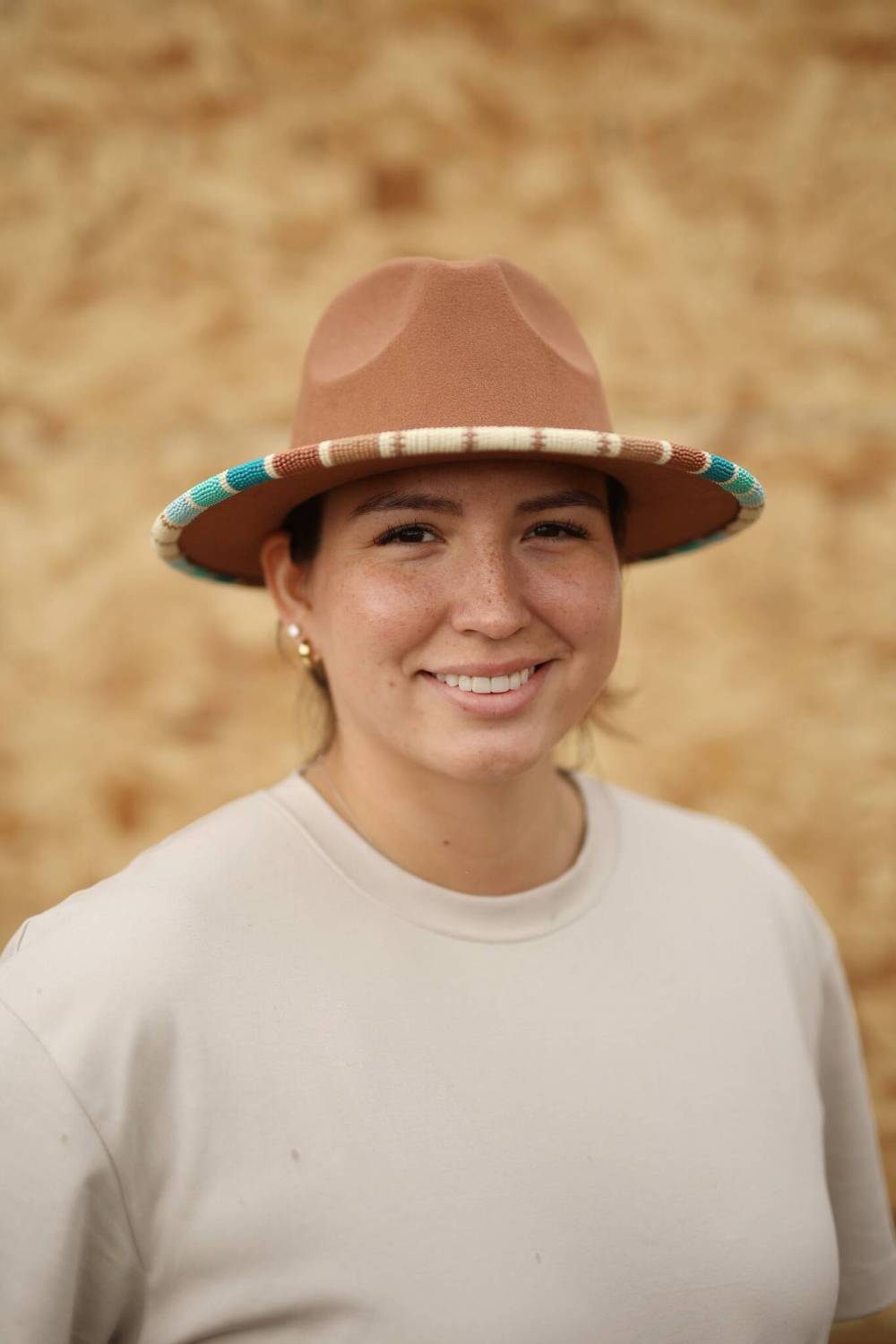
Tim Smith / Brandon Sun
Tréchelle Bunn, chief of Birdtail Sioux Dakota Nation: ‘I’m still challenging the narrative of what it looks like and what it means to be a chief.’
Assembly of First Nations National Chief Cindy Woodhouse Nepinak noted earlier this year that a record number of female chiefs — 164 — were leading First Nations across the country.
A month later, Nepinak noted there were 165 female chiefs.
“First Nations women continue to guide pathways of healing, sovereignty and opportunity,” she wrote on social media.
Because of Bunn’s youth and experience as a leader, she is seen as an example of the movement that is taking place across First Nations, with women increasingly filling professional and leadership roles.
Bunn has spoken as a delegate to the United Nations Human Rights Council on behalf of Indigenous people, served as a youth chief at the Southern Chiefs’ Organization and founded an event called the Reconciliation Run. She also graduated from law school this year.
Bunn said she believes she is representing the next generation of leadership and young people — not just her community. She wants to lead by example and sees part of her responsibility as showing what’s possible for other women and girls to come.
“I’m still challenging the narrative of what it looks like and what it means to be a chief,” she said. “I think it’s also challenging society’s perception of seeing a young woman as a chief.”
The story that is taking place in her community is also applicable to places across Canada, she said.
“The young women in my community for decades didn’t have that very tangible representation. They didn’t have a female chief of our community that they could look to and say, ‘If they can do it, so can I.’ And that’s what I’m hearing from not only young people in my community, but when I go to other events or connect with other young people across the country.”
Dakota First Nations in Westman are a good example of women taking up leadership roles, she said, noting that three of five communities are headed by female chiefs.
Bunn said it’s a revival of decision-making roles for women, rather than breaking new ground.
“I think that that’s a beautiful resurgence of, you know, our matriarchs reclaiming our place within leadership and decision making in our communities.”
In addition to Birdtail, Sioux Valley Dakota Nation is led by Chief Jennifer Bone, while Canupawakpa Dakota Nation is headed by Chief Charlene Higheagle-Moore. Both were elected in the last year.
Bone said she agrees that a shift is taking place. Women have always occupied important positions, but they are entering more leadership, political and professional roles today, she said.
Bone described how a female entrepreneur hosted a workshop in Sioux Valley this year in which she trained roughly 30 women to style eyelashes and equipped them to provide the service for clients.
“Seeing Indigenous women taking on those roles and being successful with their entrepreneurship is inspiring for other women,” Bone said. “I think it’s more inspiring for young women to further their education.”
Bone is studying for a master of business administration degree. She has been involved off and on in council and governance of Sioux Valley since being elected to council in 2010. She has served multiple terms as chief.
She said she believes the momentum for First Nation women will grow and hopes it will carry over into the new generation.
Bone said she attended an inaugural “matriarch summit” this spring in Ottawa, where female chiefs from across the country were invited to meet and discuss issues in their communities.

Having more women enter professional and political roles strengthens First Nations communities across the board, as there are more voices speaking on the community’s behalf, she said.
“I think it really helps us, not just to advance our nations, but all First Nations collectively. You have more people that are advocating for you — not only politically, but financially and economically.”
Advocacy was one of the keys to success for Kyra Wilson when she was elected grand chief of the Assembly of Manitoba Chiefs last year. Wilson told the Brandon Sun she believed she made the best case for being a powerful voice to bring First Nations issues forward.
“That is something that I shared with our leadership: I am a strong advocate, and I will continue to push to see the results that we want, and I won’t stop until we see the results,” Wilson said at the time. “My education, my career, my experience has always been advocating for our people. So I’ve really been able to develop the skill.”
— Brandon Sun