

City report makes it easy to see why more riders getting off bus

Advertisement
Read this article for free:
or
Already have an account? Log in here »
To continue reading, please subscribe:
Digital Subscription
One year of digital access for only $1.44 a week*
- Enjoy unlimited reading on winnipegfreepress.com
- Read the E-Edition, our digital replica newspaper
- Access News Break, our award-winning app
- Play interactive puzzles
*Billed as $5.77 plus GST every four weeks. After 52 weeks, price increases to the regular rate of $19.95 plus GST every four weeks. Offer available to new and qualified returning subscribers only. Cancel any time.
To continue reading, please subscribe:
Add Free Press access to your Brandon Sun subscription for only an additional
$1 for the first 4 weeks*
- Enjoy unlimited reading on winnipegfreepress.com
- Read the E-Edition, our digital replica newspaper
- Access News Break, our award-winning app
- Play interactive puzzles
*Your next Brandon Sun subscription payment will increase by $1.00 and you will be charged $17.95 plus GST for four weeks. After four weeks, your payment will increase to $24.95 plus GST every four weeks.
Read unlimited articles for free today:
or
Already have an account? Log in here »
If Winnipeggers had expected the city’s sweeping transit network overhaul to produce major improvements in service by now, the latest performance report offers a sobering reality check.
One year after Winnipeg Transit launched its redesigned route system, many of the problems that frustrated riders from the outset remain unresolved, a Transit report released this week noted.
Worse still, Transit officials have signalled that some of those shortcomings are unlikely to improve substantially any time soon.
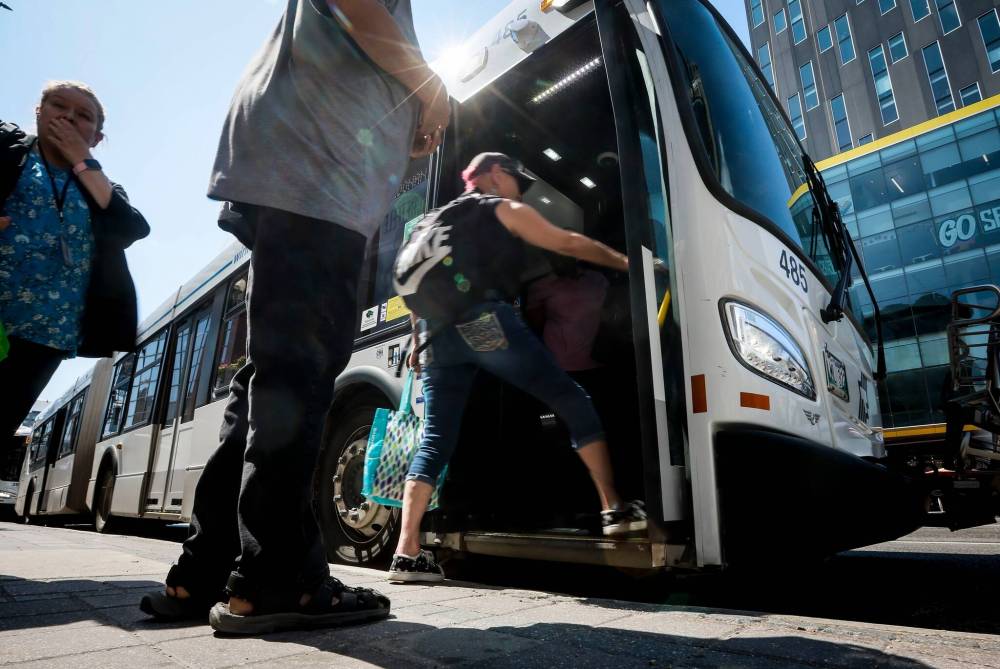
JOHN WOODS / FREE PRESS FILES
Winnipeg Transit launched its redesigned route system one year ago, with many of the problems that frustrated riders from the outset still unresolved.
That should raise serious questions about whether the city is on track to deliver the kind of transit system residents were promised.
The network redesign was supposed to be transformational. It was marketed as a modern, high-frequency system that would improve reliability, shorten travel times and encourage more people to leave their cars at home.
Instead, the first year has been defined by technical failures, rider complaints, declining ridership and missed performance targets.
Some progress has been made since last summer’s troubled rollout. Additional evening service has been added. Scheduling changes have been made. Routes have been adjusted based on feedback.
But after a year of operation, the standard should be higher than simply saying things are better than they were during the launch.
The real question is whether the system is performing at the level riders were promised.
The report suggests the answer is no.
The city’s flagship Blue Line rapid transit route, for example, achieved an on-time performance rate of only 66.6 per cent on weekdays during the winter months. That falls well below Winnipeg Transit’s target of 75 per cent. (Transit considers a bus is on time if it arrives between one minute early to five minutes after its scheduled time).
The explanation offered by officials is even more concerning.
Rather than suggesting the gap can be closed through operational improvements, Transit managers indicated the target may remain out of reach until additional downtown rapid transit infrastructure is built.
After a year of operation, the standard should be higher than simply saying things are better than they were during the launch
That infrastructure is years away.
In other words, one of the city’s most important transit routes is expected to continue missing reliability targets for the foreseeable future.
The results on other routes are hardly reassuring.
The D12 crosstown route connecting The Forks and the airport was on time 72.3 per cent on weekdays, but only 28.8 per cent of the time on Saturdays during the winter.
That means Saturday riders had far better odds of encountering a late or early bus than one arriving within Transit’s own definition of being on schedule.
Transit says performance on that route improved following scheduling changes in April, but the broader issue remains: a transit system cannot build public confidence when some routes perform that poorly.
Perhaps the most revealing part of the report, however, is the information that wasn’t provided.
Despite releasing route-specific performance figures, Winnipeg Transit declined to disclose an overall system-wide on-time performance rate.
Officials argued that route-level data is more useful because it helps identify specific problem areas.
That explanation misses the point. The public deserves both.
One of the city’s most important transit routes is expected to continue missing reliability targets for the foreseeable future
Individual route statistics help identify operational challenges. Overall system performance tells taxpayers and riders whether the network as a whole is succeeding or failing.
The refusal to release that information inevitably raises suspicion.
If the overall numbers paint a positive picture, there would seem to be little reason not to disclose them. The fact Transit chose not to do so invites speculation that the system’s overall reliability may be worse than officials want the public to see.
Transparency is particularly important given the difficulties the city has already experienced.
The network overhaul got off to a disastrous start when GPS failures produced inaccurate bus arrival information almost immediately after launch. Riders struggled with missed connections, longer travel times and schedules that often bore little resemblance to reality.
Public works committee chair Janice Lukes accurately described the situation as a “nightmare.”
Unfortunately for Transit, first impressions matter. Many frustrated riders simply stopped taking the bus.
The financial consequences are becoming apparent. Winnipeg Transit expects fare revenue this year to fall $18.4 million short of budget projections.
People do not abandon transit because they dislike buses. They abandon transit when it becomes too unpredictable to depend on.
That reality should concern city hall because Winnipeg needs a successful transit system more than ever.
Winnipeg Transit declined to disclose an overall system-wide on-time performance rate
The city continues to grow. Road construction costs continue to rise. Traffic congestion is becoming a bigger challenge. Encouraging more transit use is not merely a transportation objective, it is an economic necessity.
It requires a system people can trust. Right now, trust appears to be in short supply.
Perhaps the most troubling part of this report is that officials appear to be managing expectations downward rather than presenting a clear path toward meeting established targets.
When riders hear that reliability goals may remain out of reach for years and when the agency refuses to release system-wide performance data, confidence erodes further.
Until buses consistently arrive on time (or arrive at all), ridership begins growing again and Transit becomes fully transparent about its performance, the overhaul cannot reasonably be called a success.
tom.brodbeck@freepress.mb.ca

Tom Brodbeck is an award-winning author and columnist with over 30 years experience in print media. He joined the Free Press in 2019. Born and raised in Montreal, Tom graduated from the University of Manitoba in 1993 with a Bachelor of Arts degree in economics and commerce. Read more about Tom.
Tom provides commentary and analysis on political and related issues at the municipal, provincial and federal level. His columns are built on research and coverage of local events. The Free Press’s editing team reviews Tom’s columns before they are posted online or published in print – part of the Free Press’s tradition, since 1872, of producing reliable independent journalism. Read more about Free Press’s history and mandate, and learn how our newsroom operates.
Our newsroom depends on a growing audience of readers to power our journalism. If you are not a paid reader, please consider becoming a subscriber.
Our newsroom depends on its audience of readers to power our journalism. Thank you for your support.
Tom Brodbeck is an award-winning author and columnist with over 30 years experience in print media. He joined the Free Press in 2019. Born and raised in Montreal, Tom graduated from the University of Manitoba in 1993 with a Bachelor of Arts degree in economics and commerce. Read more about Tom.
Tom provides commentary and analysis on political and related issues at the municipal, provincial and federal level. His columns are built on research and coverage of local events. The Free Press’s editing team reviews Tom’s columns before they are posted online or published in print – part of the Free Press’s tradition, since 1872, of producing reliable independent journalism. Read more about Free Press’s history and mandate, and learn how our newsroom operates.
Our newsroom depends on a growing audience of readers to power our journalism. If you are not a paid reader, please consider becoming a subscriber.
Our newsroom depends on its audience of readers to power our journalism. Thank you for your support.
Related Articles
Transit says it’s short $6.5M to provide free rides for youth year round


Advertisement Advertise With Us
Advertisement Advertise With Us