

Presidents come and go but Canada-U.S. trade here to stay

Advertisement
Read this article for free:
or
Already have an account? Log in here »
To continue reading, please subscribe:

Digital Subscription
One year of digital access for only $205*
- Enjoy unlimited reading on winnipegfreepress.com
- Read the E-Edition, our digital replica newspaper
- Access News Break, our award-winning app
- Play interactive puzzles
*First annual payment billed as $205.00 + GST for one year. This annual subscription will automatically renew at $233.00 + GST every 52 weeks (10% off the regular annual price of $259.35). Offer available to new and qualified returning subscribers only. Cancel any time.
To continue reading, please subscribe:
Add Free Press access to your Brandon Sun subscription for only an additional
$1 for the first 4 weeks*
- Enjoy unlimited reading on winnipegfreepress.com
- Read the E-Edition, our digital replica newspaper
- Access News Break, our award-winning app
- Play interactive puzzles
*Your next Brandon Sun subscription payment will increase by $1.00 and you will be charged $17.95 plus GST for four weeks. After four weeks, your payment will increase to $24.95 plus GST every four weeks.
Read unlimited articles for free today:
or
Already have an account? Log in here »
Canada’s trade relationship with the United States is not going away.
Nor should it.
The two countries share a continent, an economy and a deeply integrated supply chain that has been built over generations. The United States will remain Canada’s largest trading partner for the foreseeable future, and no amount of diplomatic travel or new trade agreements will change that basic reality.
But there is also nothing wrong with Canada looking for more customers.
In fact, given the increasingly unpredictable nature of global trade, it is one of the smartest things the country can do.
The recent push by the federal government to expand Canada’s economic relationships around the world is good news for the Canadian economy. It could also provide an important measure of protection against the political and economic shocks that can come when too much trade is concentrated in one market.
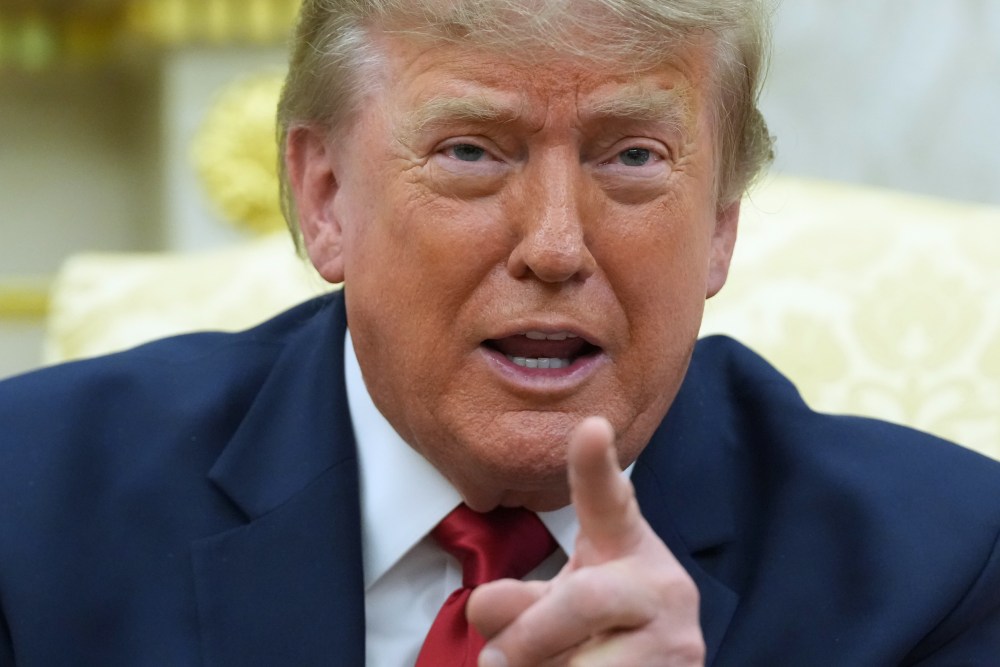
That lesson has become particularly obvious since Donald Trump returned to the White House and began treating tariffs as a political weapon.
But the case for trade diversification existed long before Trump.
It makes sense for Canada to sell more of its goods and services to more countries simply because a broader customer base provides greater economic stability.
If one market weakens, another may be growing. If one government imposes tariffs, Canadian exporters have other options.
That’s just basic business sense.
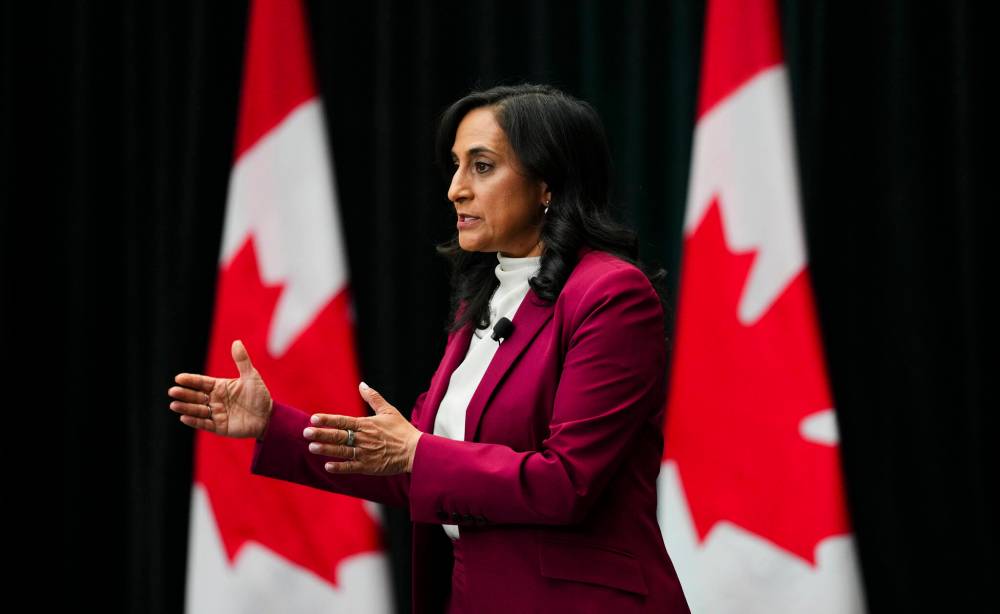
Foreign Affairs Minister Anita Anand appears to understand that.
She says Canada is now doing diplomacy differently, reviving relationships around the world that have been allowed to become stagnant and putting trade and economic growth much closer to the centre of Canada’s foreign policy.
That means more than simply attending international conferences and shaking hands with foreign leaders.
Anand was recently in Brazil, Romania and Panama. She travelled to Pakistan, the first Canadian foreign minister to visit that country in 19 years.
She is heading to the Philippines and may soon visit countries including Benin, Ivory Coast, Morocco and Kazakhstan.
Those trips are part of a broader effort by Prime Minister Mark Carney’s government to expand Canada’s economic and diplomatic relationships across multiple continents.
Anand says Ottawa wants to double non-U.S. trade over the next 10 years.
That is an ambitious goal. It is also a sensible one.
Before travelling to a foreign country, Anand says she now consults Canadian business groups to identify commercial opportunities. Her officials are tasked with examining the prospects for trade agreements, investment protection deals, strategic partnerships and other arrangements that could make it easier for Canadian companies to do business abroad.
Foreign policy cannot be separated entirely from economic policy. Countries that have strong trade relationships are often better positioned to work together on security, diplomacy and other shared interests.
And Canada has plenty to offer. The world needs energy. Canada has it. The world needs food. Canada produces it.
The world is looking for reliable supplies of critical minerals and other resources needed for the transition to a new energy economy. Canada has many of those resources, too.
Canada also offers something increasingly valuable in a volatile world: stability.
Countries that have strong trade relationships are often better positioned to work together on security, diplomacy and other shared interests.
That doesn’t mean every new international agreement will be a triumph. The Conservatives are right to scrutinize whether some of the deals being announced by the Carney government offer meaningful economic benefits or merely vague diplomatic language.
The NDP and the Senate foreign affairs committee are also right to raise concerns about cuts to Canada’s diplomatic service. It is difficult to build lasting international relationships if there are not enough people on the ground to maintain them.
Trade diversification requires more than signing agreements, it requires follow-through.
The relationship with Pakistan offers one example of what that can look like. After China restricted Canadian canola, Pakistan opened its market to Canadian canola seeds.
That is of particular importance to Manitoba farmers. A new agreement announced this week will lift restrictions on more Canadian canola exports.
That is the kind of practical result that can come from sustained diplomatic engagement.
These efforts are particularly important at a time when the global trading system is being reshaped by geopolitical tensions and protectionism.
Canada is not big enough to dictate the terms of global trade… But it can make itself less vulnerable.
Trump’s tariffs, including a new 50 per cent tariff announced Monday on a wide range of goods, have made the dangers of relying too heavily on the American market more obvious. But Canada should not be pursuing new trading relationships solely as a response to the current occupant of the White House.
Presidents come and go. Economic relationships last much longer.
The United States will continue to be a vital partner. Canada’s economic future is still deeply connected to the American economy, and there is no realistic scenario in which that changes dramatically.
But the goal should not be to choose between the United States and the rest of the world.
It should be to have both.
Canada is not big enough to dictate the terms of global trade. It is not powerful enough to ignore the decisions of larger countries.
But it can make itself less vulnerable.
In an increasingly unpredictable global economy, having more friends, more customers and more options is vitally important.
tom.brodbeck@freepress.mb.ca
Tom Brodbeck is an award-winning author and columnist with over 30 years experience in print media. He joined the Free Press in 2019. Born and raised in Montreal, Tom graduated from the University of Manitoba in 1993 with a Bachelor of Arts degree in economics and commerce. Read more about Tom.
Tom provides commentary and analysis on political and related issues at the municipal, provincial and federal level. His columns are built on research and coverage of local events. The Free Press’s editing team reviews Tom’s columns before they are posted online or published in print – part of the Free Press’s tradition, since 1872, of producing reliable independent journalism. Read more about Free Press’s history and mandate, and learn how our newsroom operates.
Our newsroom depends on a growing audience of readers to power our journalism. If you are not a paid reader, please consider becoming a subscriber.
Our newsroom depends on its audience of readers to power our journalism. Thank you for your support.
Tom Brodbeck is an award-winning author and columnist with over 30 years experience in print media. He joined the Free Press in 2019. Born and raised in Montreal, Tom graduated from the University of Manitoba in 1993 with a Bachelor of Arts degree in economics and commerce. Read more about Tom.
Tom provides commentary and analysis on political and related issues at the municipal, provincial and federal level. His columns are built on research and coverage of local events. The Free Press’s editing team reviews Tom’s columns before they are posted online or published in print – part of the Free Press’s tradition, since 1872, of producing reliable independent journalism. Read more about Free Press’s history and mandate, and learn how our newsroom operates.
Our newsroom depends on a growing audience of readers to power our journalism. If you are not a paid reader, please consider becoming a subscriber.
Our newsroom depends on its audience of readers to power our journalism. Thank you for your support.
Related Articles
Cross-border bridge celebration 'inappropriate' after Trump's tariff threats: Canada





Advertisement Advertise With Us
Advertisement Advertise With Us