

City’s crisis-response proposal makes too much sense for province to ignore

Advertisement
Read this article for free:
or
Already have an account? Log in here »
To continue reading, please subscribe:

Digital Subscription
One year of digital access for only $205*
- Enjoy unlimited reading on winnipegfreepress.com
- Read the E-Edition, our digital replica newspaper
- Access News Break, our award-winning app
- Play interactive puzzles
*First annual payment billed as $205.00 + GST for one year. This annual subscription will automatically renew at $233.00 + GST every 52 weeks (10% off the regular annual price of $259.35). Offer available to new and qualified returning subscribers only. Cancel any time.
To continue reading, please subscribe:
Add Free Press access to your Brandon Sun subscription for only an additional
$1 for the first 4 weeks*
- Enjoy unlimited reading on winnipegfreepress.com
- Read the E-Edition, our digital replica newspaper
- Access News Break, our award-winning app
- Play interactive puzzles
*Your next Brandon Sun subscription payment will increase by $1.00 and you will be charged $17.95 plus GST for four weeks. After four weeks, your payment will increase to $24.95 plus GST every four weeks.
Read unlimited articles for free today:
or
Already have an account? Log in here »
For years, Winnipeg has asked police officers to do a job they were never trained to do.
Somewhere along the way, police became the city’s default response to virtually every crisis, not just those involving crime. Mental-health emergencies, addiction episodes, wellness checks and people in emotional distress increasingly landed on the desks of police dispatchers because there simply wasn’t another option available around the clock.
That has placed an enormous burden on police resources while often failing to provide vulnerable people with the help they actually need.
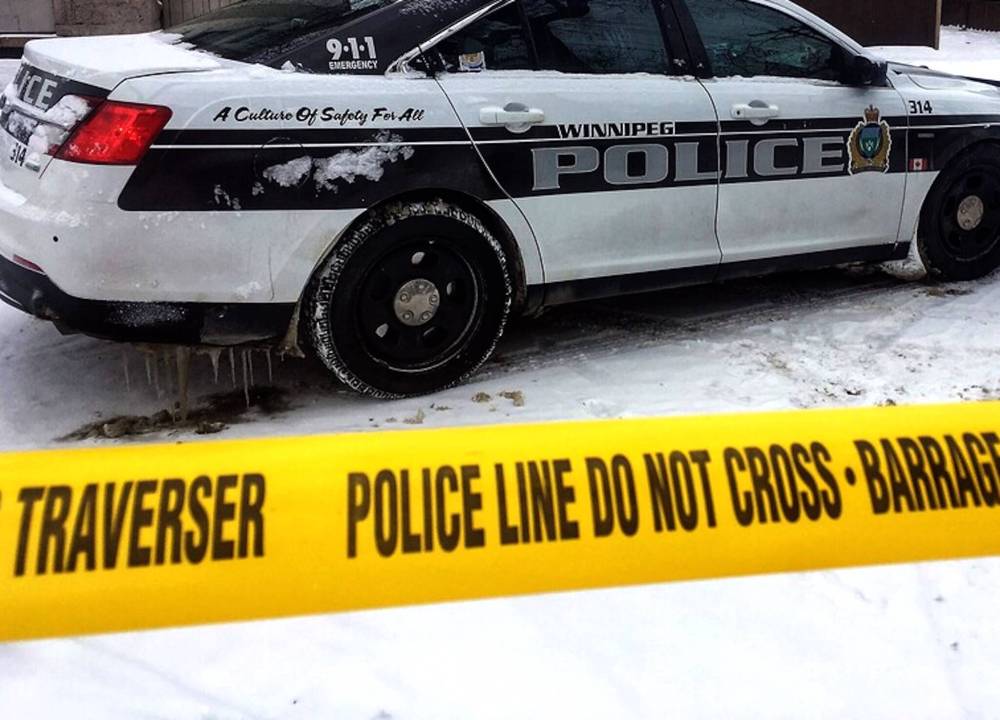
BORIS MINKEVICH / FREE PRESS FILES
Roughly 10,000 emergency calls every year don’t necessarily require flashing lights, sirens or armed officers.
The city’s proposal to create a “fourth crisis response pathway” is a long-overdue recognition that public safety doesn’t always require a badge and a gun. Sometimes it requires a social worker, a mental-health professional or someone with specialized crisis-intervention training.
More importantly, it recognizes an obvious principle that has somehow been overlooked for decades: send the right people to the right calls.
The numbers alone make a compelling case.
Winnipeg police respond to roughly 20,000 wellness checks every year — about 53 every single day. Chief Gene Bowers readily admits that most of those calls are non-violent.
Police estimate nearly 4,000 calls annually — representing almost 8,000 hours of officer time — could be redirected under the proposed model. Another 6,300 fire-paramedic calls could also be shifted to community response teams.
That amounts to roughly 10,000 emergency calls every year that don’t necessarily require flashing lights, sirens or armed officers.
Imagine what police could accomplish with 8,000 additional hours devoted to investigating crime, responding to violent incidents, targeting gangs, addressing property crime or increasing neighbourhood patrols.
Winnipeggers frequently complain that police take too long to respond to break-ins, thefts and other criminal activity. They want more visible policing in communities plagued by violence and disorder.
Those demands become much easier to meet when officers aren’t spending thousands of hours responding to situations that would be better handled by someone else.
This isn’t about criticizing police. Quite the opposite.
Police have repeatedly said they don’t want to be the city’s mental-health service. They became one by default because no viable alternative existed.
Police didn’t seek out these responsibilities. They simply became the only 24-hour service available whenever someone was in crisis.
That arrangement has never made much sense.
A police officer’s primary responsibility is enforcing the law and protecting public safety. Mental-health professionals specialize in de-escalation, trauma-informed care, addiction supports and connecting people with ongoing services.
Those are entirely different skill sets.
Sending police to every mental-health crisis is a bit like sending a plumber to repair your electrical wiring. Both are skilled professionals, but one is clearly better suited to the task.
The proposed system also avoids one of the biggest criticisms surrounding emergency responses involving vulnerable individuals.
Over the years, several interactions between police and people experiencing mental-health crises have ended tragically. Often, officers were responding to situations that were never criminal in nature but escalated unpredictably.
No system will eliminate every risk.
Nor should anyone pretend police will disappear from these calls altogether.
When violence is occurring, weapons are involved or public safety is threatened, police must continue to respond. No community crisis team should ever be expected to walk into dangerous situations without law enforcement support.
Public safety remains paramount.
But if dispatchers can safely determine a call involves someone suffering a mental-health episode without evidence of violence or criminal behaviour, why wouldn’t Winnipeg send the professionals best equipped to help?
The proposal wisely keeps police available for situations requiring police while allowing community organizations with relevant expertise to take the lead elsewhere.
Creating a centralized hub capable of triaging calls and directing them to existing community responders is a practical solution rather than an expensive exercise in building an entirely new bureaucracy.
At an estimated annual cost of about $6 million, the program won’t be free.
But compared with the cost of deploying police cruisers, ambulances and fire apparatus to thousands of inappropriate calls every year, it’s hardly unreasonable.
The real challenge will be provincial participation.
Mental health and addictions are fundamentally provincial responsibilities. The city shouldn’t be expected to shoulder the financial burden alone simply because police have historically filled gaps elsewhere in the health-care system.
If Winnipeg builds the dispatch infrastructure, Manitoba should become a full funding partner to ensure community agencies have the staffing and resources necessary to operate around the clock.
Otherwise, the city risks creating a system that looks promising on paper but lacks the capacity to deliver.
There will undoubtedly be questions about implementation. Councillors are right to ask whether existing agencies can handle a 24-7 operation and whether sufficient personnel are available.

Those questions deserve answers before launch.
But they shouldn’t become excuses for maintaining a system everyone acknowledges isn’t working.
For too long, Winnipeg has treated police as the solution to virtually every social problem.
Creating a fourth crisis response pathway won’t solve Winnipeg’s mental-health challenges overnight. But it will put the right professionals where they belong, free police to focus on fighting crime, and give vulnerable people a better chance of receiving the help they actually need.
tom.brodbeck@freepress.mb.ca
Tom Brodbeck is an award-winning author and columnist with over 30 years experience in print media. He joined the Free Press in 2019. Born and raised in Montreal, Tom graduated from the University of Manitoba in 1993 with a Bachelor of Arts degree in economics and commerce. Read more about Tom.
Tom provides commentary and analysis on political and related issues at the municipal, provincial and federal level. His columns are built on research and coverage of local events. The Free Press’s editing team reviews Tom’s columns before they are posted online or published in print – part of the Free Press’s tradition, since 1872, of producing reliable independent journalism. Read more about Free Press’s history and mandate, and learn how our newsroom operates.
Our newsroom depends on a growing audience of readers to power our journalism. If you are not a paid reader, please consider becoming a subscriber.
Our newsroom depends on its audience of readers to power our journalism. Thank you for your support.
Tom Brodbeck is an award-winning author and columnist with over 30 years experience in print media. He joined the Free Press in 2019. Born and raised in Montreal, Tom graduated from the University of Manitoba in 1993 with a Bachelor of Arts degree in economics and commerce. Read more about Tom.
Tom provides commentary and analysis on political and related issues at the municipal, provincial and federal level. His columns are built on research and coverage of local events. The Free Press’s editing team reviews Tom’s columns before they are posted online or published in print – part of the Free Press’s tradition, since 1872, of producing reliable independent journalism. Read more about Free Press’s history and mandate, and learn how our newsroom operates.
Our newsroom depends on a growing audience of readers to power our journalism. If you are not a paid reader, please consider becoming a subscriber.
Our newsroom depends on its audience of readers to power our journalism. Thank you for your support.
Related Articles
Mayor backs new way to handle 911 mental health, addiction calls



Advertisement Advertise With Us
Advertisement Advertise With Us