

The time of her life
Legal scholar, educator and author Karen Busby tirelessly fought for groundbreaking human rights and social justice changes

Advertisement
Read this article for free:
or
Already have an account? Log in here »
To continue reading, please subscribe:

Digital Subscription
One year of digital access for only $205*
- Enjoy unlimited reading on winnipegfreepress.com
- Read the E-Edition, our digital replica newspaper
- Access News Break, our award-winning app
- Play interactive puzzles
*First annual payment billed as $205.00 + GST for one year. This annual subscription will automatically renew at $233.00 + GST every 52 weeks (10% off the regular annual price of $259.35). Offer available to new and qualified returning subscribers only. Cancel any time.
To continue reading, please subscribe:
Add Free Press access to your Brandon Sun subscription for only an additional
$1 for the first 4 weeks*
- Enjoy unlimited reading on winnipegfreepress.com
- Read the E-Edition, our digital replica newspaper
- Access News Break, our award-winning app
- Play interactive puzzles
*Your next Brandon Sun subscription payment will increase by $1.00 and you will be charged $17.95 plus GST for four weeks. After four weeks, your payment will increase to $24.95 plus GST every four weeks.
Read unlimited articles for free today:
or
Already have an account? Log in here »
Of all the remarkable achievements in Karen Busby’s life, one of the most incredible is how she found the time.
Time, as a trailblazing legal scholar and educator at the University of Manitoba, to help lead transformative fights for human rights. Her work would help secure same-sex marriage equality in Manitoba, strengthen Canada’s laws against gender-based violence and earn landmark Supreme Court decisions to better protect sexual assault victims in court.
Around this core mission, she also found time to write books that made a lasting impact on equality in education, to become one of Canada’s strongest public voices for Indigenous, gender and LGBTTQ+ rights and to build Winnipeg’s art community, including as a co-founder of Ace Art and serving a decade on the board of the Winnipeg Art Gallery-Qaumajuq.
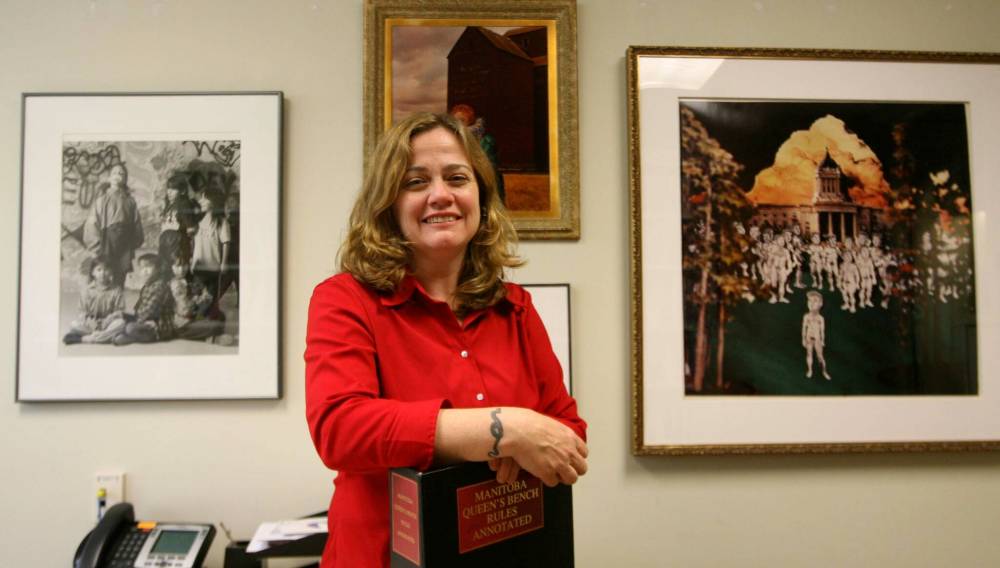
MIKE DEAL / FREE PRESS FILES
Karen Busby in 2010, when she was the subject of a profile in the Free Press. The lawyer, author and art lover was a renowned champion of human rights.
But above all, Busby always had time for her family, both born and chosen.
That meant time, along with her wife, Jan Lederman, to throw legendary dinner parties that brought people from across her diverse social world into community together. Time to make everyone in her life feel special and seen. Time to take her then-blossoming young artist niece, Jessie Jakumeit, to the WAG, where they’d share deep conversations about art.
Even as she endured the deteriorating effects of Parkinson’s disease in her final years, she found time to teach her nephew Joey Broda the precious family vinarterta recipe she’d inherited from her mother, showing him how to infuse it with the sort of love you can’t find in the instructions.
And in the days after Busby died July 23, at age 67, as friends and colleagues across Canada paid tribute to all that she accomplished, many took their own time to reflect on her vast and influential life, and wonder. How did she manage it all? Where did she get that strength, those convictions and that determination?
A good part of it, at least, came from her mother. She was born in Edmonton in 1958, the third of Dave and Norma Busby’s children and their first daughter. In 1971, Dave was arrested for bank robbery; Norma, undaunted, left him and moved her family back to her home province of Manitoba, determined to build a new life as a single mother of seven.
At first the move to Winnipeg was a shock. The family had to get by on Norma’s income as a nurse, working in Indigenous health. Despite that burden, their mother was a rock, and a trailblazer in her own right: in 1978, she led a national nurses strike to demand equitable pay, travelling frequently to Ottawa to face down the federal government — and win.
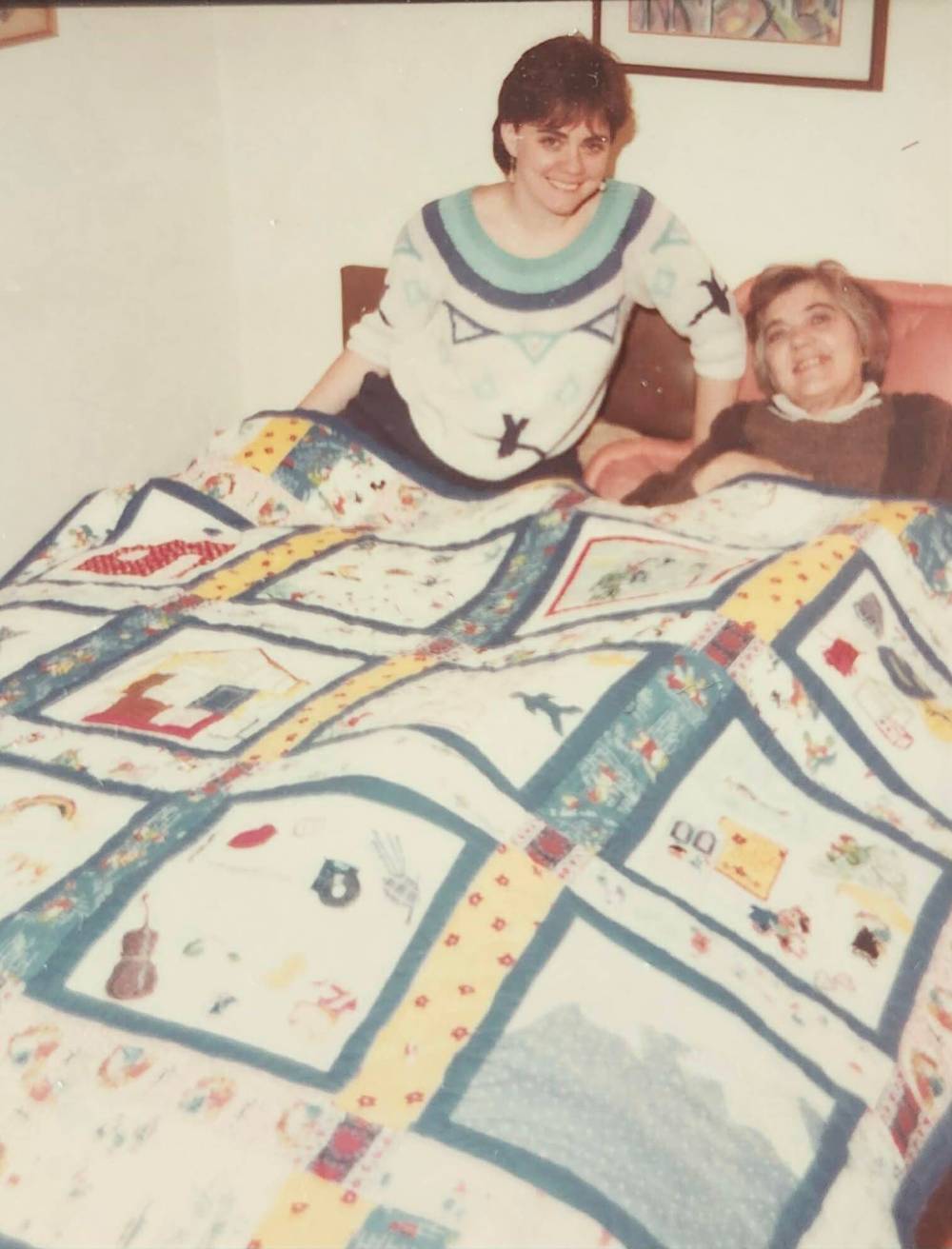
Submitted
Karen (left) with her mother, Norma, and a family quilt Karen crafted as a gift for her.
Norma’s example left a deep impression on Karen, her sister Dawn Busby says. Karen, by then a burgeoning teen feminist, had a close bond with their mother; they shared a vision of what it meant to work for equality and challenge the status quo.
That spirit would soon light her path into law school. As a teen, Karen excelled at most things she did: she was a star athlete and outstanding student. While in high school, she debated between pursuing a career in economics or law. She chose the latter, in part because of her zest for delving into the roots of concepts, ideas and opinions.
“Karen could be very soft and gently assertive, but she was persistent,” Dawn says. “She was more about the conversations she had with people to explore different opinions. You didn’t have to have the same opinion, but hopefully you could have a discussion about the differences.”
Once in university, Karen soared with the same focus she’d had as a teen. She earned her law degree, studied a year in Paris, finished her master’s degree at Columbia University, then worked for a Winnipeg law firm and the Federal Court of Appeal in Ottawa before accepting a professor position at the U of M when she was just 29.
For her, the work was something of a dream. Of everything Karen did, friends say, her deepest passion was her teaching.
“She was an extremely dedicated teacher,” says friend and fellow law professor Debra Parkes, who worked alongside Karen at the U of M until 2016. “She was always wanting to teach her students… to be aware of what role they could have in trying to change unjust laws, but doing so in a way that was thoughtful that legal changes are only part of broader social change.”
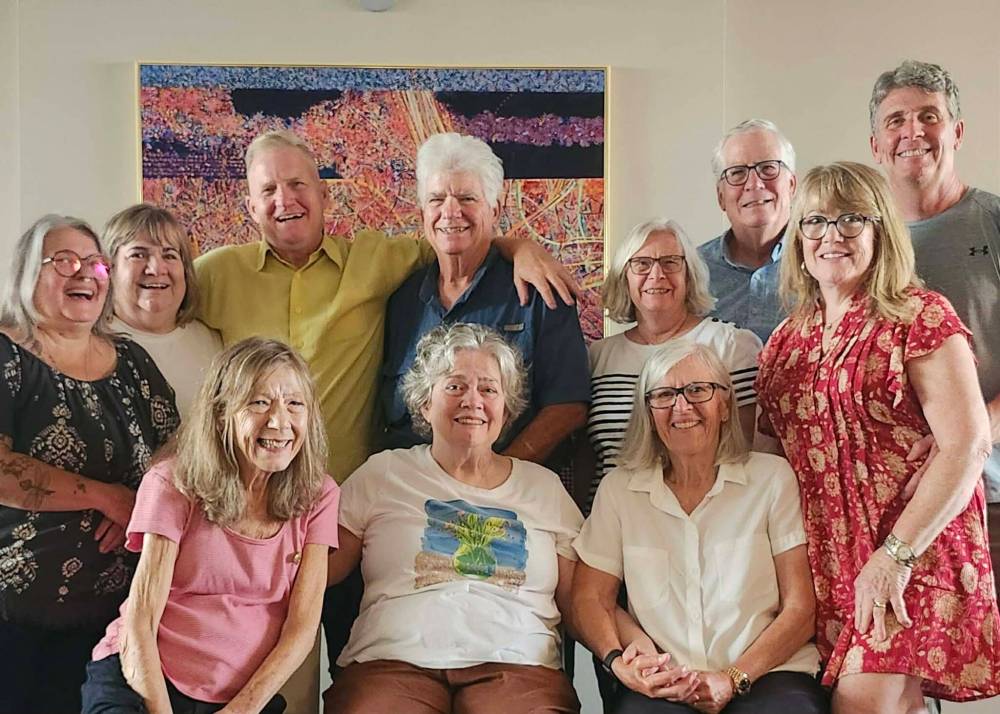
Submitted
Karen Busby (seated, centre) with wife Jan Lederman (centre right), her six siblings and their spouses at their final dinner before the trailblazing legal scholar died on July 23.
And much of the social change Karen experienced through her own life, she helped directly to create.
When Karen entered the world of legal education, it was a very different time. She didn’t come out as lesbian until after she was granted tenure in the mid-1990s; before that, Dawn says, she worried that her orientation — and their father’s criminal record — would make her uphill battle as a rising feminist scholar in a male-dominated academy even steeper.
After she helped break down those barriers, others soon followed. When Parkes joined the faculty in 2001, she did so as an open lesbian. Karen welcomed her right away, she says, inviting her to dinner parties and including her in collegial events. In fact, Parkes soon met her own partner of 24 years through Karen.
“One of the things that I am really grateful to her for is her courage, doing the feminist work she did,” Parkes says. “It opened up space for people like me.”
It wasn’t only within the university that Karen’s visibility helped change the world. As her scholarly career grew, she became a fixture in local and national media, in part because, no matter how late or urgent a reporter’s call, she always answered the phone.
Through countless radio, print and television interviews, she offered strong and nuanced advocacy for equality and justice. She once told Dawn that it was a conscious decision: if she taught it, she said, she felt a responsibility to speak for it in the eyes of the whole world, as well.
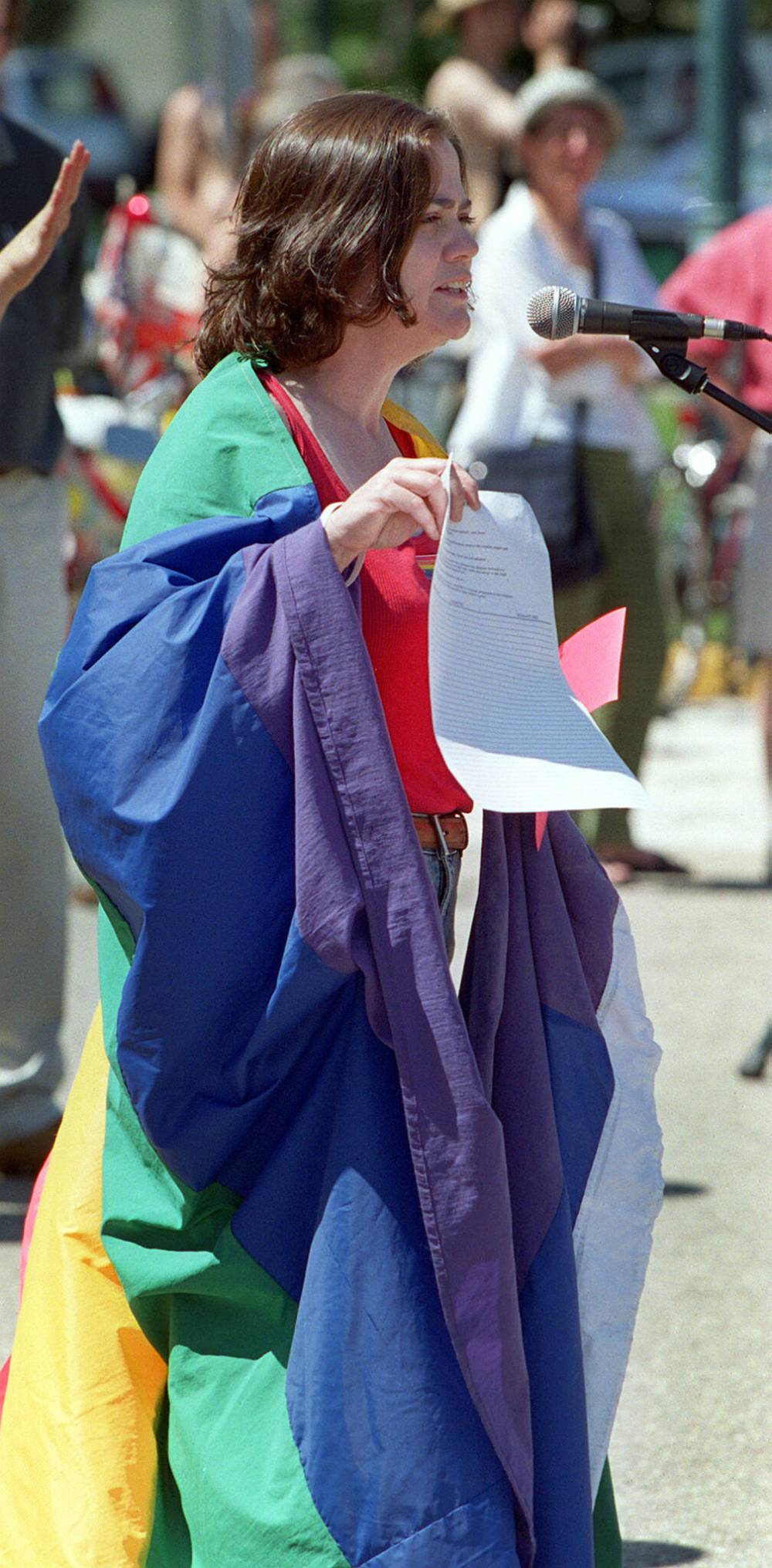
WAYNE GLOWACKI / FREE PRESS FILES
Pride Day 2001 rally Karen Busby , Legal Expert on Bill 41 and same sex adoption issue speaks to crowd in front of the Manitoba Legislative Bld. . . June 10 2001
That view tracked with how she saw the role of law as a whole. To Karen, a legal career wasn’t an end in itself; it was a tool through which one could understand, and build, a far more expansive concept of justice.
“What really surprised me, when I got to know her better, is that she wasn’t particularly interested in a traditional academic career, where the object was the publication of research for the purpose of evidencing scholarship,” says Lederman, her wife of 15 years. “She was interested in using research as a tool for improving the lives of people.
“She always thought first about who was being harmed,” she continues, quoting one of Karen’s friends. “Whether it was a harm that the law recognized, or whether the harm was being caused by the existence of a law, or the absence of a law or social policy, that’s what engaged her in a topic.”
In Lederman, Karen had the perfect partner to help explore those questions. Lederman is also a lawyer; while the two long knew each other through the profession, they connected more deeply after Lederman joined a book club Karen attended, in part to get to know Karen better.
The two shared a love of art, and spirited, intellectual debates about law, society and ideas. In 2011, they were married.
“They bonded on this higher level,” Dawn says. “Their relationship was really built on a mutual respect for each other, and a real appreciation for the lives that each of them came from, and how they brought that together. Karen would always say she truly found her soulmate and greatest companion.”
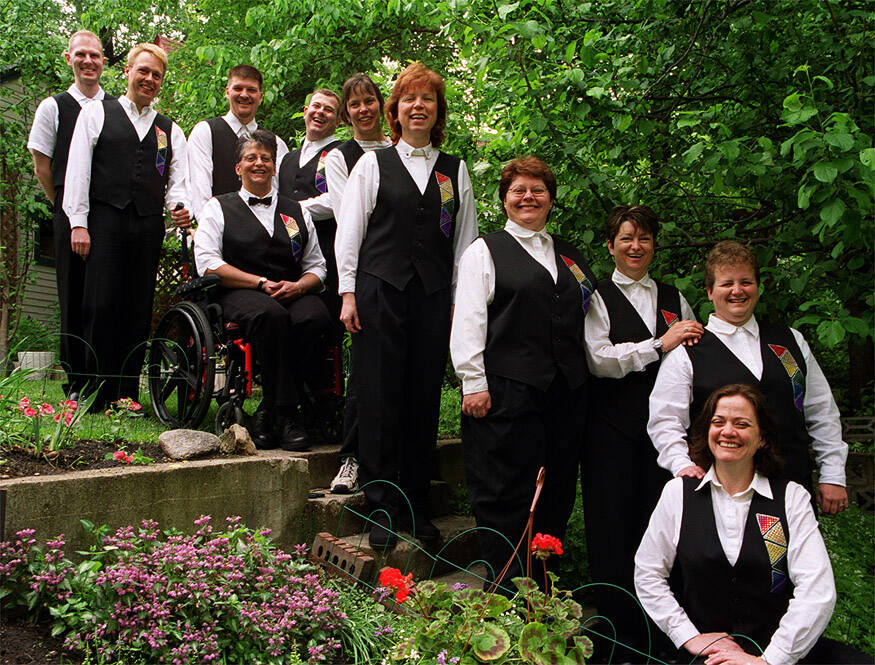
LINDA VERMETTE / FREE PRESS FILES
Karen Busby (Far Right) with Gay Pride Choir.
Yet along with that joy, Karen was facing a new challenge. Shortly before she and Lederman married, Karen, then 51, was diagnosed with Parkinson’s. For many years, she carried on with her teaching, writing, and community life. But over time, the disease began to take a deeper toll.
Over the last two years, she found she couldn’t focus enough to read; to find a new outlet for her boundless mind, she took a gleeful interest in mahjong. Still, as her quality of life ebbed away, Karen began to think about where she wished to draw the line. Earlier this year, she made the decision: she would end her life through Medical Assistance in Dying.
While some of her loved ones struggled with the decision, Dawn says, all of them respected it. Karen had always chosen her own path and known her own mind; this moment was no different. And for those closest to her, the last few months before her death were a blessing, Karen’s final gift of time.
In December, she gathered her whole family to recreate a cherished childhood photo. She and Dawn met weekly to talk for hours. Dozens of loved ones came to visit, cherishing her company one more time. Over 100 people sent cards and letters, giving her a chance to hear directly how she had affected them or changed their lives.

On Monday, hundreds of Karen’s family, friends, colleagues, and former students came together to share in a celebration of her vast and joyful life. When it was over, some of her 10 beloved nieces and nephews turned to each other and, in slightly bemused amazement, asked: “So what new thing about Auntie Karen did you learn from all the speeches?”
Now, as Manitoba mourns one of its finest trailblazers for human rights, we can see how she left us one more lesson.
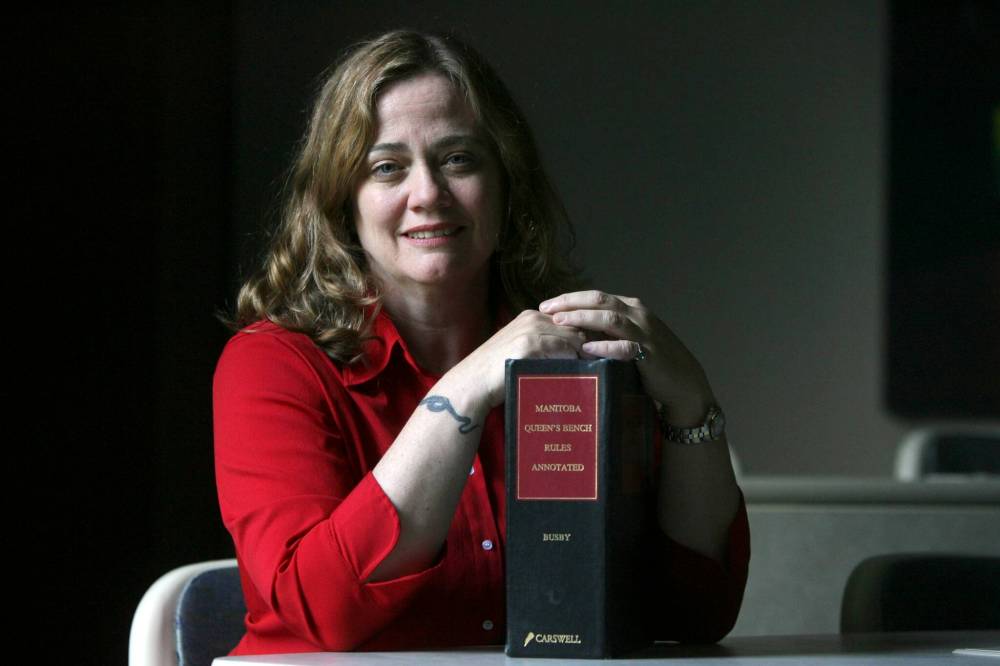
MIKE DEAL / FREE PRESS FILES
080710 Karen Busby is constitutional lawyer and gay and women’s rights activist. See Profile story by Mary Agnes Welch
As long as we’re alive, we have time. Time to listen, learn and raise our voice to champion what we believe in. Time to make the world a better place; one that’s safer, more just, more equitable. But most preciously of all, no matter what demands and challenges we face, we always have the time to be kind.
“She was a genuinely kind person who cared about people,” Lederman says. “Whether you were a friend, a colleague, any situation, she would sit down with you and ask about your life, and she was genuinely interested. She always remembered the details of people’s lives and experiences … She was just that kind of person.”
melissa.martin@winnipegfreepress.com
Melissa Martin
Reporter-at-large
Melissa Martin reports and opines for the Winnipeg Free Press.
Every piece of reporting Melissa produces is reviewed by an editing team before it is posted online or published in print — part of the Free Press‘s tradition, since 1872, of producing reliable independent journalism. Read more about Free Press’s history and mandate, and learn how our newsroom operates.
Our newsroom depends on a growing audience of readers to power our journalism. If you are not a paid reader, please consider becoming a subscriber.
Our newsroom depends on its audience of readers to power our journalism. Thank you for your support.
Melissa Martin
Reporter-at-large
Melissa Martin reports and opines for the Winnipeg Free Press.
Every piece of reporting Melissa produces is reviewed by an editing team before it is posted online or published in print — part of the Free Press‘s tradition, since 1872, of producing reliable independent journalism. Read more about Free Press’s history and mandate, and learn how our newsroom operates.
Our newsroom depends on a growing audience of readers to power our journalism. If you are not a paid reader, please consider becoming a subscriber.
Our newsroom depends on its audience of readers to power our journalism. Thank you for your support.
Advertisement Advertise With Us
Advertisement Advertise With Us