

It’s one thing to climb aboard rail-relocation train, quite another to pay for the ride

Advertisement
Read this article for free:
or
Already have an account? Log in here »
To continue reading, please subscribe:

Digital Subscription
One year of digital access for only $205*
- Enjoy unlimited reading on winnipegfreepress.com
- Read the E-Edition, our digital replica newspaper
- Access News Break, our award-winning app
- Play interactive puzzles
*First annual payment billed as $205.00 + GST for one year. This annual subscription will automatically renew at $233.00 + GST every 52 weeks (10% off the regular annual price of $259.35). Offer available to new and qualified returning subscribers only. Cancel any time.
To continue reading, please subscribe:
Add Free Press access to your Brandon Sun subscription for only an additional
$1 for the first 4 weeks*
- Enjoy unlimited reading on winnipegfreepress.com
- Read the E-Edition, our digital replica newspaper
- Access News Break, our award-winning app
- Play interactive puzzles
*Your next Brandon Sun subscription payment will increase by $1.00 and you will be charged $17.95 plus GST for four weeks. After four weeks, your payment will increase to $24.95 plus GST every four weeks.
Read unlimited articles for free today:
or
Already have an account? Log in here »
Anyone who wants a brighter, safer, healthier future for the city of Winnipeg should really want the renewed hopes of rail relocation to finally become reality. And the sooner, the better.
Premier Wab Kinew announced Wednesday the province was going to forge a plan to relocate the Canadian Pacific Kansas City central yards and many of other the lines that run through Winnipeg to a bypass that runs around the city.
This “plan to design a plan” strategy was devised by a task force headed up by former federal MP and cabinet minister Lloyd Axworthy, who in 2024 was given a two-year mandate to find the best way to rid the city of some or all of its rail infrastructure.
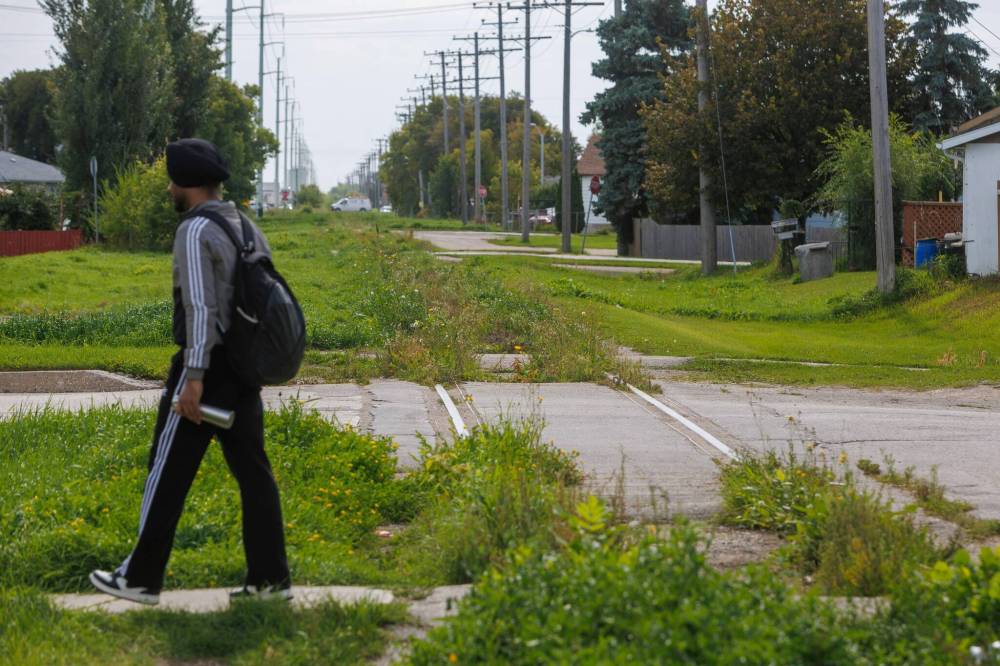
MIKE DEAL / FREE PRESS FILES
Premier Wab Kinew announced Wednesday the province was going to forge a plan to relocate the Canadian Pacific Kansas City central yards and many of other the lines that run through Winnipeg.
For the record, Kinew and Axworthy said a relocation would likely take 20 years to complete, which makes this week’s announcement an important statement of intent, but little more. The sobering reality is that this promising idea has been proposed by political leaders, and then abandoned, for decades.
Hardly anyone disputes the need to relocate the CPKC central rail yards and the 240 kilometres of rail — and 120 crossings — that carry more than 50 trains a day through the city. Relocation would make Winnipeg a transportation super-hub, free up significant parcels of high-value land for other users and eliminate the dangers that come from running dangerous commodities through the centre of a major urban centre.
In short, it has always been a good idea. But it’s also been an incredibly expensive and complex idea.
The first problem is that the railways, in general, aren’t keen on the idea of relocation of any of their assets. There is federal legislation that gives municipal and provincial governments the power to force relocation of railway infrastructure, but only if taxpayers are prepared to pay the costs.
Kinew and Axworthy both conceded the costs of relocation, remediation and redevelopment of rail lands in a city the size of Winnipeg would be measured in billions of dollars. The cost has always, ultimately, dampened the enthusiasm of the many political leaders who advocated for relocation.
Former Winnipeg mayor Glen Murray mused publicly in the early 2000s about “consolidating” rail lines to avoid the need to build expensive bridges or overpasses. And former Winnipeg NDP MP Pat Martin proposed a relocation of CPKC’s central yards in 2008, generating quite a bit of public debate.
In both instances, however, the railways and officials at the city and province balked.
In 2015, then-premier Greg Selinger committed taxpayer money to hire former Quebec premier Jean Charest to head up a rail relocation task force. Selinger had a special connection to the idea, having studied relocation of the central rail yards for his doctorate at the London School of Economics.
Unfortunately, Selinger made his proposal less than a year before he and his government were trounced in the 2016 election. Incoming Tory premier Brian Pallister quickly nixed the idea shortly after taking power, arguing that it was foolish, given the need to stabilize provincial finances.
When the NDP won the 2023 election, Kinew expressed support for the idea, and followed up by hiring Axworthy, a longtime rail relocation advocate, to head up a task force. The pace of Axworthy’s work, however, has been glacial, and this week’s “plan to create a plan” announcement is not going to generate much excitement.
Is there any reason to be more hopeful now?
There has always been a solid urban development argument for relocating the CPKC yards and rail lines. The yards serve as a daunting physical barrier between downtown and the North End. If that land were freed up and remediated, it would, no doubt, boost property values, and that would attract significant interest from private-sector partners.
However, there would be an enormous cost to clear the existing yards and build the new bypass. That is an investment that would have to be made by government before any private-sector money would enter the equation.
Given all that, doing the heavy lifting to clear the yards represents an enormous fiscal risk for Kinew. The premier will, no doubt, seek help from Ottawa, but Prime Minister Mark Carney is currently focused on investing billions of federal dollars in projects of national economic interest: mines, ports, pipelines and an expansion of the nation’s energy grid.

The redevelopment of railway lands might be a game-changer in Winnipeg, but it can’t be considered a project of national economic interest.
Already, and perhaps anticipating Ottawa’s indifference, Kinew and Axworthy are talking about making use of Crown-owned lands for the bypass, including Manitoba Hydro rights of way, which could lower total costs. But there is likely no way to mitigate the other, hard costs of a project this big.
Although it would be easy to despair, there is reason for hope. Projects of this magnitude don’t follow linear paths from conception to execution. Quite often, creative and even revolutionary thinking plays a role in bringing big ideas to fruition.
This is a big idea, but it’s also the right idea for Winnipeg. And anyone concerned about the future of Winnipeg should want this to happen.
dan.lett@freepress.mb.ca
Dan Lett is a columnist for the Free Press, providing opinion and commentary on politics in Winnipeg and beyond. Born and raised in Toronto, Dan joined the Free Press in 1986. Read more about Dan.
Dan’s columns are built on facts and reactions, but offer his personal views through arguments and analysis. The Free Press’ editing team reviews Dan’s columns before they are posted online or published in print — part of the our tradition, since 1872, of producing reliable independent journalism. Read more about Free Press’s history and mandate, and learn how our newsroom operates.
Our newsroom depends on a growing audience of readers to power our journalism. If you are not a paid reader, please consider becoming a subscriber.
Our newsroom depends on its audience of readers to power our journalism. Thank you for your support.
Dan Lett is a columnist for the Free Press, providing opinion and commentary on politics in Winnipeg and beyond. Born and raised in Toronto, Dan joined the Free Press in 1986. Read more about Dan.
Dan’s columns are built on facts and reactions, but offer his personal views through arguments and analysis. The Free Press’ editing team reviews Dan’s columns before they are posted online or published in print — part of the our tradition, since 1872, of producing reliable independent journalism. Read more about Free Press’s history and mandate, and learn how our newsroom operates.
Our newsroom depends on a growing audience of readers to power our journalism. If you are not a paid reader, please consider becoming a subscriber.
Our newsroom depends on its audience of readers to power our journalism. Thank you for your support.
Related Articles
Moving rail lines outside city would make Winnipeg ‘major transportation hub’

Advertisement Advertise With Us
Advertisement Advertise With Us