

Province fogging in West St. Paul due to high counts of West Nile-carrying mosquitoes
Advertisement
Read this article for free:
or
Already have an account? Log in here »
To continue reading, please subscribe:

Digital Subscription
One year of digital access for only $205*
- Enjoy unlimited reading on winnipegfreepress.com
- Read the E-Edition, our digital replica newspaper
- Access News Break, our award-winning app
- Play interactive puzzles
*First annual payment billed as $205.00 + GST for one year. This annual subscription will automatically renew at $233.00 + GST every 52 weeks (10% off the regular annual price of $259.35). Offer available to new and qualified returning subscribers only. Cancel any time.
To continue reading, please subscribe:
Add Free Press access to your Brandon Sun subscription for only an additional
$1 for the first 4 weeks*
- Enjoy unlimited reading on winnipegfreepress.com
- Read the E-Edition, our digital replica newspaper
- Access News Break, our award-winning app
- Play interactive puzzles
*Your next Brandon Sun subscription payment will increase by $1.00 and you will be charged $17.95 plus GST for four weeks. After four weeks, your payment will increase to $24.95 plus GST every four weeks.
Read unlimited articles for free today:
or
Already have an account? Log in here »
Manitoba Health will conduct a third round of fogging in the RM of West St. Paul due to high counts of a West Nile virus-carrying mosquito and a high infection rate in the area.
The province said spraying of the DeltaGard 20EW insecticide is scheduled to happen this weekend, as long as weather conditions are suitable, to reduce the risk of human exposure, which remains high.
The RM of West St. Paul will notify residents when the date is confirmed. The date will be published on the Manitoba Health’s website.
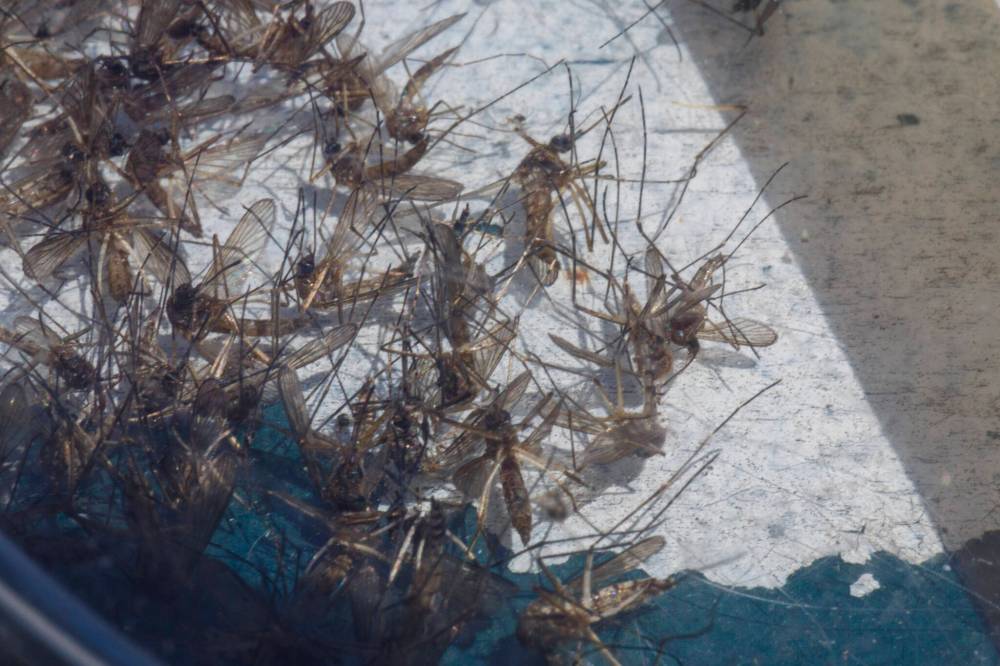
Manitoba has reported one confirmed and three probable human cases of West Nile virus in 2026. The confirmed case was in Prairie Mountain Health region in western Manitoba. Two probable cases were in Interlake-Eastern and one was in Southern Health.
A ministerial order was issued in July to allow Manitoba Health to fog for Culex tarsalis mosquitoes in West St. Paul and several other communities, including parts of Winnipeg.
Spraying was conducted in West St. Paul on July 31 and Aug. 7. DeltaGard 20EW, classified as a reduced-risk pesticide, was approved by Health Canada for use in 2017.
It is unlikely to affect human health when applied using ultra-low volume methods and according to label directions, the province said.
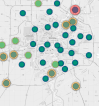
The government’s online dashboard said average Culex tarsalis mosquito trap counts in the RM more than doubled to 701 for the week ending Aug. 8, but was down from 1,229 from two weeks earlier.

Figures for the week ending Aug. 15 were not yet published on the province’s website. Across all health regions, the average number of mosquitoes per trap was lower than the previous week, with 60 West Nile virus-positive pools being detected, the province said.
The provincial average was slightly higher than the historical average for this time of year.
Manitoba Health expects the risk of human exposure to decrease with cooler weather over the next few weeks. Infection may cause severe illness resulting in encephalitis (swelling of the brain), long-term complications and death, the province said.
While Culex tarsalis activity is decreasing, Manitobans are encouraged to take precautions to avoid being bitten by mosquitoes, including reducing time spent outdoors during peak mosquito hours between dusk and dawn, and using appropriate repellent.
fpcity@freepress.mb.ca