

Number of fentanyl overdoses may have peaked in Manitoba
Advertisement
Read this article for free:
or
Already have an account? Log in here »
To continue reading, please subscribe:
Digital Subscription
One year of digital access for only $1.44 a week*
- Enjoy unlimited reading on winnipegfreepress.com
- Read the E-Edition, our digital replica newspaper
- Access News Break, our award-winning app
- Play interactive puzzles
*Billed as $5.77 plus GST every four weeks. After 52 weeks, price increases to the regular rate of $19.95 plus GST every four weeks. Offer available to new and qualified returning subscribers only. Cancel any time.
To continue reading, please subscribe:
Add Free Press access to your Brandon Sun subscription for only an additional
$1 for the first 4 weeks*
- Enjoy unlimited reading on winnipegfreepress.com
- Read the E-Edition, our digital replica newspaper
- Access News Break, our award-winning app
- Play interactive puzzles
*Your next Brandon Sun subscription payment will increase by $1.00 and you will be charged $17.95 plus GST for four weeks. After four weeks, your payment will increase to $24.95 plus GST every four weeks.
Read unlimited articles for free today:
or
Already have an account? Log in here »
Hey there, time traveller!
This article was published 28/02/2017 (3397 days ago), so information in it may no longer be current.
The number of fentanyl overdose deaths in Manitoba appears to be levelling off, but medical experts are far from declaring victory.
Last year, there were 17 deaths directly or indirectly caused by fentanyl, compared with 20 in 2015.
Mark O’Rourke, director of the chief medical examiner’s office, said the 2016 numbers could still climb as an estimated 25 per cent of overdose toxicology and autopsy reports are yet to be completed.
Of the 17 fentanyl deaths last year, 10 were directly caused by the opioid while in another seven cases the drug was a contributing factor, O’Rourke said.
His office won’t have final figures for 2016 until about June. “There’s always several months delay,” he said.
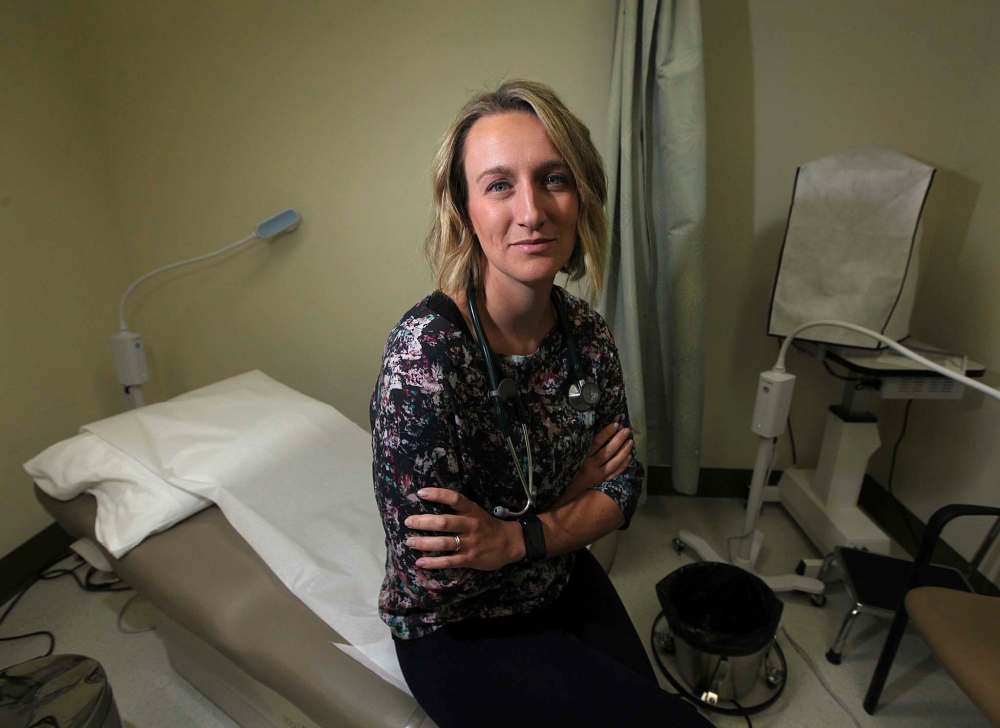
Dr. Joss Reimer, medical officer of health with the Winnipeg Regional Health Authority, said local health officials are not celebrating the latest numbers. A big spike in fentanyl overdoses occurred in 2015 after only seven deaths in 2014.
“I don’t believe the battle is won,” she said, noting that other powerful opioids are becoming problematic here.
Last year, there were five overdose deaths in Manitoba due to carfentanil — an even more powerful drug used to subdue elephants. There were no deaths associated with carfentanil in 2015.
As well, there were two deaths last year attributed to furanylfentanyl, an analog of fentanyl.
Dr. Gerald Hoy, who treats opioid addicts at a clinic on Main Street, said he knows of four or five drug users who have sought treatment for carfentanil in the last several months.
“The fentanyl (numbers) did peak a year or two ago. The carfentanil is climbing,” he said.
Those who take carfentanil — and live to tell about it — have used opioids for some time and built up a tolerance, Hoy said. “For fentanyl users that have graduated to carfentanil, it’s just another step on the ladder of tolerance and addiction.”
After a spike in fentanyl deaths in 2015, local health officials began last year to distribute kits containing the antidote naloxone to opioid users in Winnipeg through the Street Connections program. More recently, the province has increased distribution of the kits to 24 points in the city and across the province.
Late last year, the Pallister government launched a social media campaign to raise awareness of the dangers of fentanyl among young people.
Reimer said of 250 naloxone kits distributed through Street Connections last year, 32 were confirmed to have been used by clients fearing an opioid overdose. Officials assume that the actual number of kits used was higher.
In late 2015, the Winnipeg Fire and Paramedic Service reported that in the first 10 months of the year it responded to 96 emergency calls involving fentanyl at which paramedics administered naloxone. An analysis of those first-responder reports found that 41 of the calls involved immediate life-saving intervention because patients had stopped breathing or were in cardiac arrest.
While the number of local first-responder calls for opioid overdoses are still being tabulated and analyzed for 2016, Reimer said she has “no hesitation” in saying that the number of opioid overdose emergency responses were up last year compared with 2015.
All medical first responders carry naloxone, as do officers on patrol with the Winnipeg Police Service.
With 20 deaths attributed to fentanyl in 2015 and only 17 tabulated (so far) for in 2016, the number of overdose deaths in Manitoba is dwarfed by the hundreds last year reported in both British Columbia and Alberta. Saskatchewan reported 22 fentanyl deaths in 2015. Its 2016 numbers are not yet final, although indications are that they’re down substantially.
Reimer said geography plays a role in the relatively low numbers of fentanyl overdose deaths in Manitoba.
Fentanyl powder enters Canada from China through Vancouver. It takes longer and is more challenging to get the drug to Manitoba, she said.
“That’s the same reason we’ve never had a major issue with heroin in Manitoba. By the time it gets here the prices have gone up, there’s much less available.”
larry.kusch@freepress.mb.ca
